
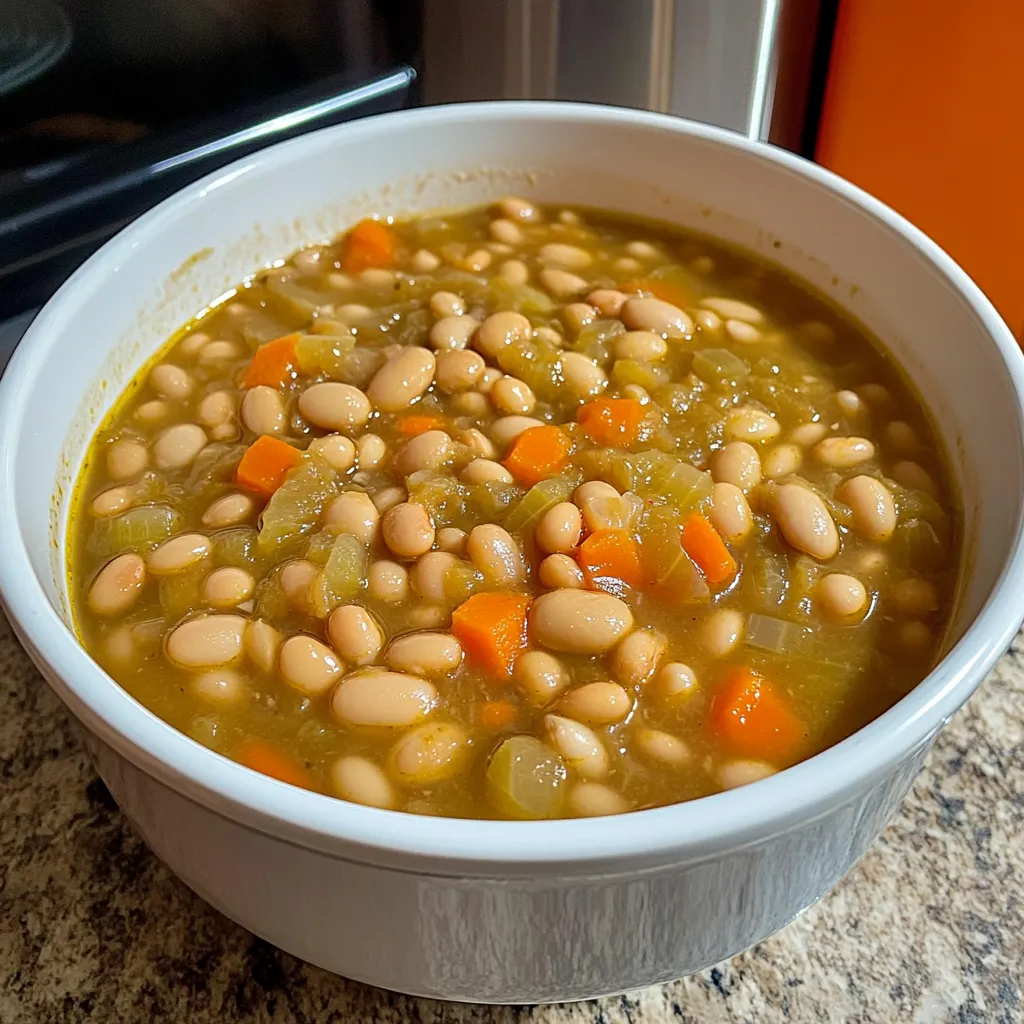
A Comforting Bowl With Old-School Roots
Great Northern Bean Soup is one of those recipes that feels like a warm hug in a bowl. It’s simple, filling, and deeply comforting, especially on chilly days when you want something nourishing without a lot of fuss. This is the kind of soup that simmers quietly on the stove while the kitchen fills with a savory, homey aroma.
I’ve made this soup more times than I can count, and it never disappoints. It’s humble food at its best—no flashy ingredients, just patience and good technique. Whether you grew up eating bean soups or you’re discovering them now, this one has a timeless, satisfying quality that keeps you coming back.
Ingredients That Build Big Flavor
This soup relies on pantry staples and fresh vegetables to create its depth. You can keep it vegetarian or add a little meat for extra richness—it’s flexible and forgiving.
Ingredients:
- 2 cups dried Great Northern beans, soaked overnight
- 1 tablespoon olive oil
- 1 onion, chopped
- 2 carrots, sliced
- 2 celery stalks, chopped
- 3 cloves garlic, minced
- 6 cups vegetable or chicken broth
- 1 bay leaf
- 1 teaspoon dried thyme
- ½ teaspoon black pepper
- Salt to taste
- Optional: diced ham or bacon for extra flavor
Getting the Beans Ready the Right Way
Soaking the beans overnight is a small step that makes a big difference. It helps them cook evenly and shortens the simmering time. After soaking, drain and rinse them well. You’ll notice they’ve plumped up and softened slightly—that’s exactly what you want.
If you ever forget to soak them, you can still make the soup, but expect a longer cooking time and slightly less even texture. I’ve been there, and while it still works, planning ahead really pays off here.
Building the Flavor Base in the Pot
Start by heating the olive oil in a large, heavy-bottomed pot over medium heat. Add the chopped onion, carrots, and celery. This trio is the backbone of the soup, and you want to give it time to soften properly. Stir occasionally and let the vegetables cook until they’re tender and fragrant, about 6–8 minutes.
Add the minced garlic and cook for about 30 seconds, just until fragrant. Be careful not to let it brown—burnt garlic can turn bitter quickly. At this stage, the kitchen already smells inviting, and you know you’re on the right track.
Simmering the Soup to Cozy Perfection
Add the drained beans to the pot along with the broth, bay leaf, thyme, black pepper, and salt. If you’re using diced ham or bacon, this is the moment to add it. Bring everything to a gentle boil, then reduce the heat to low.
Let the soup simmer uncovered for 1½ to 2 hours, stirring occasionally. The beans should become tender and creamy, but still hold their shape. I usually start checking around the 90-minute mark. You’ll notice the broth thickening slightly as the beans release their starches—that’s part of the charm of this soup.
Once the beans are fully tender, remove the bay leaf and taste. Adjust the salt and pepper as needed. This final seasoning step makes all the difference.
Small Tips for the Best Texture and Taste
- Keep the simmer gentle; a rolling boil can cause the beans to split.
- If the soup thickens too much, add a splash of broth or water.
- For a creamier texture, mash a small scoop of beans against the side of the pot and stir them back in.
- The soup tastes even better the next day after the flavors have had time to settle.
These little tweaks come from experience, and they really elevate a simple bean soup.
Serving and Storing Your Bean Soup
Serve the soup hot, preferably with crusty bread or warm rolls on the side. I love it with a drizzle of olive oil or a sprinkle of fresh herbs if I have them. It’s hearty enough to be a full meal on its own.
Store leftovers in an airtight container in the refrigerator for up to 4 days. This soup also freezes well—just let it cool completely before freezing. When reheating, add a bit of liquid and warm it gently on the stove.
Easy Variations to Make It Your Own
This soup is wonderfully adaptable. You can add diced tomatoes for a slightly brighter flavor, toss in a handful of spinach near the end for extra greens, or use smoked paprika for a subtle smoky note.
If you like a richer soup, bacon adds depth, while ham gives it that classic, savory edge. For a vegetarian version, stick with vegetable broth and maybe add a splash of lemon juice at the end to brighten everything up.
Nutrition Notes Worth Knowing
Great Northern beans are packed with plant-based protein, fiber, and essential minerals. This soup is filling without being heavy, making it a great choice for balanced, everyday meals. It’s one of those dishes that leaves you satisfied, not sluggish.
Common Questions About Great Northern Bean Soup
Do I have to soak the beans overnight?
It’s highly recommended for even cooking and better texture, but not absolutely required if you have extra time to simmer.
Why are my beans still hard after cooking?
Old beans or adding salt too early can slow softening. Make sure your beans are fresh and simmer patiently.
Can I make this in a slow cooker?
Yes. Sauté the vegetables first, then add everything to the slow cooker and cook on low for 7–8 hours.
Is this soup better the next day?
Absolutely. The flavors deepen overnight, and the texture becomes even more comforting.
Great Northern Bean Soup is proof that simple ingredients, treated with care, can create something deeply satisfying. It’s a recipe I return to again and again, especially when I want something nourishing, familiar, and quietly delicious.