
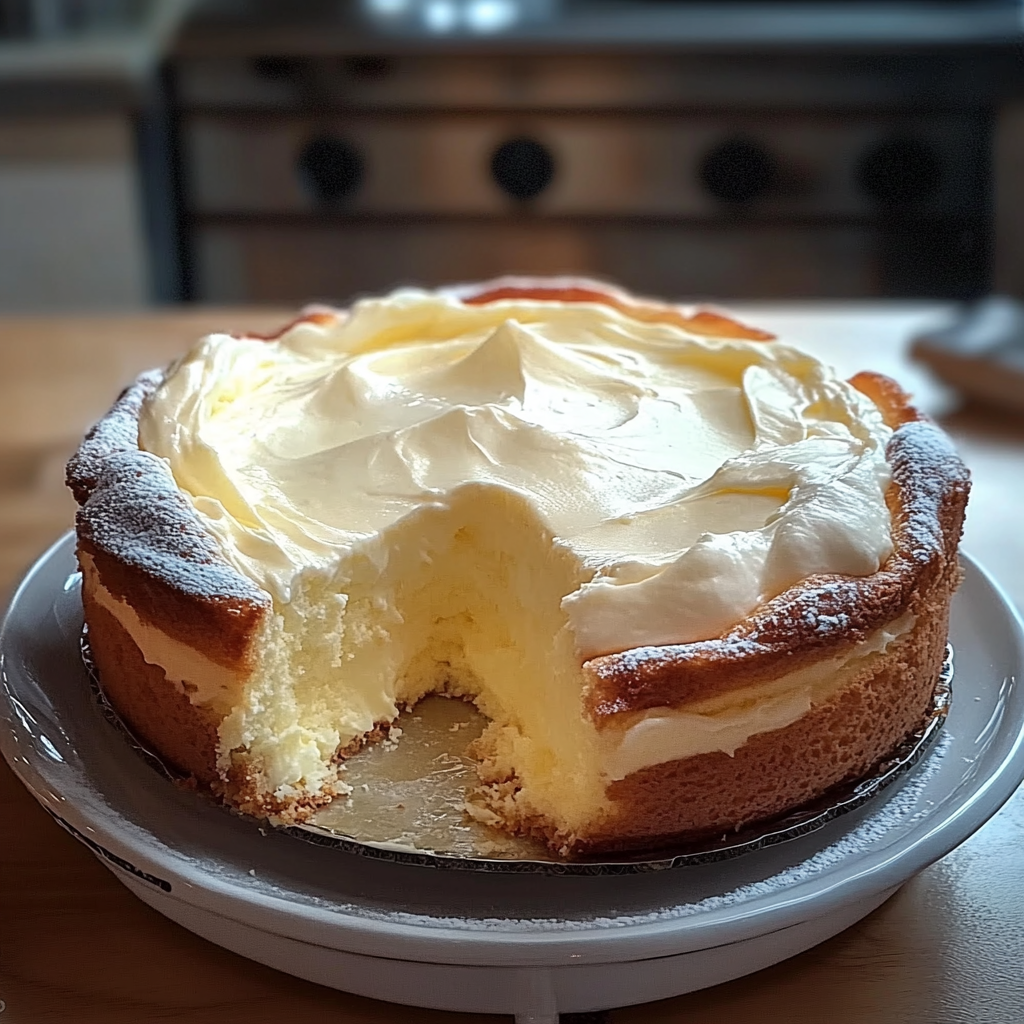
Looking for a dessert that feels as elegant as it tastes? This Melt-in-Your-Mouth Cake is a Polish-inspired classic that perfectly balances buttery softness with smooth, velvety cream. It’s the kind of cake that transforms simple ingredients into a luxurious treat—ideal for family gatherings, holidays, or anytime you want to impress without overcomplicating your kitchen routine.
Ingredients:
- 150 grams (1½ cups) all-purpose flour
- 100 ml (½ cup) water
- 100 ml (½ cup) milk
- 80 grams (⅓ cup) butter
- 4 large eggs
- 1 teaspoon baking powder
- ½ teaspoon salt
- 500 ml (2 cups) milk
- 150 grams (¾ cup) sugar
- 100 grams (1 cup) all-purpose flour
- 2 large eggs
- 180 grams (¾ cup) butter
- Icing sugar or your favorite garnish
Here’s a clear, detailed, step-by-step method you can drop into your recipe page.
Preparation:
Before you start
- Pan & oven: Line a 25 cm (10-inch) round pan (or two if you have them) with parchment on the base. Preheat oven to 200°C / 400°F (no fan).
- Measure & separate:
- For the layers: 150 g flour, 100 ml water, 100 ml milk, 80 g butter, 4 eggs, 1 tsp baking powder, ½ tsp salt.
- For the cream: 500 ml milk, 150 g sugar, 100 g flour, 2 eggs, 180 g butter (room temp).
- Butter for cream: Cut the 180 g butter into cubes and let it soften at room temperature (soft, not greasy).
Bake the cake layers (choux-style dough)
- Heat liquids: In a medium saucepan, add 80 g butter, 100 ml milk, 100 ml water, and ½ tsp salt. Bring to a gentle simmer over medium heat until the butter fully melts.
- Add dry mix: In a bowl, whisk 150 g flour with 1 tsp baking powder. Remove the saucepan from the heat and add the flour mix all at once, stirring vigorously with a wooden spoon or stiff spatula until there are no dry spots.
- Cook the dough ball: Return the pan to medium-low heat and cook, stirring and pressing the dough, 2–3 minutes, until it pulls away from the sides and leaves a thin film on the bottom. This dries the dough.
- Cool slightly: Transfer the dough to a mixing bowl. Spread it up the sides to release steam. Rest 5–7 minutes until warm (not hot)—you should be able to touch it comfortably.
- Beat in eggs: Beat the dough briefly to loosen. Add 4 eggs one at a time, beating well after each until fully absorbed before adding the next. The dough should be smooth, glossy, and thick—it should slowly fall from the spatula in a V-shape.
- Divide & spread: Weigh the dough and divide into two equal portions. Spread the first half into the prepared pan in an even, thin layer (use an offset spatula; leave a 5 mm/¼-inch margin from the edge to reduce overhang).
- Bake first layer: Bake 18–22 minutes until deep golden, puffed, and set. Do not open the oven early. Remove to a rack, cool completely, then peel off parchment.
- Bake second layer: Re-line the pan and repeat with the remaining dough.
Tip: If the layers puff unevenly, that’s okay—those airy pockets hold the cream beautifully.
Make the vanilla cream
- Whisk base: In a saucepan (off heat), whisk 2 eggs with 150 g sugar until pale and slightly thick, 30–60 seconds. Whisk in 100 g flour until smooth (it will be thick).
- Add milk gradually: Slowly whisk in 500 ml milk, a splash at a time at first to avoid lumps, then the rest until completely smooth.
- Cook & thicken: Place over medium heat, whisking constantly, 6–10 minutes until it bubbles and thickens to a pastry-cream consistency (it should hold soft ribbons).
- Cool properly: Remove from heat. Press plastic wrap directly on the surface to prevent a skin. Cool to room temperature (about 30–40 minutes). The cream and the butter for the next step should be at a similar, cool-room temperature to prevent curdling.
- Butter emulsion: In a separate bowl, beat 180 g softened butter until light and fluffy (2–3 minutes).
- Combine: Whisk the cooled cream until smooth, then add to the butter 2–3 tbsp at a time, beating well after each addition until you have a silky, stable cream.
Fix-it note: If the cream looks slightly curdled, keep beating a bit longer; if it’s too soft, chill 10–15 minutes and beat again.
Assemble
- First layer: Place one baked layer on a serving plate or back in a clean lined pan (for neat sides).
- Half the cream: Spread half of the cream evenly to the edges.
- Second layer: Set the second layer on top, gently pressing to level.
- Top cream: Spread the remaining cream over the top (and sides, if you like).
- Chill to set: Cover and refrigerate for at least 2 hours (4 hours or overnight for the cleanest slices).
Finish & serve
- Garnish: Dust with icing sugar just before serving, or add shaved chocolate, toasted almond flakes, or fresh berries.
- Slice: Use a hot, dry knife (dip in hot water and wipe) for tidy cuts.
- Storage: Keep refrigerated, covered, for up to 3 days. Best texture within 24 hours.
Success cues (quick checklist)
- Dough: glossy, pipeable but thick; holds a V-shaped fall from the spatula.
- Layers: evenly golden, dry to the touch, cool completely before filling.
- Cream: smooth, spreadable, not runny; cool room temp when beating with butter.
- Chill: at least 2 hours so slices hold their shape.
Light, creamy, and irresistibly smooth—this Melt-in-Your-Mouth Cake truly delivers on its name. Each bite feels like a little celebration of texture and flavor. Serve it chilled, dusted with icing sugar, and watch it disappear slice by slice. A timeless recipe that brings warmth, comfort, and just the right touch of indulgence to your table.