
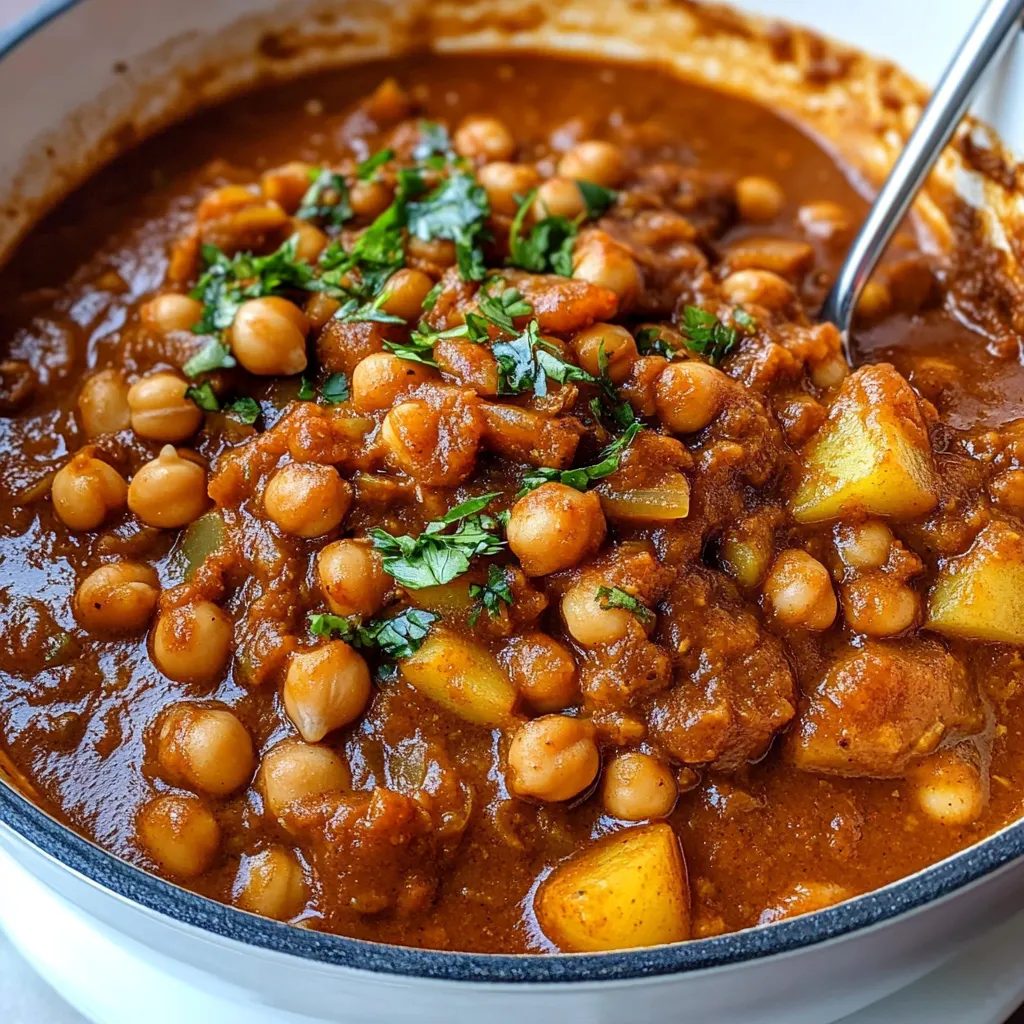
H2: Why This Chickpea and Potato Curry Deserves a Spot in Your Weekly Rotation
There are meals you make once, and then there are the ones that quietly become part of your routine. This chickpea and potato curry is definitely the second kind. It’s warm, filling, and packed with spices that make your kitchen smell incredible. I love how it comes together in one pot, especially on days when I want something satisfying without a lot of fuss.
H3: The comforting appeal of simple pantry ingredients
What makes this curry special is how it transforms everyday ingredients into something rich and layered. Canned chickpeas, a few potatoes, and a blend of spices—that’s really all it takes. You’ll notice as it simmers, the aroma deepens and everything starts to feel a bit more cozy.
H2: What You’ll Need for a Rich and Aromatic Curry Base
Before you start cooking, it helps to have everything prepped and within reach. Once the spices hit the oil, things move quickly.
Ingredients:
- 1 ½ tbsp curry powder
- 1 tsp ground cumin
- 1 tsp ground coriander
- ½ tsp all spice
- ½ tsp nutmeg
- 1 tsp smoked paprika
- ½ tsp dried thyme
- 1 tsp dried fenugreek leaves (optional)
- ½ tsp cayenne pepper (optional)
- 2 tbsp vegetable oil
- 1 cup onion, diced
- 3 garlic cloves, minced
- 1 ½ cups potatoes, cubed
- 2 cans (14 oz) chickpeas, drained and rinsed
- 1 can (14 oz) crushed tomatoes
- 2 cups chicken or vegetable broth
- 3 green onions, sliced
- 2 tbsp fresh parsley, chopped
- Salt and pepper
H3: Building layers of flavor with spices and aromatics
This spice blend is what gives the curry its personality. It’s warm, slightly smoky, and just a little earthy. If you’ve never used fenugreek before, it adds a subtle depth that’s hard to describe but really noticeable. I sometimes rub it between my fingers before adding—it releases more aroma.
H2: Step-by-Step: Cooking a Balanced, Flavorful Curry
Start by heating the oil in a large pot over medium heat. Add the diced onion and let it cook until soft and slightly golden. This step takes a few minutes, but it’s worth it—the sweetness of the onion builds the base. Add the garlic and cook just until fragrant.
Sprinkle in all the spices. Stir constantly for about a minute. You’ll notice the smell intensifies quickly—this is when the flavors really start to wake up.
Add the cubed potatoes and toss them in the spice mixture so they’re well coated. This helps them absorb flavor right from the beginning.
Pour in the broth, crushed tomatoes, and chickpeas. Give everything a good stir and bring it to a gentle boil. Then reduce the heat and let it simmer. I usually cover it partially and let it cook until the potatoes are fork-tender. Sometimes I sneak a taste halfway through—it’s hard not to.
Once the potatoes are soft, stir in the green onions and parsley. Season with salt and pepper to taste. The curry should be thick, rich, and slightly saucy.
H3: Knowing when your curry is perfectly cooked
You’ll know it’s ready when the potatoes are tender but not falling apart. The sauce should coat the back of a spoon, and the oil might slightly separate at the top—that’s a good sign of depth and richness.
H2: Tips for Getting the Best Texture and Depth of Flavor
Don’t rush the onion step. Letting it soften properly makes a big difference in the final taste. I’ve hurried this before, and the curry felt a bit flat.
If the curry gets too thick, add a splash of broth or water. If it’s too thin, let it simmer uncovered for a few extra minutes.
Taste as you go. Sometimes it needs a pinch more salt or a touch more spice depending on your preference.
H3: Adjusting spice levels and consistency to your taste
If you like heat, keep the cayenne or even add a bit more. If you prefer it mild, you can skip it entirely. The beauty of this dish is how flexible it is.
H2: Common Mistakes to Avoid When Making This Curry
One mistake is undercooking the spices. If you don’t give them that quick toast in oil, they won’t fully develop their flavor.
Another is cutting the potatoes unevenly. Smaller pieces cook faster, so try to keep them uniform.
Overcooking can also be an issue. If the potatoes break down too much, the curry turns mushy instead of hearty.
H3: Fixing bland or overly thick curry
If it tastes bland, a pinch of salt or an extra dash of spices can bring it back to life. If it’s too thick, just loosen it with a bit of broth—it comes together quickly.
H2: Variations and Add-Ins to Make It Your Own
This curry is a great base for experimenting. I’ve added spinach at the end for a bit of green, and it works beautifully.
You can also toss in carrots or bell peppers for extra texture. Sometimes I even swap potatoes for sweet potatoes when I want a slightly sweeter twist.
H3: Making it vegetarian or adding protein options
Using vegetable broth keeps it fully vegetarian. If you want extra protein, tofu or even lentils can be added without changing the character too much.
H2: Serving, Pairing, and Storing Your Curry
Serve this curry hot over a bowl of rice. I personally love it with plain white rice, but it also pairs well with flatbread or even quinoa.
A spoonful of yogurt on top adds a nice contrast—it cools the spices and makes each bite a bit creamier.
Store leftovers in an airtight container in the fridge for a few days. The flavors actually deepen overnight, which I always look forward to.
H3: Reheating tips and keeping leftovers fresh
Reheat gently on the stove or in the microwave, adding a splash of water if needed. Stir occasionally to keep the texture smooth.
H2: Curious Cook’s Corner: Your Curry Questions Answered
Can I make this ahead of time?
Yes, and it often tastes even better the next day as the flavors develop more.
Can I freeze this curry?
Absolutely. Let it cool completely before freezing. Thaw and reheat when needed.
What can I use instead of chickpeas?
You can substitute with other beans like white beans or even lentils for a slightly different texture.
Is this curry very spicy?
It depends on the cayenne. Without it, the curry is more warm than hot.
Can I make it creamier?
Yes, adding a splash of coconut milk at the end gives it a richer, creamier texture.
This is one of those recipes that feels forgiving and reliable. Once you make it a couple of times, you’ll start adjusting it naturally to suit your taste—and that’s when it really becomes your own.