
H2: A Fresh Take on Simple Ingredients with Big Flavor
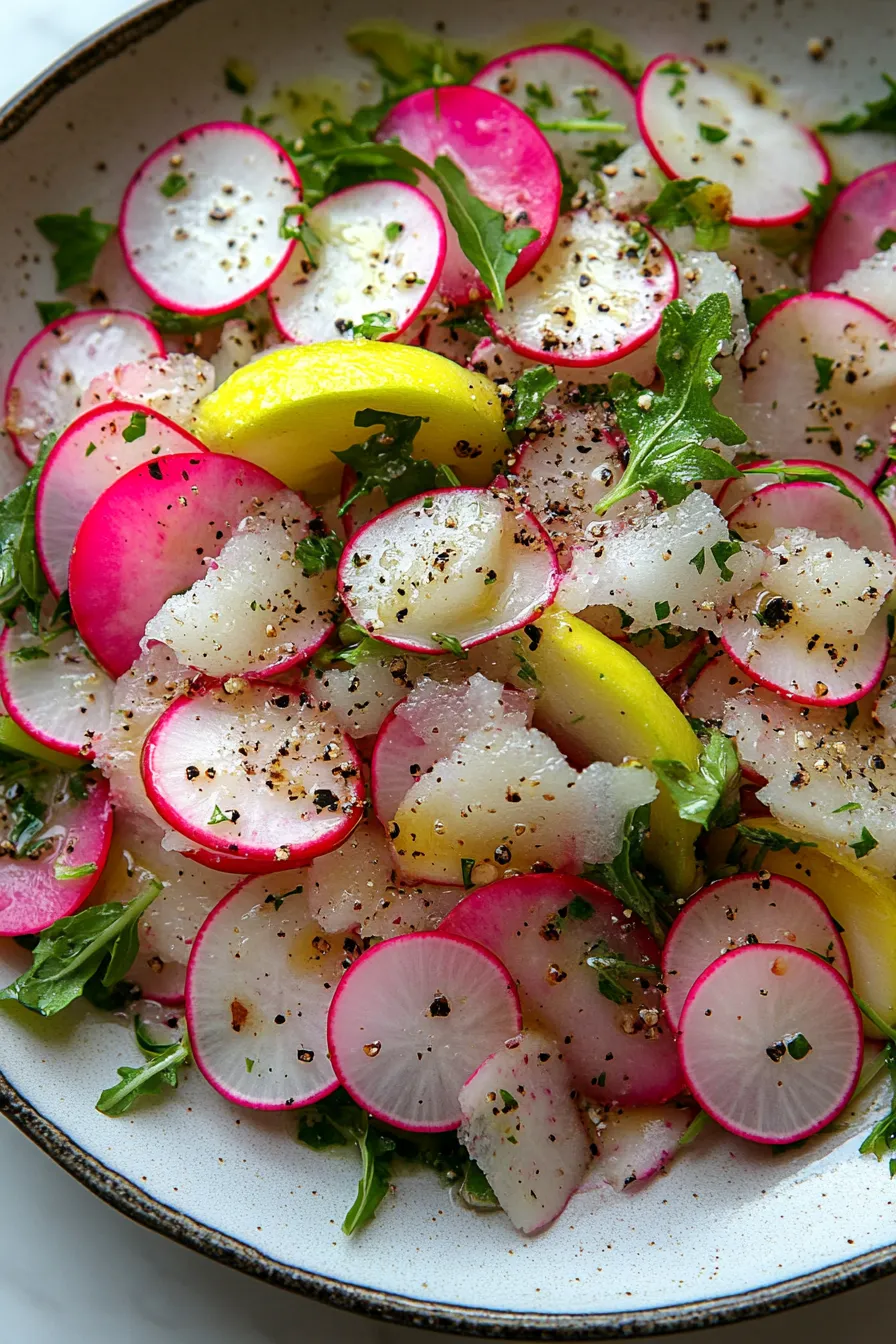
There’s something incredibly satisfying about turning a handful of simple vegetables into a dish that feels refined and restaurant-worthy. This radish salad is exactly that. It’s crisp, refreshing, and full of contrast—peppery radishes, cool cucumber, and that subtle anise note from fennel if you choose to include it.
I love making this when I want something quick but still impressive. The sharpness of the radishes softens just enough once dressed, and the lemon zest lifts everything in a way that feels light and clean.
H3: Why this combination works so well together
Radishes bring a natural bite, but when sliced thin and paired with a bright dressing, they mellow out beautifully. The olive oil smooths things over, the lemon adds freshness, and herbs tie it all together. If you add cheese, you get that creamy, salty contrast that makes every bite more interesting.
H2: What You’ll Need for This Crisp Radish Salad
This recipe keeps things simple, but each ingredient plays a role.
Ingredients:
- 200g fresh radishes, thinly sliced
- 1 small cucumber, thinly sliced (optional)
- ½ small fennel bulb, very thinly sliced (optional)
- 2 tbsp extra virgin olive oil
- 1 tbsp lemon juice or white wine vinegar
- Zest of ½ lemon
- Salt and freshly ground black pepper
- 1 tbsp chopped fresh parsley or dill
- Shaved Parmesan or crumbled feta (optional)
H3: Picking the freshest produce for best results
Look for radishes that feel firm with smooth skin—soft spots usually mean they’re past their prime. Smaller radishes tend to be milder and less woody. If you’re using fennel, go for a bulb that’s tight and pale without browning. Fresh herbs should smell vibrant the moment you chop them.
H2: Bringing It All Together: The Preparation Method
Start by washing everything thoroughly. Slice the radishes as thinly as you can—this really matters. Thinner slices absorb the dressing better and lose some of that sharp bite. I sometimes use a mandoline for consistency, but a sharp knife works just fine if you take your time.
If you’re adding cucumber and fennel, slice them just as thin. You want everything to feel delicate and evenly textured.
In a small bowl, whisk together the olive oil, lemon juice, lemon zest, salt, and pepper. Taste it—it should be bright and slightly tangy with a smooth finish from the oil. Adjust seasoning if needed.
Place all the sliced vegetables in a large bowl and drizzle the dressing over. Toss gently. I like using my hands here to avoid crushing anything.
Add the chopped herbs and give it one last light toss. If you’re using cheese, sprinkle it over just before serving.
H3: Timing and tossing for the perfect texture
This salad is best served immediately. If it sits too long, the radishes release water and lose their crispness. A quick toss right before serving keeps everything fresh and lively.
H2: Tips to Elevate Flavor and Presentation
A small detail I’ve learned: let the dressed salad sit for just a minute or two—not longer. This gives the flavors a chance to settle without sacrificing crunch.
Also, don’t skip the lemon zest. It might seem minor, but it adds a fragrant brightness that really makes the dish stand out.
H3: Balancing acidity, salt, and crunch
If your radishes are particularly sharp, a tiny pinch more salt can help balance them. If the salad feels too acidic, a slight drizzle of olive oil softens it. It’s all about tasting and adjusting.
H2: Common Mistakes to Avoid
One mistake is slicing the vegetables too thick. It changes the whole experience and makes the salad feel heavier.
Another is overdressing. It’s tempting, but too much liquid can make everything soggy quickly.
H3: Avoiding soggy or overly sharp bites
If your salad turns watery, it’s usually from letting it sit too long or adding too much dressing. Keep things light and serve right away for the best texture.
H2: Variations and Add-Ons to Customize Your Salad
This salad is easy to adapt. Sometimes I add thinly sliced red onion for extra bite, or even a handful of arugula for a peppery layer.
H3: Cheese, herbs, and extra crunch ideas
Parmesan adds a nutty, savory touch, while feta gives a creamy, tangy contrast. You can also toss in toasted nuts or seeds for crunch—it adds another dimension that’s really satisfying.
H2: Serving and Storage Tips for Maximum Freshness
Serve this salad chilled or at cool room temperature. It pairs beautifully with grilled meats, fish, or even as part of a light lunch spread.
If you need to prepare ahead, slice the vegetables and keep them separate. Mix everything together just before serving.
H3: Keeping leftovers crisp and flavorful
If you do have leftovers, store them in the fridge, but expect them to soften. It’s still tasty, just less crisp. A quick refresh with a squeeze of lemon can bring it back to life a bit.
H2: Your Radish Salad Questions Answered
Can I make this salad ahead of time?
You can prep the ingredients in advance, but it’s best to assemble right before serving.
What if I don’t like fennel?
Simply leave it out. The salad still works beautifully without it.
Can I use a different dressing?
Yes, but keep it light and acidic. A heavy dressing will overpower the fresh flavors.
Is this salad very spicy?
Radishes have a natural bite, but slicing them thin and dressing them reduces the sharpness significantly.
What pairs well with this salad?
It goes great with grilled chicken, fish, or even a simple piece of crusty bread.