
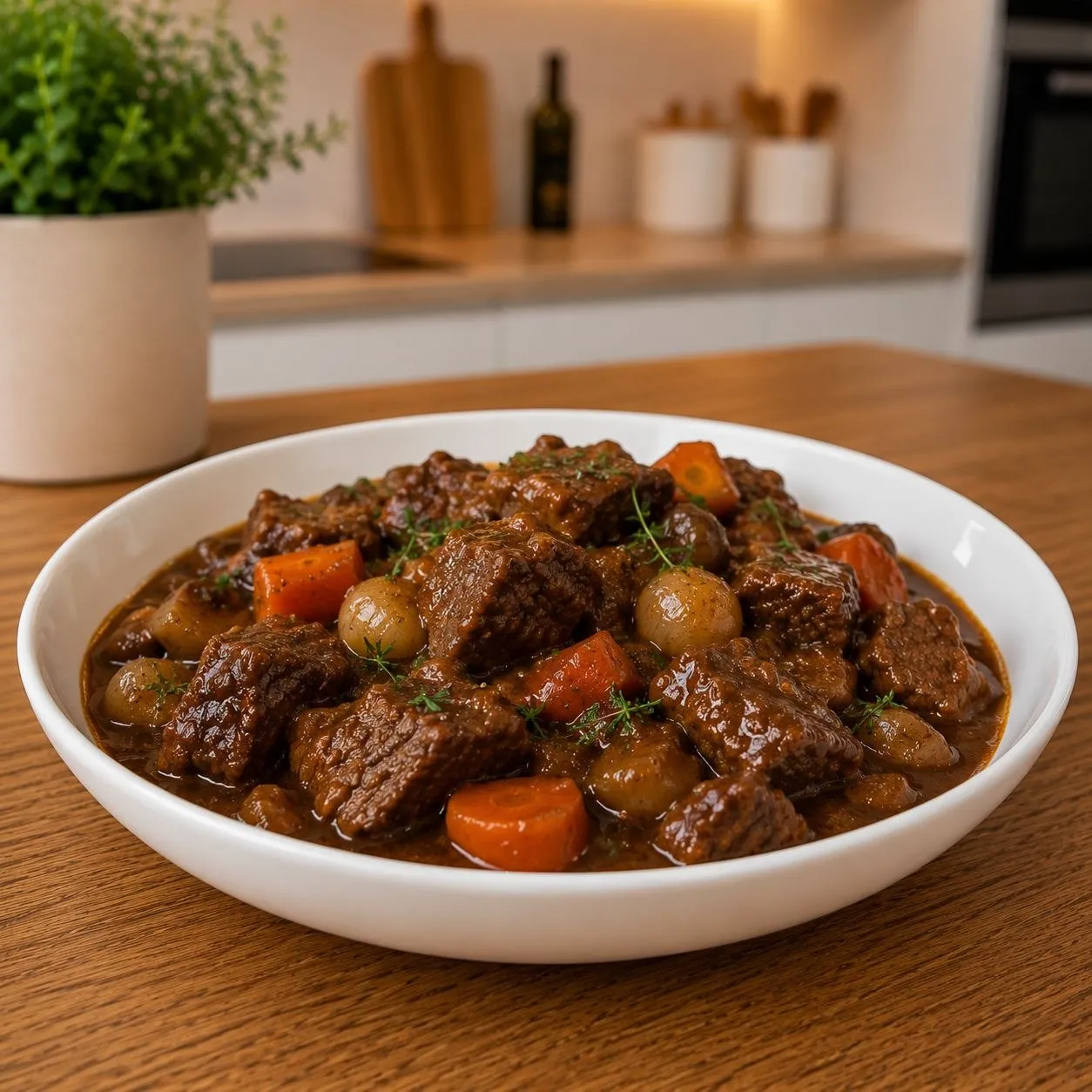
There are few meals more comforting than a pot of Classic Beef Stew slowly simmering on the stove. The rich aroma of beef, herbs, and vegetables filling the kitchen instantly makes the house feel warmer. This is the kind of meal that brings everyone to the table without needing to call them twice.
I’ve made this stew on rainy afternoons, cold winter evenings, and even lazy Sundays when I wanted something deeply satisfying. The long simmer transforms simple ingredients into tender, flavorful bites wrapped in a rich, savory gravy. It’s humble food in the best possible way.
Why This Classic Beef Stew Always Delivers
What makes beef stew so special is the slow cooking process. The beef becomes incredibly tender, the vegetables soften perfectly, and the broth thickens into a comforting sauce packed with flavor. Every spoonful tastes rich and hearty without being complicated.
I also love how forgiving this recipe is. Even if your carrot slices aren’t perfectly even or the stew simmers a little longer than planned, it still turns out delicious. In fact, I think beef stew often tastes even better the next day.
Ingredients You’ll Need
This recipe serves about 6 people.
- 2 lbs (900g) beef chuck or stewing beef, cut into cubes
- 2 tablespoons flour
- Salt and black pepper
- 2 tablespoons olive oil
- 1 onion, diced
- 3 cloves garlic, minced
- 3 carrots, sliced
- 2 celery stalks, chopped
- 2 tablespoons tomato paste
- 4 cups beef broth
- 1 cup red wine (optional)
- 2 tablespoons Worcestershire sauce
- 2 teaspoons dried thyme
- 2 bay leaves
- 1 cup mushrooms or pearl onions (optional)
Optional thick gravy:
- 1 tablespoon cornstarch
- 2 tablespoons water
For serving:
- Mashed potatoes
- Rice
- Crusty bread
Preparing the Beef for Maximum Flavor
Start by patting the beef dry with paper towels. This helps it brown properly instead of steaming. Season the beef generously with salt and black pepper, then toss it lightly with flour.
The flour creates a delicate coating that helps the meat develop a beautiful crust while also slightly thickening the stew later on. It’s a small step, but it makes a noticeable difference.
Browning the Beef – The Secret to a Rich Stew
Heat the olive oil in a large heavy pot or Dutch oven over medium-high heat. Once the oil is hot, add the beef in batches. Avoid overcrowding the pot because the meat needs space to brown properly.
Sear the beef until browned on all sides. You’ll notice dark caramelized bits forming at the bottom of the pot—that’s pure flavor. Don’t rush this stage. Good browning builds the deep savory taste that makes homemade stew so satisfying.
Once browned, remove the beef and set it aside.
Building the Flavor Base with Vegetables and Herbs
In the same pot, add the onion, garlic, carrots, and celery. Cook for about 5 minutes until the vegetables begin to soften and the onions turn translucent. The smell at this stage is incredible—earthy, sweet, and comforting.
Stir in the tomato paste and cook for another minute or two. This deepens its flavor and removes any raw acidity.
Pour in the beef broth, red wine if using, and Worcestershire sauce. Stir well, scraping the bottom of the pot to release all those browned bits. Add the thyme and bay leaves, then return the beef to the pot.
Slow Simmering for Tender, Fall-Apart Beef
Cover the pot and reduce the heat to low. Let the stew simmer gently for 2 to 3 hours. Slow cooking is what transforms tougher cuts of beef into melt-in-your-mouth pieces.
You’ll notice the broth gradually thickening and the flavors becoming richer as time passes. I usually give the stew an occasional stir and check the tenderness near the end of cooking. The beef should easily break apart with a spoon when it’s ready.
Finishing Touches for the Perfect Texture
If you’re using mushrooms or pearl onions, add them during the last 20 minutes of cooking. This keeps them tender without turning mushy.
Taste the stew and adjust the salt and pepper as needed. Sometimes I add an extra splash of Worcestershire sauce for a deeper savory note.
If you prefer a thicker gravy, mix the cornstarch with water until smooth and stir it into the stew. Let it simmer for a few more minutes until the broth becomes glossy and rich.
What This Beef Stew Tastes Like
This stew is deeply savory with layers of flavor from the browned beef, herbs, vegetables, and broth. The carrots add a gentle sweetness while the Worcestershire sauce gives subtle richness and depth.
The texture is what makes it unforgettable. The beef becomes fork-tender, the vegetables soften beautifully, and the broth turns silky and comforting. Every bite feels warm and satisfying.
Best Ways to Serve Beef Stew
Classic Beef Stew pairs beautifully with creamy mashed potatoes, fluffy rice, or thick slices of crusty bread. Personally, I love soaking warm bread into the rich gravy—it never gets old.
You can also serve it over buttered noodles for an extra hearty meal.
Storage and Reheating Tips
One of the best things about beef stew is how well it keeps. Store leftovers in an airtight container in the refrigerator for up to 4 days.
The flavors actually deepen overnight, making the stew even tastier the next day. Reheat gently on the stove over low heat or in the microwave, adding a splash of broth if needed.
This stew also freezes beautifully for up to 3 months.
Easy Variations to Try
You can easily customize this recipe depending on what you have available.
Add potatoes directly into the stew for a one-pot meal. Stir in peas near the end for extra color and sweetness. Swap the mushrooms for parsnips or turnips if you prefer root vegetables.
For a richer flavor, use dark stout beer instead of wine. And if you enjoy spice, a pinch of smoked paprika or chili flakes adds warmth without overpowering the stew.
Classic Beef Stew FAQ
Can I make beef stew in a slow cooker?
Yes. Brown the beef and vegetables first, then transfer everything to a slow cooker and cook on low for 7 to 8 hours.
What cut of beef works best?
Beef chuck is ideal because it becomes tender and flavorful after slow cooking.
Do I have to use wine?
No. The wine adds depth, but you can simply replace it with extra beef broth.
Why is my beef tough?
Usually the stew needs more cooking time. Tough beef softens as it continues to simmer slowly.
Can I make this ahead of time?
Absolutely. Beef stew is one of those dishes that tastes even better after resting overnight in the fridge.
Classic Beef Stew is the kind of recipe that never goes out of style. It’s rich, cozy, and deeply satisfying in a way that only slow-cooked comfort food can be. Once you make it from scratch and taste that rich homemade gravy with tender beef, it’s hard to go back to anything else.