
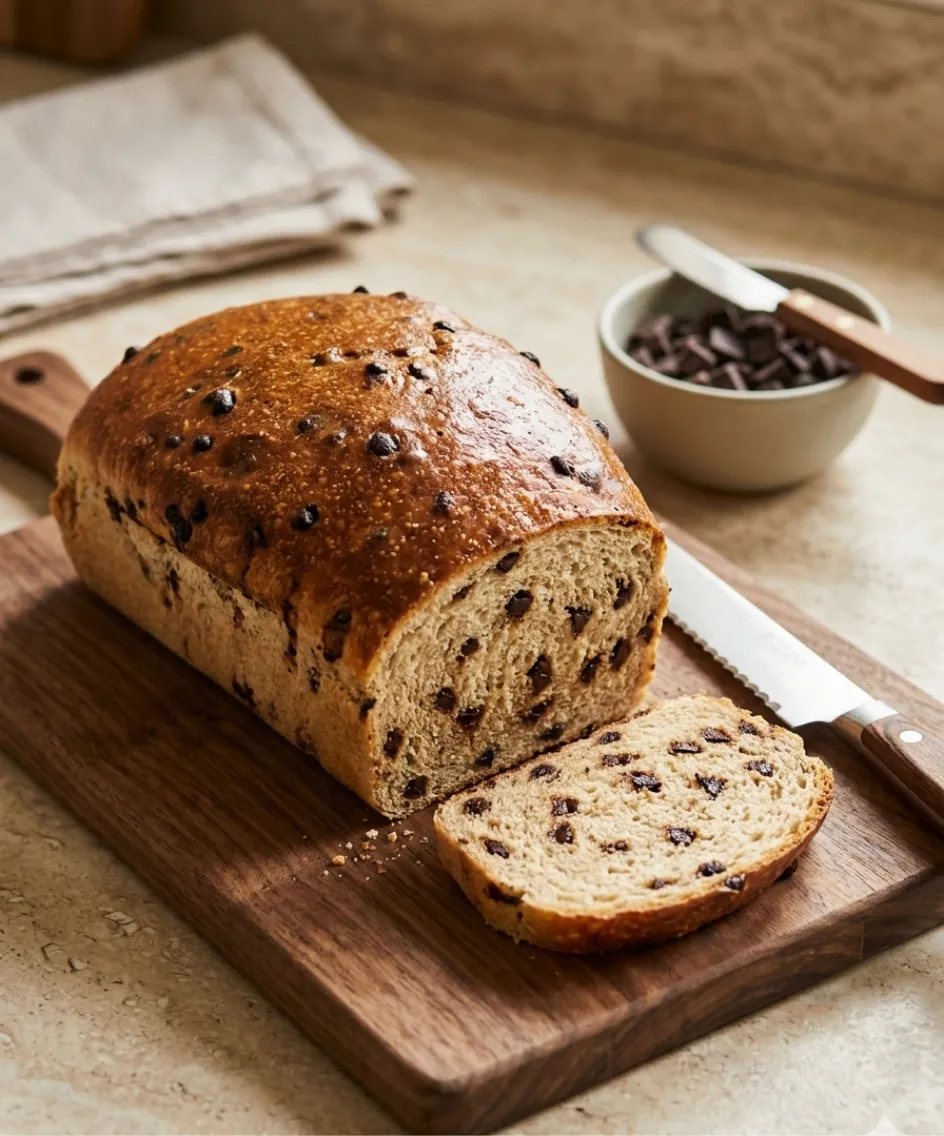
There’s something almost magical about sourdough bread when it comes out right. That crackly crust, the soft airy interior, and that slightly tangy aroma that fills the kitchen—it’s hard to beat. Now add chocolate chips into the mix, and you get a loaf that feels both rustic and indulgent at the same time.
I’ll be honest: the first time I tried chocolate chip sourdough, I wasn’t sure if the flavors would work. But they absolutely do. The tang of the sourdough balances the sweetness of the chocolate so well, and every slice feels like a little surprise—some bites more bready, some with melted chocolate pockets.
Ingredients
- 500g bread flour
- 100g active sourdough starter
- 350ml water
- 10g salt
- 80–120g chocolate chips
How to Make Chocolate Chip Sourdough Bread
Step 1: Mixing the base dough
Start by combining your active sourdough starter with water in a large bowl. Stir until it looks milky and evenly mixed. This step doesn’t need to be perfect—just make sure the starter is fully dispersed. I like using my hands here because I can feel when everything is properly combined.
Step 2: Forming the initial dough
Add the bread flour and mix until a rough, shaggy dough forms. It will look messy and slightly dry at first, but that’s completely normal. Once everything is incorporated, cover the bowl and let it rest for 30–45 minutes. This resting phase, called autolyse, helps the flour fully hydrate and makes the dough easier to work with later.
Step 3: Adding salt and building structure
After the rest, sprinkle in the salt and gently work it into the dough. You don’t need heavy kneading—just enough to distribute it evenly. The dough will start feeling smoother and more elastic as you go.
Step 4: Stretch and folds for strength
Now comes the part that really builds the structure of sourdough. Over the next 2–3 hours, perform stretch and folds every 30 minutes. To do this, grab one side of the dough, stretch it upward, and fold it over itself. Rotate the bowl and repeat. Do this 3–4 times per session.
You’ll notice the dough transforming from loose and sticky into something more cohesive and elastic. It’s honestly one of the most satisfying parts of bread making.
Step 5: Adding the chocolate chips
During the last stretch and fold, gently incorporate the chocolate chips. Try not to crush them or overwork the dough. I usually scatter them across the surface and fold carefully so they distribute in pockets rather than blending completely. That way, you get those little bursts of melted chocolate later.
Step 6: Bulk fermentation
Cover the dough and let it rise at room temperature for 4–6 hours. This stage is where the flavor develops. You’re looking for a dough that’s noticeably puffier, slightly jiggly, and airy to the touch. The timing can vary depending on room temperature, so go more by look and feel than the clock.
Step 7: Shaping the loaf
Turn the dough onto a lightly floured surface and gently shape it into a round or oval loaf. Try not to deflate it too much—you want to keep those air bubbles inside. Place it into a floured banneton or a bowl lined with a clean towel.
Step 8: Cold fermentation overnight
Cover the dough and refrigerate it for 8–12 hours. This slow, cold fermentation is what gives sourdough its deep flavor and beautiful crust. I’ve skipped this step before when impatient, and while the bread was still good, it definitely lacked that extra complexity.
Step 9: Baking the bread
Preheat your oven to 230°C (450°F) with a Dutch oven inside. This step is important—the hot pot helps create steam, which gives you that perfect crust.
Carefully place the cold dough into the hot Dutch oven. Bake covered for 20 minutes, then remove the lid and bake for another 20–25 minutes. The crust should turn a deep golden brown, and you might even see a few chocolate streaks peeking through.
Step 10: Cooling (the hardest part)
Let the bread cool completely before slicing. I know this is the most difficult step because the smell is incredible, but cutting too early can make the inside gummy. Give it at least an hour if you can.
Tips for the Best Chocolate Chip Sourdough
Use an active starter
Your starter should be bubbly and at its peak. If it’s weak, the dough won’t rise properly.
Don’t overmix the chocolate chips
If you mix too aggressively, the chocolate will smear into the dough. Gentle folding keeps those nice pockets intact.
Control fermentation, not the clock
Sourdough is more about observation than timing. Look for a dough that’s airy and slightly domed during bulk fermentation.
Try different chocolate types
Dark chocolate gives a richer, slightly bitter contrast, while milk chocolate makes the loaf sweeter and more dessert-like.
Storage and Serving
This bread is best eaten fresh, slightly warm if possible. The chocolate is soft and melty, and the crumb is at its most tender.
Store it wrapped in a clean kitchen towel or in a bread box for 2–3 days. For longer storage, slice and freeze it. You can toast slices straight from frozen, which actually brings the chocolate back to life beautifully.
I personally love this bread toasted with a little butter—the edges get crisp, the chocolate melts slightly, and it feels like something between breakfast and dessert.
Frequently Asked Questions
Can I use all-purpose flour instead of bread flour?
Yes, but the texture will be slightly softer and less chewy. Bread flour gives better structure for sourdough.
Why didn’t my dough rise much?
Most likely your starter wasn’t active enough or the room temperature was too cold. Sourdough is very sensitive to both.
Can I add more chocolate chips?
Absolutely, but don’t overdo it. Too many chips can weigh down the dough and affect fermentation.
Do I really need the overnight fridge step?
It’s highly recommended. The cold fermentation improves flavor, texture, and makes the dough easier to score and handle.
What’s the best way to get an open crumb?
Proper stretch and folds, a strong starter, and not overworking the dough during shaping all help create that airy structure.
This is one of those recipes that feels impressive but becomes easier every time you make it. Once you get comfortable with sourdough, adding chocolate feels like a small but brilliant upgrade that turns a classic loaf into something truly special.