
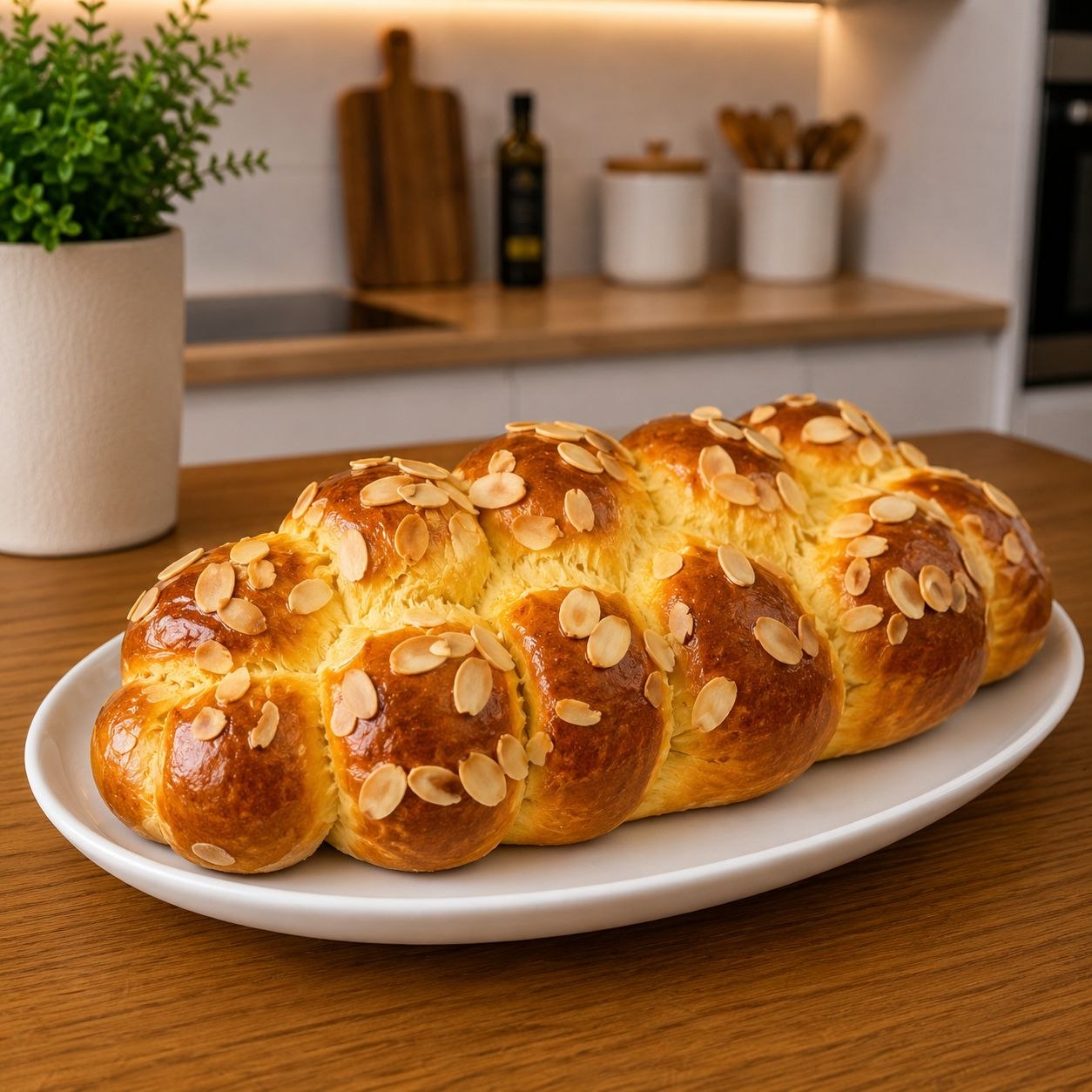
There’s something incredibly special about homemade Tsoureki fresh from the oven. The glossy golden crust, the delicate aroma of orange and warm spices, and that soft, stretchy texture inside make it one of the most comforting breads you can bake. Traditional Greek Tsoureki is more than just sweet bread—it’s part of family gatherings, holidays, and slow weekends where the kitchen smells warm for hours.
The first time I made Tsoureki, I remember being nervous about the braiding and the long rising time, but once I pulled those golden loaves from the oven, I understood why this bread has been loved for generations. The dough is rich yet light, slightly sweet, and beautifully fluffy with those signature stringy strands inside.
The Story Behind Traditional Greek Tsoureki
Tsoureki is a beloved Greek sweet bread traditionally baked during Easter celebrations, though many families enjoy it year-round with coffee or tea. What makes it unique is its texture—soft, airy, and slightly chewy all at once.
Classic Tsoureki is flavored with mahleb and mastic, two traditional ingredients that give it its unmistakable aroma. Even if you leave them out, the bread still tastes wonderful thanks to the butter, eggs, vanilla, and orange zest.
The braided shape isn’t just decorative either. It symbolizes togetherness and tradition, and honestly, it makes the loaf look stunning sitting on the table.
Ingredients You’ll Need for Authentic Tsoureki
This recipe makes 2 loaves.
For the Dough:
- 4 cups (500 g) all-purpose flour
- 1/2 cup (100 g) sugar
- 2 1/4 tsp active dry yeast
- 3/4 cup (180 ml) warm milk
- 2 eggs
- 1 egg yolk
- 1/2 cup (115 g) softened butter
- 1 tsp vanilla extract
- 1/2 tsp salt
- 1 tsp orange zest
- 1/2 tsp ground mahleb (optional)
- 1/4 tsp mastic powder (optional)
For the Topping:
- 1 egg beaten with 1 tbsp milk
- Sliced almonds
Preparing the Yeast Mixture for a Perfect Rise
Start by warming the milk gently. It should feel warm to the touch but not hot. If the milk is too hot, it can kill the yeast, and if it’s too cool, the dough may rise very slowly.
In a small bowl, combine the warm milk, yeast, and 1 tablespoon of sugar. Stir lightly and let it sit for about 10 minutes until it becomes foamy on top. This step tells you the yeast is active and ready to work.
I always love this stage because you can already smell that classic bakery scent starting to develop.
Mixing the Dough – Building Flavor and Texture
In a large mixing bowl, combine the flour, remaining sugar, salt, orange zest, mahleb, and mastic powder if using. Stir everything together well so the flavors distribute evenly throughout the dough.
Add the eggs, egg yolk, vanilla extract, softened butter, and the activated yeast mixture.
At first, the dough may look sticky and uneven, but keep going. Once everything comes together, transfer the dough to a lightly floured surface and knead for about 10 to 12 minutes.
The dough should become smooth, soft, and elastic. It’s slightly richer than regular bread dough because of the butter and eggs, so it may feel softer than you expect. Resist adding too much extra flour or the bread can become dense.
First Rise – Letting the Dough Become Light and Airy
Place the kneaded dough into a lightly greased bowl and cover it with a clean towel or plastic wrap. Leave it in a warm spot for 1.5 to 2 hours, or until doubled in size.
This part requires patience, but it’s worth it. The dough slowly develops flavor and structure during this time. If your kitchen is cool, the rise may take a little longer.
You’ll notice the dough becoming puffy and pillowy, almost alive under the towel.
Braiding the Tsoureki Like a Traditional Greek Baker
Once risen, gently punch down the dough and divide it into 3 equal portions. Roll each piece into a long rope.
Lay the ropes side by side and pinch them together at one end. Braid them carefully, crossing one rope over another until you reach the end. Tuck the ends underneath slightly for a neat finish.
Don’t worry if your braid isn’t perfect. Homemade Tsoureki always has a little character, and honestly, that’s part of its charm.
Place the braided loaf onto a parchment-lined baking tray.
Second Rise – The Secret to Soft and Fluffy Bread
Cover the braided dough loosely and let it rise again for about 1 hour. This second rise gives Tsoureki its light, fluffy texture.
The loaf should become noticeably puffier. If you gently press the dough with a fingertip, it should slowly spring back.
Skipping or rushing this step can lead to dense bread, so try to give it enough time.
Egg Wash and Almond Topping for a Glossy Finish
Before baking, brush the loaf gently with the egg wash mixture made from beaten egg and milk. This gives the bread its beautiful shiny golden crust.
Sprinkle sliced almonds generously over the top. As the bread bakes, the almonds toast slightly and add wonderful texture and aroma.
Baking Traditional Tsoureki to Golden Perfection
Bake the bread in a preheated oven at 175°C (350°F) for 30 to 35 minutes.
The loaf should turn a deep golden brown and your kitchen will smell absolutely incredible—sweet butter, citrus, and warm bread all at once.
If the top browns too quickly, loosely cover it with foil during the last 10 minutes of baking.
Once baked, let the Tsoureki cool before slicing. This can be the hardest part because the smell makes you want to cut into it immediately.
Texture, Flavor, and Aroma Notes
A good Tsoureki has a soft, fluffy interior with delicate strands that pull apart beautifully. The flavor is lightly sweet with hints of vanilla, orange, and warm spice.
The crust is glossy and slightly crisp at first, then softens as the bread rests. I actually think Tsoureki tastes even better the next day because the flavors settle and deepen overnight.
Helpful Tips for the Best Homemade Tsoureki
Use room-temperature ingredients whenever possible for smoother dough.
Knead thoroughly to develop the signature stretchy texture.
Avoid adding too much flour during kneading. The dough should stay soft.
Let the dough rise fully both times for the fluffiest result.
Store the bread tightly covered to keep it moist and tender.
Creative Variations to Try
Traditional Tsoureki is wonderful on its own, but there are plenty of delicious variations too.
You can add chocolate chips for a sweeter modern version or fill the braid with chocolate spread, sweet cream cheese, or cinnamon sugar before braiding.
Some people like adding raisins or chopped nuts for extra texture. You can even shape the dough into smaller individual braided buns instead of large loaves.
Serving and Storing Tsoureki
Tsoureki is delicious slightly warm with coffee, tea, or hot chocolate. It also makes incredible French toast the next day.
Store it tightly wrapped or in an airtight container at room temperature for up to 4 days. It stays surprisingly soft if covered properly.
You can also freeze slices and warm them gently before serving.
Nutrition Snapshot
Tsoureki is a rich, buttery bread made with eggs and milk, giving it a soft texture and satisfying flavor. It’s meant to be enjoyed slowly, often shared with family and friends during special moments.
Traditional Greek Tsoureki FAQ
Can I make Tsoureki without mahleb or mastic?
Yes. The flavor will be slightly different, but the bread will still taste delicious with vanilla and orange zest.
Why didn’t my dough rise properly?
Usually this happens if the yeast was inactive or the milk was too hot or too cold. Always check for foam in the yeast mixture before continuing.
Can I make the dough ahead of time?
Yes. After the first rise, you can refrigerate the dough overnight and continue the next day.
How do I keep Tsoureki soft?
Store it tightly wrapped once fully cooled. Exposure to air dries it out quickly.
Can I freeze Tsoureki?
Absolutely. Wrap it tightly in plastic wrap and freeze for up to two months.
Traditional Greek Tsoureki is one of those recipes that feels deeply rewarding from start to finish. From kneading the rich dough to smelling the sweet aroma filling the kitchen, every step feels comforting and meaningful. Once you bake your own loaf, it’s easy to understand why this beautiful braided bread has remained a treasured classic for generations.