
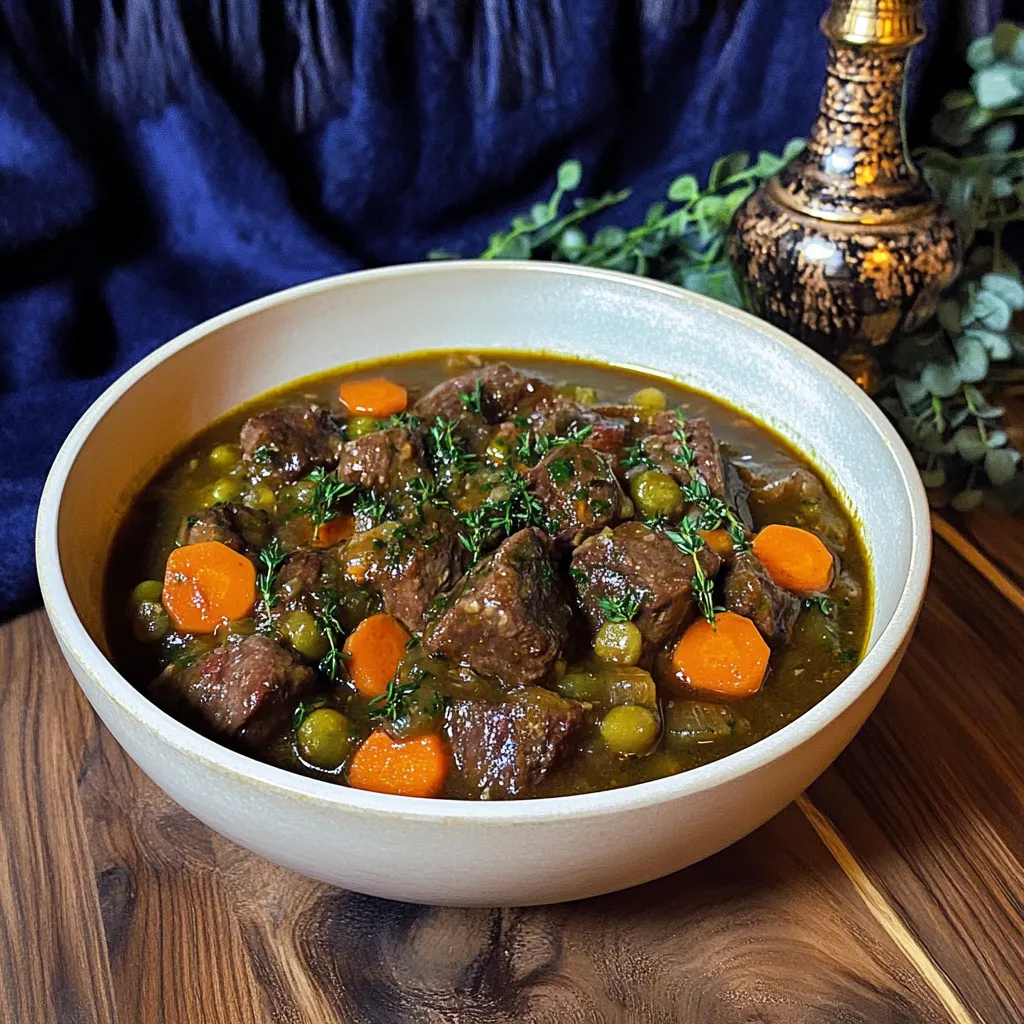
A Sweet Taste of Nostalgia – The Story Behind Juniper and Beer Beef Stew
There’s something timeless about a hearty beef stew simmering on the stove. The kind that fills the kitchen with a rich, meaty aroma and makes everyone gather around, hungry for a bowl. Juniper and Beer Beef Stew is one of those recipes that feels old-world, cozy, and satisfying all at once.
I first tried this recipe on a chilly evening, and I’ll never forget how the scent of juniper berries mingling with beer and slow-cooked beef transformed my kitchen. The flavors deepen the longer it simmers, giving you tender, melt-in-your-mouth beef, earthy vegetables, and a slightly boozy, aromatic richness that’s perfect with crusty bread. It’s the kind of stew that warms more than your stomach—it warms your soul.
What You’ll Need to Make This Hearty Stew
This recipe calls for simple, robust ingredients. The magic comes from combining beef, root vegetables, herbs, and beer in a slow-cooked pot.
Ingredients:
- 3 lb beef blade or chuck roast
- 2 tbsp olive oil, plus extra as needed
- 1 large onion, diced
- 3-4 carrots, diced
- 2-3 parsnips, diced
- 2 garlic cloves, minced
- 1 tbsp juniper berries, crushed
- 1 tbsp tomato paste
- 1 tbsp brown sugar
- 1 tbsp Worcestershire sauce
- 1 tsp kosher salt
- ½ tsp pepper
- 1 x 355 ml beer
- 2 cups beef broth, plus extra as needed
- 3-4 sprigs fresh parsley
- 3-4 sprigs fresh thyme
- 2 bay leaves
- ¼ cup all-purpose flour
- ⅓ cup water, or more beef broth
- ¼ cup chopped fresh parsley
Preparing Your Beef and Vegetables for Maximum Flavor
Start by trimming your beef, removing any large pieces of fat, and cutting it into roughly inch-sized chunks. Pat the pieces dry—this ensures a good sear. I always take a little extra time here because searing the beef properly makes a huge difference in flavor.
Dice your onion, carrots, and parsnips, making sure the pieces are uniform so they cook evenly. Mince the garlic and crush the juniper berries—freshly crushed juniper adds a piney, slightly citrusy aroma that’s characteristic of this stew.
Crafting the Flavor Base – Sautéing and Aromatics
Heat olive oil in a Dutch oven over medium-high heat. Sear the beef in batches until each piece is browned on all sides. Don’t overcrowd the pan—browning gives the stew a deep, rich flavor. Remove the beef to a plate and add more oil if needed.
Turn the heat to medium-low and add the diced onions. Sauté until they begin to brown, then add carrots and parsnips and cook a few minutes more. Add garlic, crushed juniper berries, tomato paste, brown sugar, Worcestershire sauce, salt, and pepper. Cook until fragrant, letting the aroma fill your kitchen. I love how the tomato paste caramelizes slightly and coats the vegetables, building depth for the stew.
Deglazing and Building the Stew
Turn the heat back up to medium-high and pour in the beer, scraping up any browned bits from the bottom of the pot. This step is key—it incorporates all the concentrated flavor from the seared beef. Return the beef along with its juices to the pot.
Tie parsley, thyme, and bay leaves into a bouquet garni and add it to the pot. Pour in beef broth until the beef is just covered. Bring the stew to a gentle simmer, cover, and reduce the heat to low. Skim off any foam that rises to the top. Let it cook on very low until the beef is tender—this slow cooking ensures the meat is fall-apart soft while the vegetables are infused with rich flavors.
Tips for Even Cooking and Perfectly Tender Beef
- Sear the beef properly. A golden crust adds flavor and texture.
- Low and slow is key. Simmering gently keeps the beef tender and the broth clear.
- Don’t rush skimming. Removing foam and excess fat keeps the stew from tasting greasy.
- Uniform vegetable size. This ensures even cooking and prevents some pieces from becoming mushy while others are undercooked.
Thickening and Finishing Your Stew
Once the beef is tender, skim off any excess fat. Bring the stew to a boil. Mix the flour with water to create a smooth slurry, then stir it into the boiling stew. Continue boiling until the stew thickens to a rich, hearty consistency. Finally, stir in the chopped parsley for freshness and color. I love how the bright green pops against the dark, savory sauce.
Serving and Storing Your Hearty Stew
Serve this stew piping hot, ideally with rustic bread or creamy mashed potatoes to soak up every drop of the sauce. It’s even better the next day—the flavors continue to meld beautifully.
Store leftovers in an airtight container in the refrigerator for up to four days, or freeze for longer storage. Reheat gently to keep the beef tender and the vegetables intact.
Creative Ways to Enjoy Juniper and Beer Beef Stew
This stew is versatile. Add mushrooms or turnips for extra earthy notes, or serve it over buttered noodles for a filling meal. I sometimes sprinkle a little fresh thyme on top right before serving—it elevates the presentation and flavor. Leftovers also make a fantastic filling for pies or savory pastries.
Variations to Try – From Different Herbs to Stout or Ale
Experiment with the beer—dark ales add a deeper richness, while lighter lagers create a more delicate flavor. Swap some root vegetables for parsnip or celery root to change the texture slightly. If you like a bit of sweetness, a touch of maple syrup or honey complements the juniper beautifully.
Nutrition Snapshot – Hearty, Filling, and Wholesome
This stew is packed with protein, vitamins from the root vegetables, and iron from the beef. It’s a nutrient-dense, warming meal perfect for colder months. While it’s rich in flavor, the long cooking time and simple ingredients make it a wholesome comfort dish without unnecessary additives.
Sweet Questions Answered – Your Beef Stew FAQ Corner
Can I use a different cut of beef?
Yes, chuck or blade roast works best due to the marbling and connective tissue, which break down into tenderness.
What if I don’t have juniper berries?
You can omit them, but the piney, slightly citrusy note is distinctive. Crushed rosemary or a pinch of allspice can provide a subtle alternative.
How long should the stew simmer?
Simmer low and slow for at least 2-3 hours, or until the beef is tender and the vegetables are cooked through.
Can I make this in a slow cooker?
Absolutely. Sear the beef first, then combine all ingredients in a slow cooker and cook on low for 6-8 hours.
How do I thicken the stew without flour?
You can mash a few cooked vegetables into the broth or use cornstarch mixed with cold water.
This Juniper and Beer Beef Stew is a celebration of rich, rustic flavors. Every simmering pot fills your kitchen with warmth and invites people to linger at the table, savoring the comforting taste of home-cooked goodness.