
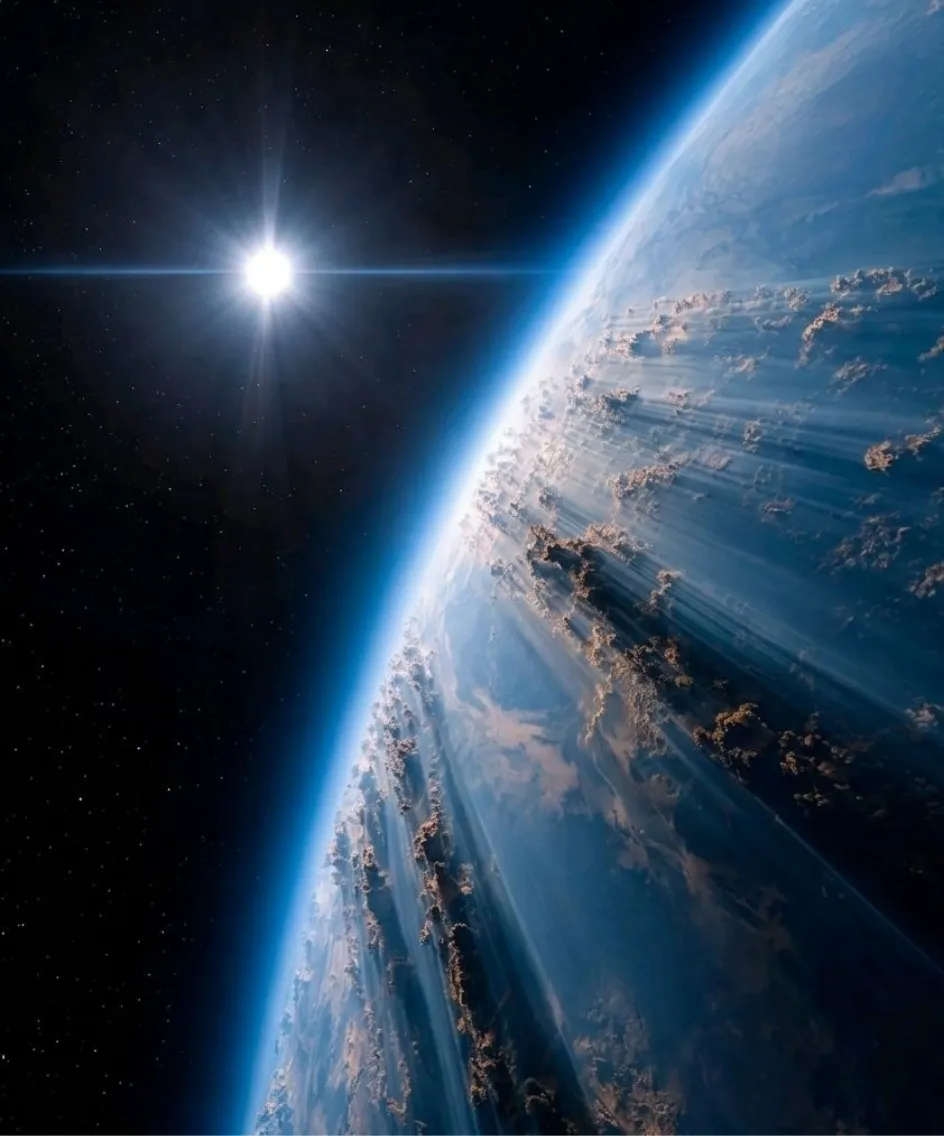
There is something deeply unsettling and mesmerizing about witnessing a moment that feels forbidden, as if it exists outside the boundaries of ordinary human experience. From space, a sunrise is not just the beginning of a new day—it is a cosmic event unfolding in silence. As the first light breaks over the curve of the Earth, shadows stretch across continents like a slow, unstoppable wave. For a brief moment, the planet no longer feels like a place we live on, but like something alive—something that breathes.
From the ground, sunrise is gentle, almost intimate. It filters through windows, warms the skin, and quietly replaces darkness with light. But from orbit, the perspective changes everything. The illusion of stillness disappears, revealing the truth: it is not the Sun that rises, but the Earth that turns. This rotation becomes visible in a way that feels almost surreal, as the boundary between night and day—known as the “terminator line”—moves steadily across the surface.
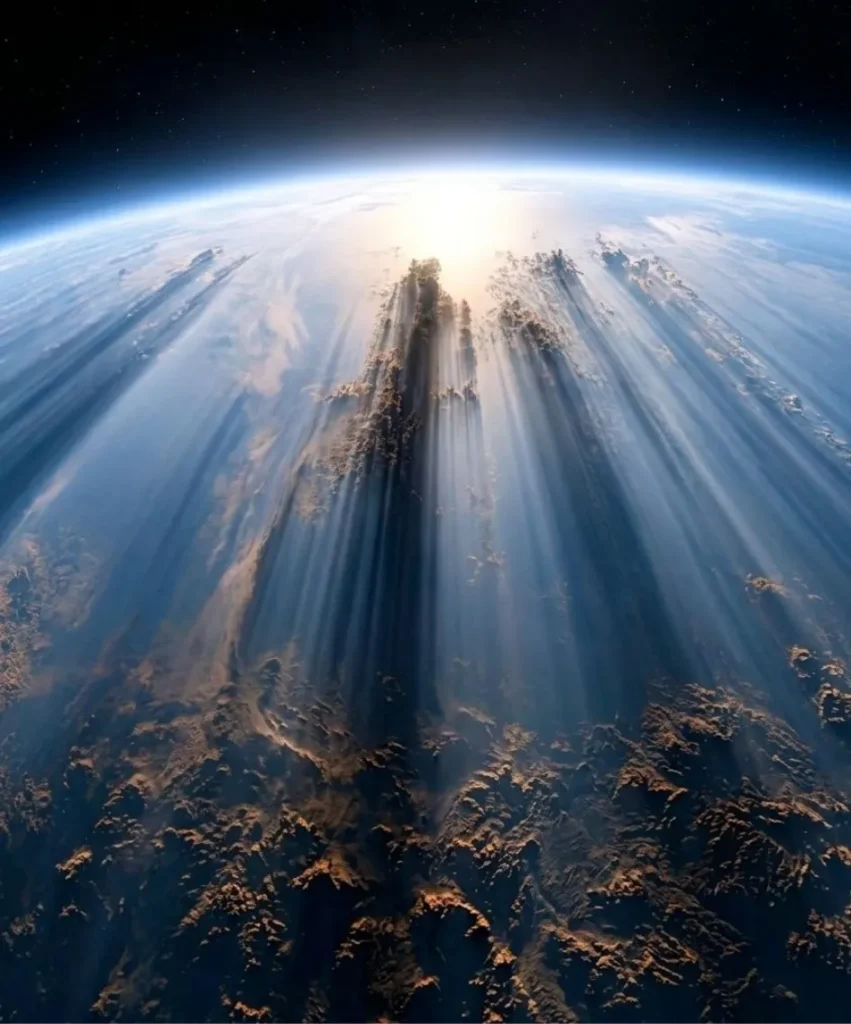
This line is not sharp or rigid. Instead, it bends and flows, wrapping around mountains, oceans, and cities. Entire regions transition from darkness to light within minutes. Artificial lights flicker and fade as sunlight overtakes them, while clouds catch the early glow, painting the atmosphere in gradients of orange, gold, and deep blue. It is as if a curtain is being lifted, revealing the hidden details of the world below.
What makes this phenomenon even more powerful is its scale. From space, you can watch entire continents awaken at once. Shadows stretch across deserts, forests, and coastlines, creating patterns that are impossible to perceive from the ground. The movement is slow enough to feel deliberate, yet fast enough to remind you that time, on a planetary scale, is always in motion.
For a few seconds, something extraordinary happens. The Earth seems to pulse with light and darkness, like the rise and fall of a breath. This illusion is born from the gradual transition of illumination, combined with the vastness of the view. It triggers a strange emotional response—a mix of awe, insignificance, and connection. You realize that every sunrise you have ever seen is just a tiny fragment of a much larger, more complex rhythm.
Astronauts often describe this experience as transformative. Seeing the planet from this perspective dissolves borders and redefines identity. There are no countries, no divisions—only a shared home moving through the darkness of space, illuminated by a distant star. The sunrise becomes more than a visual event; it becomes a reminder of unity and fragility.
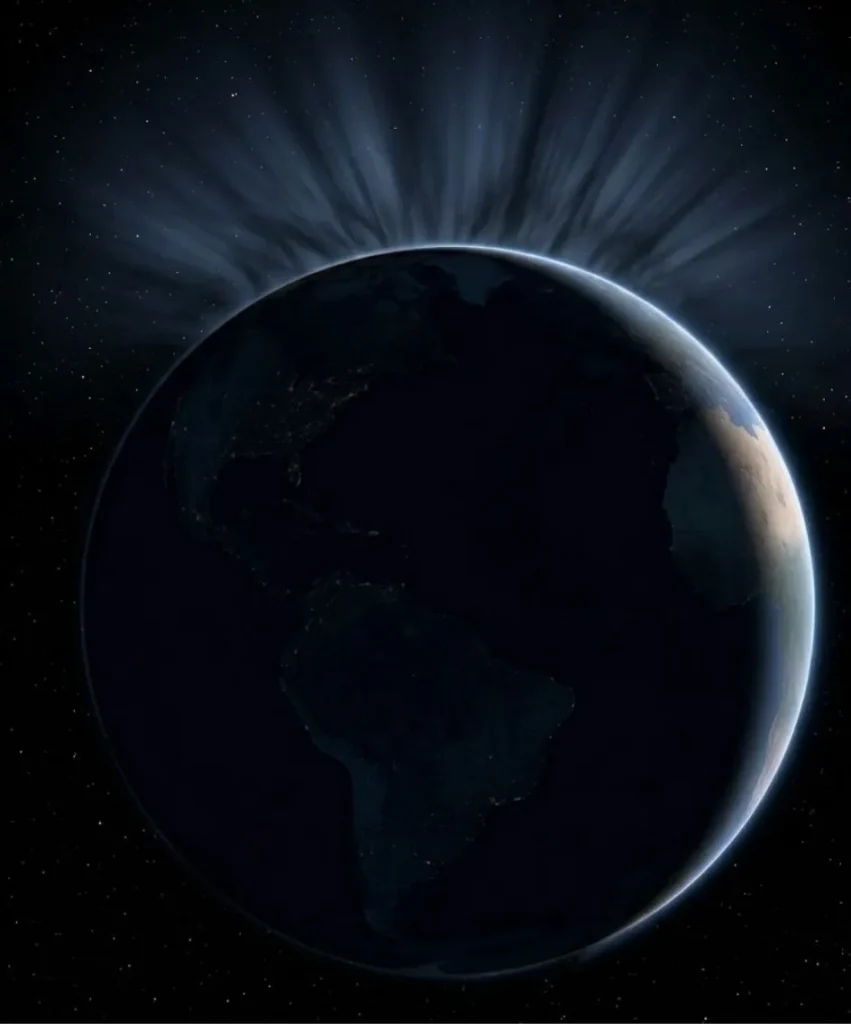
There is also a quiet paradox in this moment. It feels both fleeting and eternal. The specific sunrise you witness will never happen again in exactly the same way, yet the process itself has been repeating for billions of years. Every rotation brings a new wave of light, a new “breath” of the planet, continuing an ancient cycle that predates humanity and will likely outlast it.
To witness a sunrise from space is to see the Earth in a way few ever will—not as a backdrop to our lives, but as a living, moving presence. In those brief seconds when light and shadow sweep across the globe, the world feels unreal, almost dreamlike. And yet, it is profoundly real.
Maybe we’re not supposed to see it this way.
But when we do, even for a moment, it changes how we understand everything—our place, our time, and the fragile, beautiful planet we call home.