
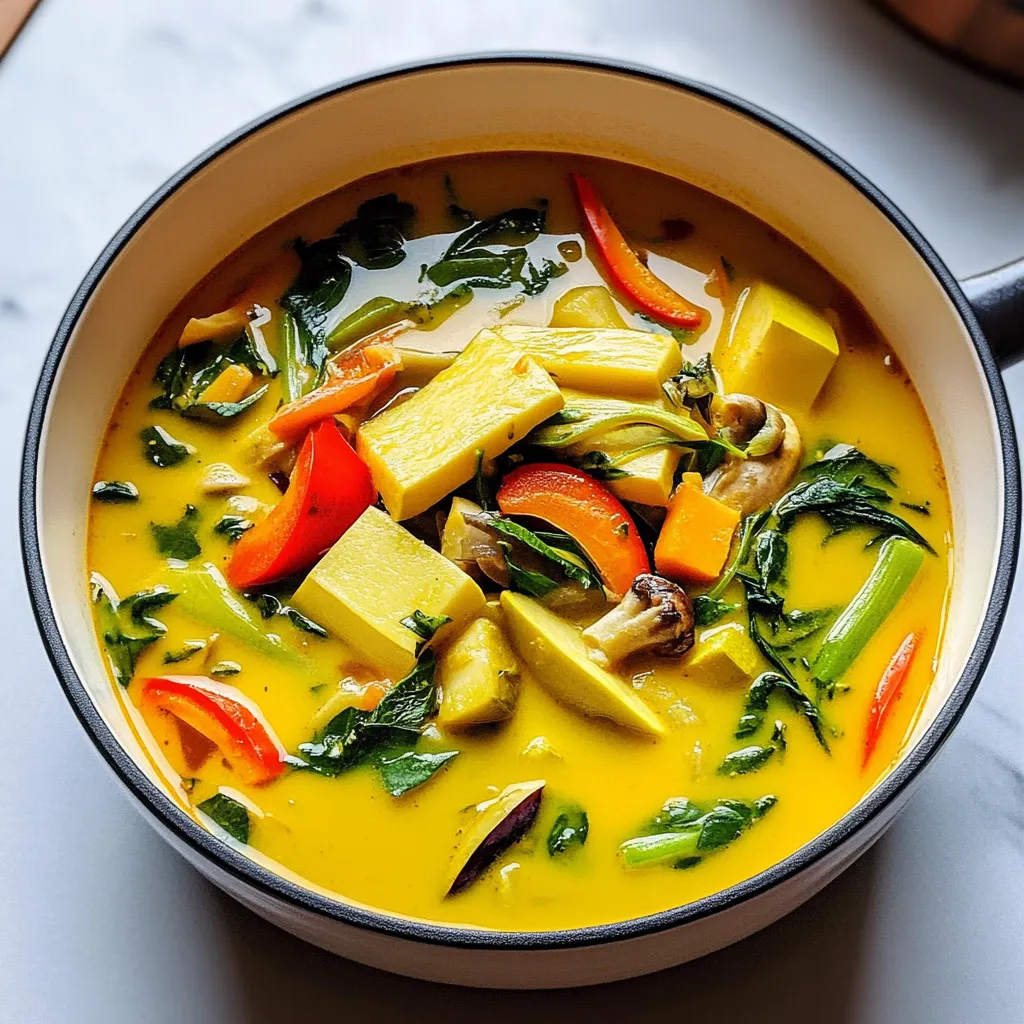
A Warm Introduction to Thai-Inspired Vegetable Soup
This Thai Vegetable Soup is one of those recipes I come back to again and again, especially when I want something nourishing but full of bold flavor. It’s comforting without being heavy, vibrant without being complicated. The moment ginger, garlic, and lemongrass hit the pot, you’ll notice the aroma instantly—it’s fresh, earthy, and deeply inviting.
I love how this soup feels both cozy and energizing. It’s the kind of meal that warms your hands as you hold the bowl, yet tastes light and clean with every spoonful. Whether you’re cooking for yourself or sharing with others, this soup has a way of making the kitchen feel calm and alive at the same time.
What You’ll Need for This Flavor-Packed Soup
This recipe relies on fresh vegetables, warming spices, and creamy coconut milk to build layers of flavor. Everything is easy to find, and the ingredient list looks longer than it feels once you start cooking.
Ingredients:
- 3 Tbsp neutral cooking oil, divided
- 1 yellow onion, finely chopped
- 1 red bell pepper, thinly sliced
- 1 large carrot, finely chopped
- 5 oz shiitake mushrooms, sliced or torn
- 1 tsp kosher salt, divided
- 2 Tbsp minced fresh ginger
- 1 Tbsp minced fresh garlic
- 1 Tbsp lemongrass paste
- 1 Tbsp curry powder
- 1 tsp ground coriander
- 1 tsp ground turmeric
- 6 cups vegetable broth
- 1 can coconut milk
- 2 heads baby bok choy, stemmed and quartered
- 1 block firm tofu, drained, pressed, and cubed
- 1/4 cup fresh chopped basil leaves
- 1 to 2 Tbsp fresh lime juice
- Cooked jasmine rice, optional for serving
Building the Flavor Base with Vegetables and Aromatics
Start by heating the oil in a large pot over medium heat. Add the chopped onion, sliced bell pepper, and carrot, and cook them gently until they begin to soften. This step sets the foundation for the soup, so don’t rush it. The vegetables should look glossy and smell slightly sweet.
Next, add the shiitake mushrooms and cook while stirring until they turn golden and release their moisture. Sprinkle in half of the salt at this stage. The mushrooms deepen the flavor, adding a savory, almost meaty note that makes this soup especially satisfying.
Spices, Broth, and Coconut Milk – Creating Depth
Once the vegetables are softened, stir in the ginger, garlic, lemongrass paste, curry powder, coriander, and turmeric. Let everything cook for about a minute, just until fragrant. This is one of my favorite moments—the spices bloom in the oil, and the kitchen suddenly smells incredible.
Pour in the vegetable broth and coconut milk, scraping the bottom of the pot to release any browned bits. Those little bits carry so much flavor. Stir gently until the soup looks creamy and unified.
Simmering to Perfection with Bok Choy and Tofu
Add the baby bok choy, cubed tofu, and the remaining salt. Bring the soup to a gentle simmer and let it cook uncovered until the vegetables are tender and the flavors have melded together. The tofu absorbs the broth beautifully, and the bok choy stays tender with just a slight bite.
Try not to boil the soup aggressively here—slow simmering keeps the coconut milk smooth and prevents the vegetables from overcooking.
Finishing Touches That Brighten the Bowl
Once the soup is done simmering, remove it from the heat and stir in the fresh basil and lime juice. This final step wakes everything up. The lime adds brightness, and the basil brings a fresh, slightly sweet herbal note that balances the richness of the coconut milk.
Taste and adjust seasoning if needed. Sometimes I add an extra squeeze of lime, depending on how bold I want the flavor that day.
Serving and Storing Thai Vegetable Soup
This soup is wonderful on its own, but serving it with a scoop of cooked jasmine rice makes it extra comforting and filling. I like to ladle the soup over the rice so it soaks up all that fragrant broth.
For storage, let the soup cool completely, then transfer it to an airtight container. It keeps well in the refrigerator for up to four days. The flavors actually deepen overnight, making leftovers even better.
Simple Variations to Make It Your Own
This recipe is flexible, which is part of why I love it. You can swap tofu for chickpeas, add sliced zucchini or snow peas, or stir in a spoonful of red curry paste for extra heat.
If you enjoy spice, a drizzle of chili oil or a pinch of crushed red pepper flakes at the end adds a gentle kick. For a heartier version, add rice noodles directly to the soup and simmer until tender.
Nutrition Notes and Feel-Good Benefits
This Thai Vegetable Soup is packed with vegetables, plant-based protein, and warming spices. Coconut milk provides healthy fats that make the soup satisfying, while ginger and turmeric add both flavor and traditional wellness benefits. It’s a balanced, nourishing meal that feels indulgent without being heavy.
Cozy Questions Answered – Thai Vegetable Soup FAQ
Can I make this soup ahead of time?
Yes, it’s perfect for meal prep. The flavors deepen as it rests, making it even tastier the next day.
Can I freeze this soup?
You can, but keep in mind that coconut milk may change texture slightly when frozen. Stir well when reheating.
What can I use instead of tofu?
Chickpeas, edamame, or even thinly sliced tempeh work well.
Is this soup spicy?
It’s mild as written. You can easily adjust the heat with chili paste or fresh chilies.
Can I use light coconut milk?
Yes, though the soup will be less creamy. Full-fat coconut milk gives the richest texture.
This Thai Vegetable Soup is one of those recipes that feels like a warm hug in a bowl. Once you make it, I have a feeling it’ll become a regular in your kitchen too.