
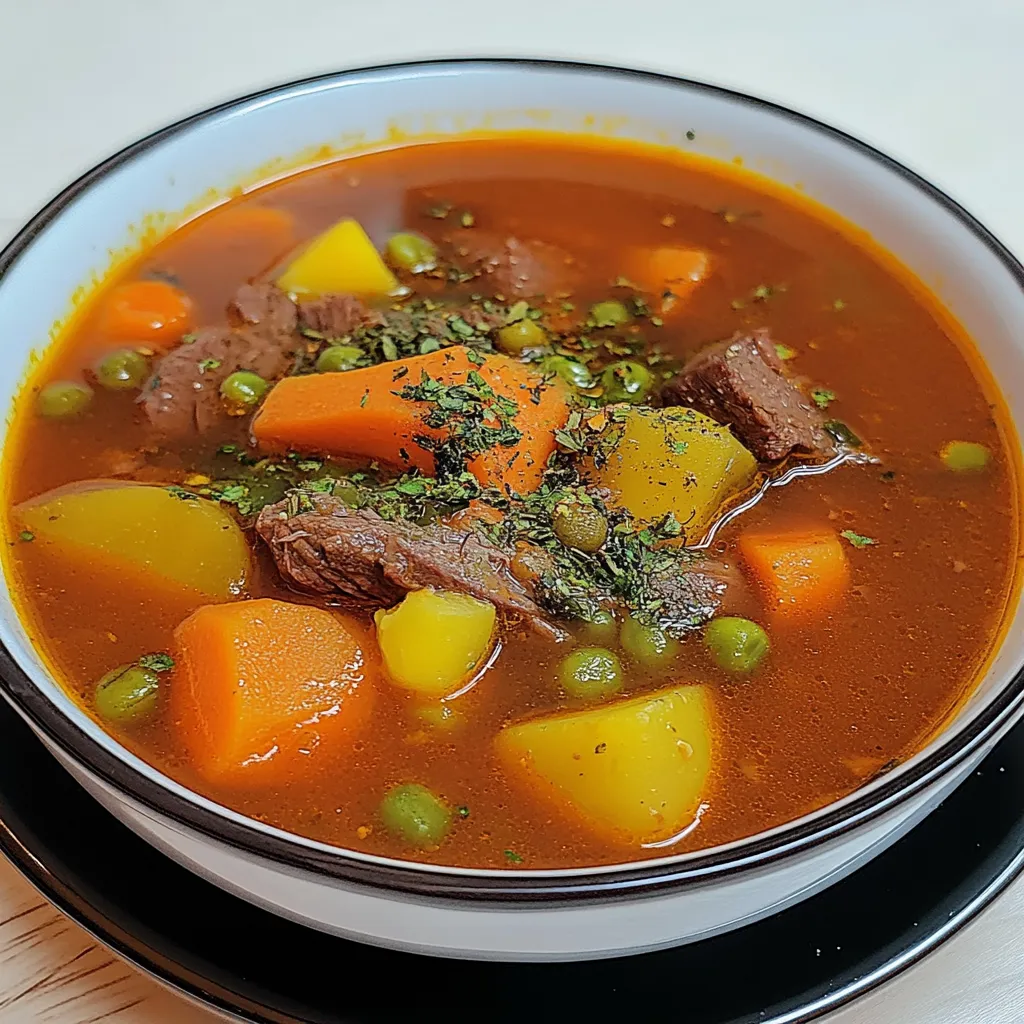
There are certain recipes that feel like a warm blanket in a bowl, and slow-cooked beef vegetable soup is definitely one of them. It’s the kind of meal that fills your kitchen with comforting aromas while it simmers gently on the stove. The rich smell of beef, garlic, herbs, and vegetables slowly blending together always reminds me of simple family dinners where everyone gathered around the table hungry.
What I really love about this soup is how humble the ingredients are. Nothing fancy, just good vegetables, tender beef, and a flavorful broth that develops depth as it cooks. Give it time to simmer and you’ll be rewarded with a thick, hearty soup that tastes like it took all day to make.
Why This Slow-Cooked Beef Vegetable Soup Works So Well
This soup is all about balance. The beef adds richness and protein, the vegetables bring natural sweetness and texture, and the herbs tie everything together with a gentle savory aroma.
It’s also incredibly forgiving. If you have extra vegetables in the fridge, they usually fit right in. The longer it simmers, the more flavorful it becomes, which is why this recipe always feels like a reliable comfort food classic.
Ingredients You’ll Need
This recipe makes about 4 to 5 generous servings.
- 1 lb beef stew meat
- 1 tablespoon olive oil
- 1 small onion, chopped
- 3 cloves garlic, minced
- 2 carrots, diced
- 2 potatoes, diced
- 1/2 cup peas
- 1/2 cup celery, chopped (optional)
- 1 cup tomato sauce
- 4 cups beef broth
- 1 teaspoon dried oregano
- 1 teaspoon dried parsley
- 1/2 teaspoon paprika
- Salt and black pepper to taste
Step-by-Step Cooking Instructions
Start by heating the olive oil in a large pot over medium heat. Once the oil is warm, add the beef stew meat. Let it cook for several minutes, turning occasionally so it browns on all sides. Browning the meat is important because those caramelized bits add a deep, savory flavor to the soup.
Next, add the chopped onion and minced garlic to the pot. Stir them around with the beef and cook for about two to three minutes. You’ll start to smell the garlic right away, and the onion should soften slightly.
Now add the diced carrots, potatoes, peas, and celery if you’re using it. Give everything a good stir so the vegetables begin to mingle with the beef and onions.
Pour in the tomato sauce and beef broth. As soon as the liquid hits the pot, it lifts all the flavorful browned bits from the bottom, which makes the broth richer.
Sprinkle in the oregano, parsley, paprika, salt, and black pepper. Stir well so the herbs spread throughout the soup.
Bring the pot to a gentle boil, then lower the heat to a simmer. Let the soup cook uncovered or partially covered for about 40 to 60 minutes. During this time the beef becomes tender, the vegetables soften, and the broth thickens slightly.
I usually give it a stir every once in a while just to make sure nothing sticks to the bottom. The aroma that fills the kitchen during this stage is one of my favorite parts.
Once the beef is tender and the vegetables are cooked through, taste the soup and adjust the seasoning if needed. Sometimes a pinch more salt or pepper brings everything together.
Serve the soup warm in bowls and sprinkle fresh herbs on top if you have them.
Texture, Flavor, and Aroma Notes
This soup has a beautiful hearty texture. The beef becomes tender and almost melts in your mouth, while the carrots and potatoes stay soft but still hold their shape.
The broth is savory with a slight richness from the tomato sauce, and the herbs add a subtle warmth that ties everything together. You’ll notice the smell of garlic and beef first, followed by the comforting aroma of simmered vegetables.
It’s the kind of soup that tastes even better after it rests for a bit.
Helpful Tips for the Best Soup
Take time to brown the beef well before adding liquids. This step builds the foundation of flavor.
Cut the vegetables into similar sized pieces so they cook evenly.
If the soup becomes too thick while simmering, simply add a splash of extra broth or water.
For deeper flavor, let the soup simmer closer to an hour rather than the shorter time.
Easy Variations to Try
This soup is easy to adapt based on what you have available. You can add green beans, corn, or zucchini for extra vegetables. Some cooks like to add barley or small pasta to make the soup even heartier.
If you enjoy a bit of spice, a pinch of chili flakes works nicely with the tomato broth. For a richer flavor, a small splash of Worcestershire sauce can add depth as well.
Serving and Storage
Serve this slow-cooked beef vegetable soup with warm bread, crusty rolls, or even a slice of toasted garlic bread. The broth is perfect for dipping.
Leftovers store very well. Keep the soup in an airtight container in the refrigerator for up to four days. In fact, the flavors often become even better the next day.
To reheat, simply warm it gently on the stove over medium-low heat until hot.
You can also freeze the soup for up to three months. Just allow it to cool completely before placing it in freezer-safe containers.
Nutrition Snapshot
This soup is naturally balanced with protein from the beef, fiber from the vegetables, and a flavorful broth that keeps it satisfying without being too heavy. It’s a wholesome meal that works well for lunch or dinner.
Slow-Cooked Beef Vegetable Soup FAQ
Can I make this soup in a slow cooker?
Yes, you can brown the beef first, then place everything in a slow cooker and cook on low for about 6 to 8 hours.
What cut of beef works best?
Stew meat, chuck roast, or any cut that becomes tender with slow cooking works well.
Can I add more vegetables?
Absolutely. This soup is very flexible, so feel free to include vegetables like green beans, corn, or cabbage.
How do I thicken the soup?
If you prefer a thicker soup, let it simmer uncovered a little longer so some liquid reduces.
Can I make it ahead of time?
Yes, and it often tastes better the next day because the flavors continue to develop.
A bowl of slow-cooked beef vegetable soup is simple, hearty, and deeply comforting. It’s one of those reliable recipes that warms you from the inside out and makes your kitchen smell amazing while it cooks. Once you make it, you’ll probably find yourself coming back to it whenever you want a cozy homemade meal.