
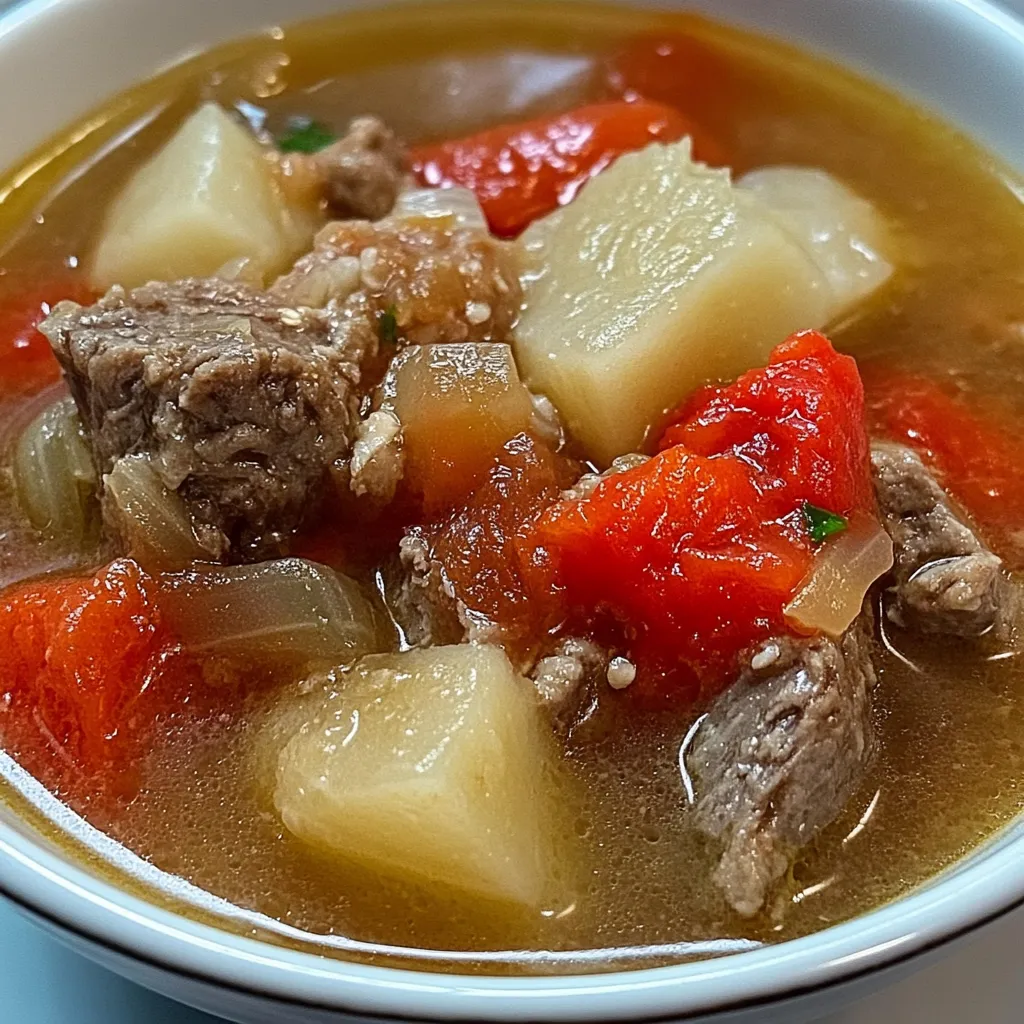
Luo Song Tang is one of those comforting soups that feels both familiar and unique at the same time. It’s often called Chinese Borscht, and while it has roots inspired by Russian soup traditions, it has evolved into a deeply loved home-style dish across many Chinese kitchens. What makes it special is the balance: tender beef, soft potatoes, and sweet-tangy tomatoes simmered into a rich, savory broth that warms you from the inside out.
I love how the kitchen slowly fills with the smell of simmering beef and tomatoes. It’s not flashy cooking, but it’s the kind that feels patient and rewarding. The longer it cooks, the better it gets.
What You’ll Need for Luo Song Tang
This soup uses simple, everyday ingredients, but the flavor becomes much more than the sum of its parts.
- 1 lb beef (brisket, shank, oxtail, or stew chunks)
- 2 tbsp cooking oil
- 8 garlic cloves, crushed
- 2 medium white onions, roughly sliced
- 1 large russet potato, cut into 1-inch cubes
- 1 lb tomatoes, cut into wedges
- ¼ cup rice wine (michiu)
- 2 tbsp tomato paste (optional but recommended)
- 1 tbsp sugar
- Salt to taste
Preparing and Blanching the Beef for a Clean Broth
Start by placing the beef in a pot and covering it with cold water. Bring it to a boil and let it cook briefly. You’ll notice foam and impurities rising to the top—this is completely normal. Skim it off carefully to keep the broth clean and clear.
Once blanched, drain the beef and set it aside. This step makes a big difference in the final soup, giving it a cleaner taste without heaviness.
Building the Aromatic Base with Garlic, Onion, and Tomato
Heat oil in a large pot or deep pan over high heat. Add the crushed garlic, half of the onions, and half of the tomatoes. Stir everything together until the tomatoes start to soften and break down slightly.
Then add the blanched beef and stir-fry for a few minutes. This step helps develop deep flavor early on—you’ll notice the aroma becoming richer and slightly sweet from the caramelizing tomatoes and onions.
Slow Simmering the Soup for Deep Flavor
Transfer everything into a large soup pot. Add the rice wine and bring it to a boil. Once boiling, reduce the heat and let it simmer gently for about 60 minutes.
During this time, the beef slowly becomes tender, and the broth starts developing a soft tomato-rich base. It’s not a rushed process, but that’s exactly what makes this soup so comforting.
Adding Potatoes and Layering the Flavor
Once the beef has started to soften, add the cubed potatoes. Let them simmer until tender, absorbing all the savory broth. The potatoes help thicken the soup slightly and make it more filling.
At this stage, the kitchen smells warm and slightly sweet, with the tomatoes melting into the broth.
Finishing with Fresh Tomatoes, Onions, and Seasoning Balance
Now add the remaining onions and tomatoes, along with tomato paste if using. Stir gently and let everything simmer again until the flavors come together and the beef becomes fully tender.
Add sugar to balance the acidity of the tomatoes—it doesn’t make the soup sweet, just smoother and more rounded. Taste and adjust with salt at the end.
Final Seasoning and Serving the Soup Hot
Once everything is soft, rich, and well combined, give the soup a final taste and adjust seasoning if needed. The broth should be slightly tangy, savory, and deeply comforting, with tender beef and soft vegetables in every spoonful.
Serve it hot in bowls, ideally with steamed rice or fresh bread on the side. I personally love how the broth soaks into rice—it makes the whole meal even more satisfying.
Flavor, Texture, and Cooking Experience Notes
This soup has a beautiful balance of textures. The beef becomes soft and rich, the potatoes turn tender but still hold shape, and the tomatoes melt into the broth, creating a naturally thick and slightly tangy base.
What I enjoy most is how the flavor changes over time. On day one, it tastes bright and fresh. On day two, it becomes deeper and even more comforting.
Helpful Tips for Best Luo Song Tang
Use beef cuts with some fat or connective tissue like brisket or shank for better richness.
Don’t skip blanching the beef—it keeps the soup clean and less oily.
Let the soup simmer slowly; high heat can make the meat tough.
If you prefer a thicker broth, mash a few potato cubes into the soup before serving.
Variations You Can Try
You can add carrots for extra sweetness or cabbage for a softer vegetable profile. Some versions include celery for a more aromatic broth.
If you want a stronger tomato flavor, increase the tomato paste slightly. For a lighter version, reduce it and let fresh tomatoes do the work.
You can also make it slightly spicier with a pinch of white pepper or chili oil at serving time.
Serving and Storage
Serve Luo Song Tang hot, ideally with rice or crusty bread. It’s the kind of soup that feels even better when shared at the table.
Store leftovers in the fridge for up to 3 days. The flavor actually improves overnight as the beef and tomatoes continue to meld. Reheat gently on the stove for best results.
Nutrition Snapshot
This soup is rich in protein from the beef, vitamins from tomatoes and onions, and energy from potatoes. It’s a balanced, hearty dish that works well as a full meal, especially on cooler days when you want something warming and nourishing.
Luo Song Tang FAQ
Can I use a different cut of beef?
Yes, brisket, shank, or oxtail all work well. The key is choosing a cut that becomes tender with slow cooking.
Do I have to use rice wine?
It adds depth and aroma, but you can skip it if needed or replace it with a small splash of vinegar diluted in water.
Why add sugar to the soup?
The sugar balances the acidity of the tomatoes and creates a smoother, more rounded flavor.
Can I make this in a pressure cooker?
Yes, you can reduce cooking time significantly, but the slow simmer method gives a more developed flavor.
Is this soup supposed to be thick or light?
It’s naturally medium-bodied, but you can adjust thickness by mashing some potatoes or adding more broth depending on your preference.
Luo Song Tang is one of those soups that feels simple at first glance but reveals more depth with every spoonful. It’s warm, comforting, and perfect for sharing, especially when you want something homemade and full of heart.