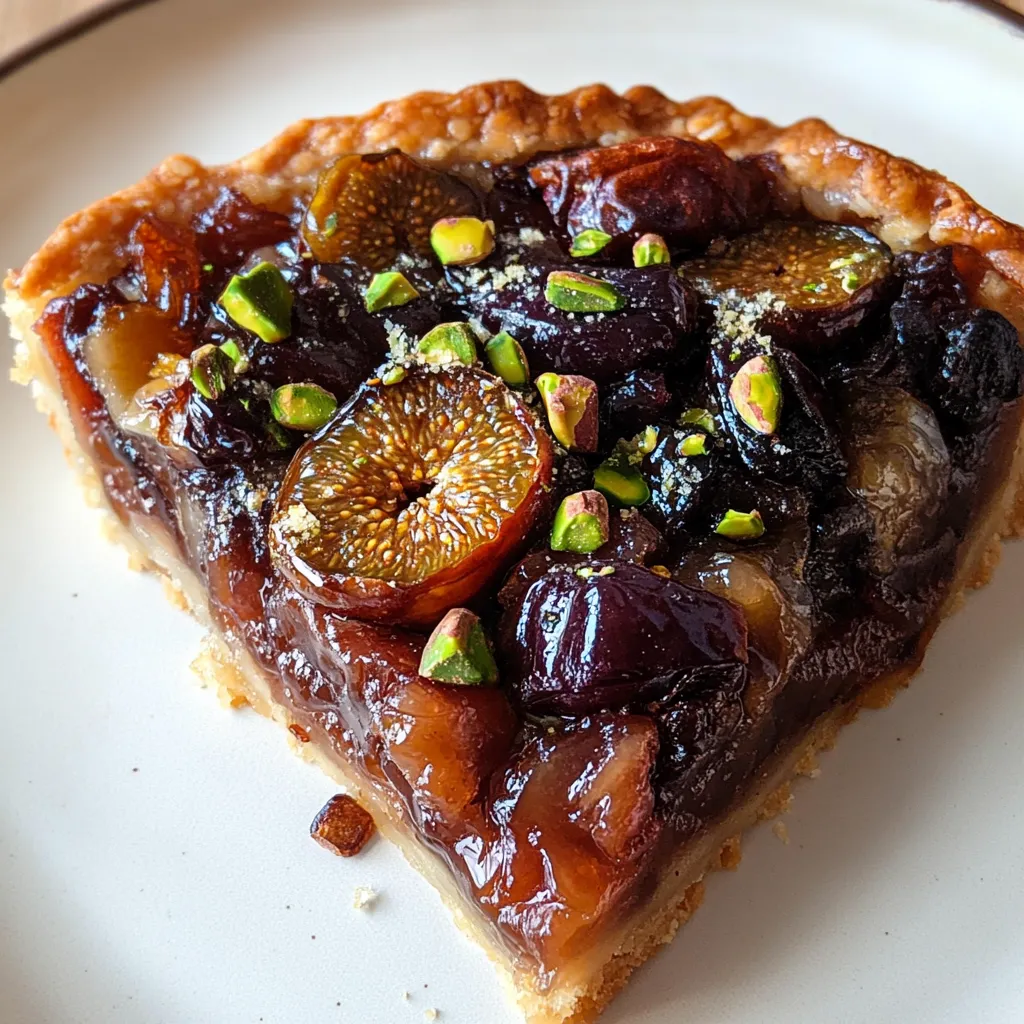
There’s something almost dramatic about flipping a tarte tatin onto a plate and revealing glossy caramelized fruit underneath. This Salted Honey & Pistachio Fig Tarte Tatin is one of those desserts that feels like it belongs in a French countryside kitchen, yet it’s surprisingly simple to make at home.
The combination of soft figs, buttery puff pastry, warm brown sugar caramel, and the final drizzle of honey with crunchy pistachios is honestly unforgettable. You get silky, jammy fruit, crisp pastry edges, and that little hit of salt that makes everything pop. It’s the kind of dessert that makes people go quiet for a second after the first bite.
Salted Honey & Pistachio Fig Tarte Tatin – The Story Behind the Dessert
What I love about tarte tatin is its rustic nature. It doesn’t try to be perfect. In fact, it looks even better when it’s a little uneven and caramel drips down the sides. This fig version adds a more elegant twist with honey and pistachios, which bring richness and texture.
Figs naturally become jammy when cooked, almost melting into the caramel, and the puff pastry on top turns golden, flaky, and slightly crisp at the edges. It’s simple, but it feels special every time.
Ingredients You’ll Need
- 3 tbsp butter
- 1 ½ lb fresh figs, stems removed and sliced ¼ inch
- ½ cup brown sugar
- Kosher salt, as needed
- 1 sheet puff pastry (about 14 oz), thawed
- 1 tbsp olive oil
- ½ cup pistachios, roughly chopped
- 2 tbsp honey
- Flaky sea salt, for finishing
Preparing the Base – Building Flavor from the Skillet Up
Start by heating a cast-iron skillet over medium heat. Melt the butter slowly until it begins to foam slightly. This is where the flavor foundation starts to build, so don’t rush it.
Add the sliced figs directly into the skillet. They’ll look firm at first, but within minutes they begin to soften and release their natural juices. The smell at this stage is sweet and earthy, almost jam-like.
Creating the Caramel Layer
Sprinkle in the brown sugar and a small pinch of kosher salt. Stir gently as the sugar melts into the butter and fig juices. It transforms quickly into a glossy caramel sauce that coats the fruit.
Let it simmer briefly until thick and syrupy. You don’t want it too runny or it won’t set properly once baked. Once it looks rich and sticky, remove it from the heat and let it settle for a moment.
Shaping and Baking the Pastry Crown
Roll out your puff pastry into a circle large enough to cover your skillet. Carefully place it over the figs, tucking the edges inward around the fruit. This step doesn’t need to be perfect—the pastry will naturally adjust as it bakes.
Place the skillet into a preheated oven and bake until the pastry rises, turns golden, and becomes crisp and layered. You’ll notice buttery aromas filling the kitchen as it bakes, which is always a good sign.
Toasted Pistachio Honey Finish – The Signature Touch
While the tart bakes, heat olive oil in a small pan over low to medium heat. Add the chopped pistachios and toast them lightly until they become fragrant. Be careful here—they can burn quickly if left unattended.
Drizzle in the honey and add a pinch of salt, stirring everything together until the nuts are coated in a glossy, sticky mixture. This topping is what gives the tart its final contrast of crunch, sweetness, and salt.
The Big Reveal – Inverting the Tarte Tatin
Once baked, remove the skillet from the oven and let it rest for a minute or two. Then carefully invert it onto a serving plate. This moment always feels a bit dramatic—the caramel may flow slightly, and the figs will settle into a beautiful glossy pattern.
Take your time here, because the tart will be hot and delicate.
Finishing Touches That Make It Special
Spoon the warm honey pistachio mixture over the top of the tart. The pistachios add crunch, the honey adds shine, and the salt lifts everything.
Finish with a light sprinkle of flaky sea salt. It seems simple, but that final touch is what balances the sweetness and makes each bite more complex.
Texture, Flavor, and Aroma Experience
This dessert has layers of texture that make it feel luxurious. The figs are soft and jammy, the caramel is rich and buttery, and the pastry is crisp on top but slightly soaked underneath from the syrup. Then you get the pistachios—crunchy, nutty, and slightly toasted—cutting through the sweetness.
The aroma is warm and almost floral, thanks to the figs and honey together. It fills the room in a way that feels comforting and a little indulgent.
Helpful Tips for Best Results
Use ripe figs for the best natural sweetness.
Don’t overcook the caramel before baking or it may harden too much.
Make sure the puff pastry is cold when it goes into the oven for better puffing.
Let the tart rest briefly before flipping so the caramel settles slightly.
Variations You Can Try
You can easily adapt this recipe depending on the season. Try pears or apples instead of figs for a more traditional tarte tatin. Swap pistachios for walnuts or almonds if that’s what you have. A small splash of vanilla or cinnamon in the caramel also adds warmth and depth.
For a more decadent version, serve it with whipped cream or a scoop of vanilla ice cream.
Serving and Storage
Serve the tart warm or at room temperature, ideally shortly after assembling. It pairs beautifully with coffee, tea, or a light dessert wine.
Store leftovers covered in the fridge for up to two days. Reheat gently in the oven to bring back the crispness of the pastry. The texture is best on the day it’s made, but the flavors actually deepen overnight.
Nutrition Snapshot
This is a rich dessert with natural sugars from figs, caramelized brown sugar, and honey, balanced by healthy fats from pistachios. It’s meant to be enjoyed as a treat, slowly and in small slices.
Salted Honey & Pistachio Fig Tarte Tatin FAQ
Can I use dried figs instead of fresh?
Fresh figs work best because they soften and caramelize naturally. Dried figs would make the tart much denser.
Do I need a cast-iron skillet?
It’s highly recommended because it holds heat evenly and helps create a stable caramel base, but any oven-safe skillet can work.
Why did my caramel harden too quickly?
It likely cooked too long before baking. Keep it just syrupy, not overly thick.
Can I make this ahead of time?
You can prepare it a few hours in advance, but it’s best served fresh for the crispiest pastry.
What’s the best way to flip it safely?
Use oven mitts, place a plate larger than the skillet on top, and flip confidently in one smooth motion.
This Salted Honey & Pistachio Fig Tarte Tatin is the kind of dessert that looks impressive but feels surprisingly approachable once you make it. It’s warm, sticky, crisp, and elegant all at once—exactly the kind of recipe that makes people remember the moment they tasted it.