
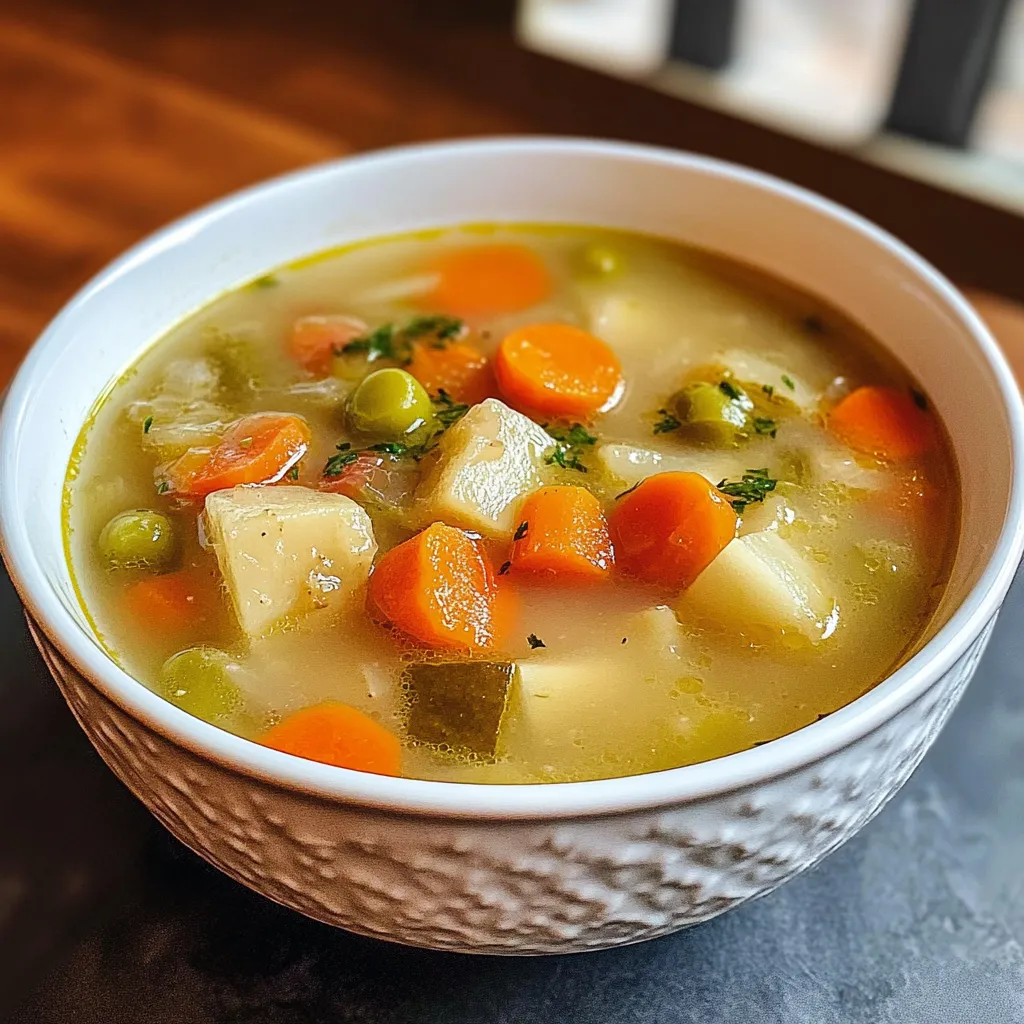
A Cozy Classic for Chilly Weather
When the weather turns cold and the days feel shorter, this Hearty Winter Vegetable Soup is one of the first recipes I reach for. It’s the kind of soup that warms you from the inside out, with soft vegetables, a fragrant broth, and that unmistakable feeling of comfort you only get from a homemade pot simmering on the stove.
I love how humble this recipe is. No fancy ingredients, no complicated steps—just honest vegetables, gently cooked until tender. The smell alone, especially once the bay leaf and thyme hit the broth, makes the kitchen feel calm and inviting. This is everyday food at its best.
Ingredients You’ll Need for This Warming Soup
This soup is built from simple pantry staples and everyday vegetables. You can easily adapt it based on what you have on hand, which makes it perfect for winter cooking.
Ingredients:
- 2 tbsp olive oil
- 1 onion, chopped
- 2 carrots, sliced
- 2 potatoes, diced
- 1 cup green beans, chopped
- 1 cup peas (fresh or frozen)
- 3–4 cups vegetable broth or water
- 1 bay leaf
- ½ tsp dried thyme (optional)
- Salt and black pepper, to taste
- Optional: 1 tbsp butter or a squeeze of lemon
Prepping Your Vegetables for the Best Texture
Before you start cooking, take a few minutes to prep everything. Chop the onion finely so it melts into the soup, slice the carrots evenly, and dice the potatoes into bite-sized pieces. Uniform cuts help everything cook at the same pace, which makes a big difference in the final texture.
I like to keep the vegetables rustic rather than perfect. This soup isn’t meant to be polished—it’s meant to be comforting.
Building Flavor from the Very First Step
Heat the olive oil in a large pot over medium heat. Add the chopped onion and cook it gently, stirring often, until it becomes soft and translucent. This step sets the foundation for the entire soup, so don’t rush it. You’ll notice the aroma almost immediately—sweet, mellow, and comforting.
Once the onion is ready, add the carrots and potatoes. Stir them around for 2–3 minutes so they get lightly coated in the oil and start releasing their flavor.
Simmering the Soup Until Everything Comes Together
Pour in the vegetable broth (or water if that’s what you’re using), then add the bay leaf and dried thyme if you’re including it. Bring the soup to a gentle boil, then reduce the heat and let it simmer for about 15 minutes.
At this stage, the broth starts to take on a deeper flavor, and the vegetables begin to soften. The bay leaf adds a subtle background note that makes the soup taste like it’s been cooking longer than it has.
Adding the Final Vegetables at the Right Time
After the initial simmer, add the green beans and peas. These cook more quickly, so adding them later keeps them tender and bright rather than mushy.
Let the soup simmer for another 8–10 minutes, just until all the vegetables are soft but still holding their shape. Taste the broth and season with salt and black pepper as needed.
Finishing Touches That Make a Difference
Before serving, remove the bay leaf. If you like a richer finish, stir in a tablespoon of butter—it gives the broth a soft, silky feel. On days when I want something lighter, I add a small squeeze of lemon instead. That bit of acidity really wakes everything up.
This is one of those moments where you can trust your instincts. Taste and adjust until it feels right to you.
How to Serve and Store Winter Vegetable Soup
Serve this soup hot, ideally in deep bowls with some crusty bread on the side. It’s perfect on its own, but it also pairs well with a simple salad or a grilled cheese sandwich.
Leftovers store beautifully. Keep the soup in an airtight container in the fridge for up to four days. The flavors actually improve overnight, making it even better the next day. Reheat gently on the stove or in the microwave.
Easy Variations and Add-Ins to Try
This soup is incredibly flexible. You can add lentils or chickpeas for extra protein, toss in a handful of pasta or rice, or swap the potatoes for sweet potatoes. A pinch of paprika or cumin adds warmth, while fresh parsley or dill stirred in at the end brings freshness.
I often make this soup slightly differently each time, depending on what’s in my fridge. It never turns out exactly the same, and that’s part of the charm.
Nutrition Notes for a Comforting, Balanced Meal
This Hearty Winter Vegetable Soup is naturally light, nourishing, and full of fiber from the vegetables. It’s low in fat, especially if you skip the butter, and packed with vitamins from carrots, peas, and green beans. It’s the kind of meal that leaves you satisfied without feeling heavy.
Common Questions About Hearty Winter Vegetable Soup
Can I freeze this soup?
Yes, this soup freezes well. Let it cool completely, then store it in freezer-safe containers for up to three months.
Can I use water instead of broth?
Absolutely. The soup will still be flavorful, especially with the bay leaf and thyme, though broth adds extra depth.
How can I make it more filling?
Add beans, lentils, or small pasta shapes to turn it into a heartier meal.
What if I don’t have thyme?
You can leave it out or substitute with rosemary, oregano, or even a pinch of Italian seasoning.
This Hearty Winter Vegetable Soup is simple, warming, and endlessly comforting. It’s the kind of recipe you’ll come back to again and again, especially on cold days when all you want is something nourishing and familiar.