A Bold, Comforting Dish – The Story Behind Gochujang Pasta
If you love a bowl of creamy pasta but crave something with a kick, Gochujang Pasta will absolutely win you over. This dish blends the richness of butter, garlic, and cream with the deep, spicy-sweet flavor of Korean gochujang. I remember the first time I tried it—I was surprised by how quickly it came together and how the heat from the chili paste balanced perfectly with the creaminess. It’s one of those recipes that feels both comforting and exciting, a little familiar but with a bold twist.
You’ll smell the garlic sizzling right away, and the moment you stir in the gochujang, the sauce turns this beautiful, fiery red-orange color that hints at the deliciousness to come. It’s simple, satisfying, and honestly hard to stop eating.
Ingredients You’ll Need for This Creamy Gochujang Pasta
This pasta needs only a handful of ingredients and comes together in about 15 minutes. Here’s what you’ll need:
- 8 oz dry pasta
- 2 tablespoons gochujang
- 3 cloves garlic, minced
- 4 tablespoons salted butter
- 2 tablespoons olive oil
- ½ cup shredded parmesan or cheddar cheese
- ½ cup heavy cream
- ½ teaspoon black pepper (optional)
- 2 teaspoons chopped parsley (optional)
These ingredients build a creamy, spicy, slightly smoky sauce that coats every noodle beautifully.
Cooking the Pasta – Getting the Perfect Texture
Start by bringing a pot of water to a boil. Salt the water if you like—it seasons the pasta from the inside out. Add your pasta and cook it until it reaches the texture you prefer. I usually go for al dente; it holds up better once mixed with the warm sauce.
Once it’s done, drain the pasta and set it aside. You don’t need to rinse it—the starch helps the sauce cling to every strand.
Building the Sauce – Butter, Garlic, and a Spicy Kick
In a large sauté pan, melt the butter with the olive oil over medium heat. You’ll hear a gentle sizzle as the fats blend together. Add the minced garlic and the optional black pepper, and cook until fragrant. This only takes a minute, but it sets the whole tone of the dish.
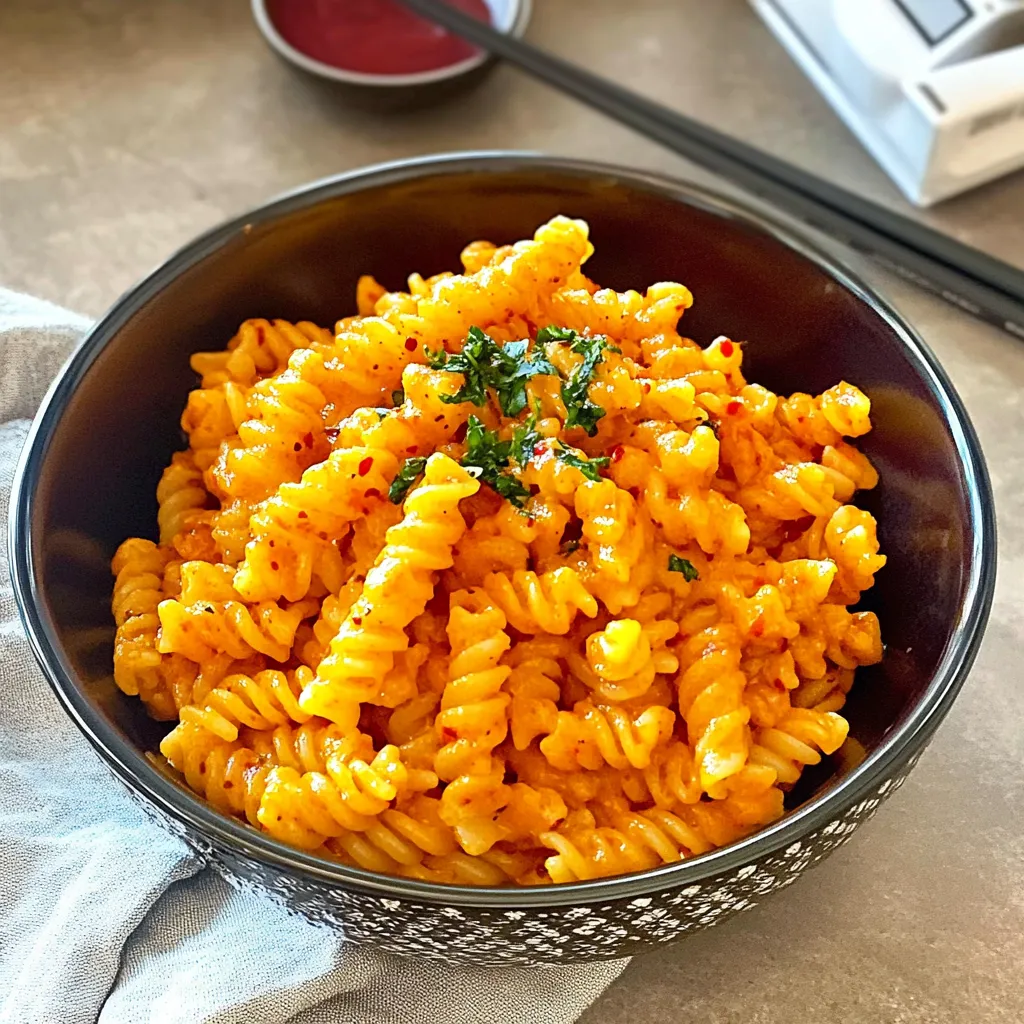
Next, stir in the gochujang. You’ll see it loosen and melt into the butter mixture, creating a deep red base. Pour in the heavy cream and add the shredded cheese. As everything warms, the sauce thickens slightly, turning silky and glossy. I love watching it come together—it’s a simple process, but the transformation is gorgeous.
Combining the Pasta and Sauce – The Best Part
Add your cooked pasta straight into the pan. Toss everything together until the noodles are fully coated in the creamy gochujang sauce. Take your time here—the sauce clings more as it cools slightly, creating that luxurious, velvety finish.
Serving and Garnishing Your Gochujang Pasta
Transfer the pasta to a bowl or plate and garnish with chopped parsley if you like a pop of freshness. The contrast between the red sauce and green herbs looks beautiful.
Serve it immediately while the sauce is warm and creamy. If you love heat, you can top it with extra gochujang or red pepper flakes. If you prefer more richness, grate a little extra cheese over the top.
Creative Ways to Customize Your Dish
- Add sautéed mushrooms for extra umami.
- Stir in cooked shrimp or chicken for more protein.
- Add a splash of pasta water to loosen the sauce if it thickens too much.
- Mix in a teaspoon of honey if you want a slightly sweeter balance.
This dish is incredibly flexible—you can adjust it based on what you have on hand or what you’re craving.
Nutrition Snapshot
Gochujang Pasta is a hearty, satisfying meal with a balance of carbs, fats, and a bit of protein from the cheese and cream. It’s richer than a typical red sauce pasta but still lighter than Alfredo. Enjoy it as an indulgent weeknight treat or a quick weekend lunch.
Handy Tips and FAQs
Can I make this less spicy?
Yes—just reduce the gochujang or add more cream.
Can I use a different cheese?
Absolutely. Parmesan is sharp and salty, while cheddar makes it extra creamy. Use what you love.
What pasta shape works best?
Anything goes, but noodles like linguine or spaghetti hold the sauce beautifully. Short shapes like rigatoni also work great.
How do I store leftovers?
Keep leftovers in an airtight container in the fridge for up to two days. Reheat gently with a splash of cream or milk to revive the sauce.
Once you try this Gochujang Pasta, it might just become your new go-to comfort meal—simple, bold, and unbelievably delicious.