
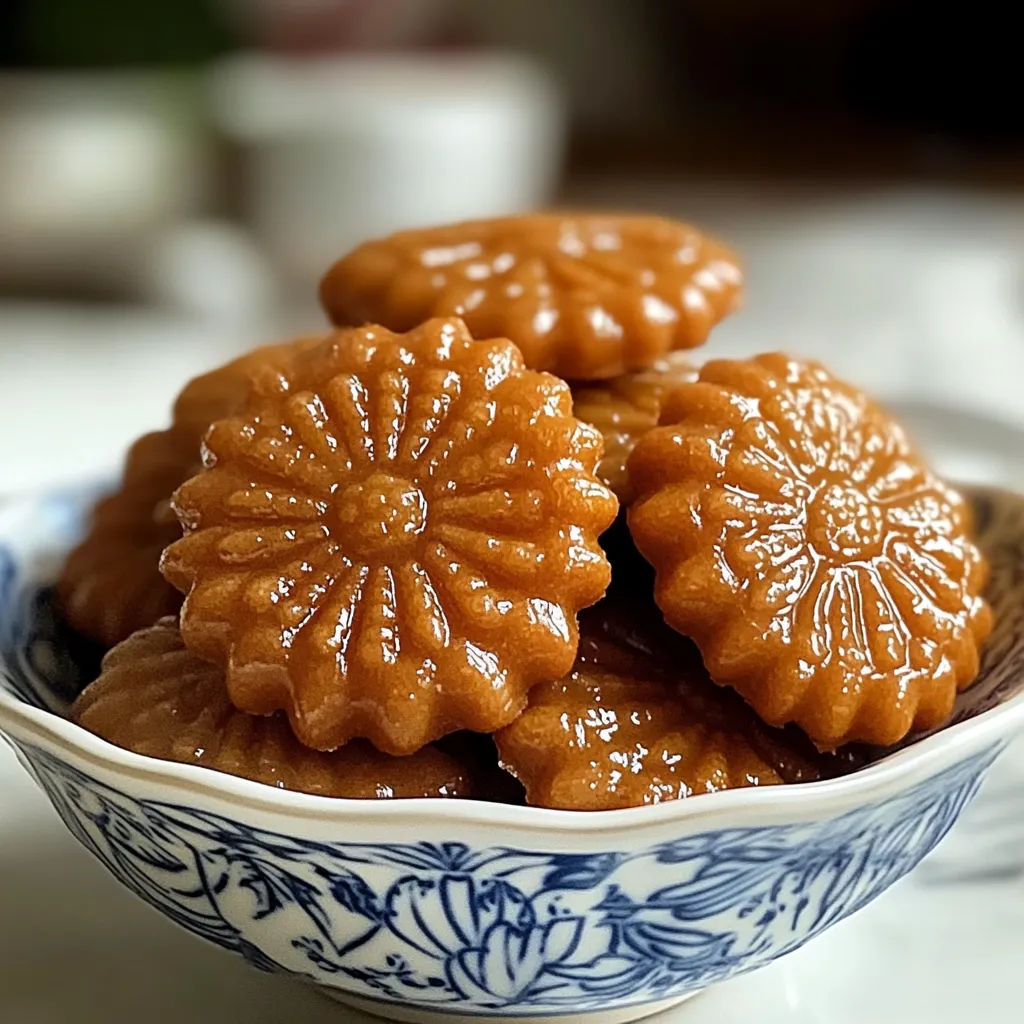
A Beloved Korean Classic – The Story of Yakgwa
Yakgwa is one of those traditional sweets that feels deeply tied to culture and memory. In Korea, it’s often served during holidays, celebrations, and ancestral rites, and for good reason. These honey-soaked cookies are rich, fragrant, and meant to be savored slowly. The name itself comes from “yak,” meaning medicinal, and “gwa,” meaning confection, reflecting the belief that honey and sesame oil were nourishing and restorative ingredients.
The first time I made yakgwa at home, I was surprised by how comforting the process felt. Kneading the dough, frying it gently, then soaking it in warm ginger honey syrup fills the kitchen with an aroma that’s hard to forget. There’s something grounding about it, like you’re participating in a ritual that’s been repeated for generations.
What You’ll Need to Make Crispy Yakgwa at Home
Yakgwa relies on a short list of ingredients, but each one plays an important role in flavor and texture. Using good-quality honey really makes a difference here.
Ingredients:
- 2 cups all-purpose flour, sifted
- 2 tablespoons sesame oil
- 1 cup honey
- 1 tablespoon fresh ginger, grated
- 2 tablespoons rice wine
- Vegetable oil, for frying
- 1 cup honey, for syrup
- 1/2 cup water
Mixing and Resting the Dough – Building Flavor from the Start
In a large bowl, combine the sifted flour, sesame oil, honey, and rice wine. At first, the mixture may look shaggy and uneven, but keep mixing. Once it comes together, knead it gently until the dough becomes smooth and elastic. It should feel supple, not sticky.
Cover the dough with a damp cloth and let it rest. This resting time is important—it relaxes the gluten and makes shaping much easier later. I usually use this time to prepare the syrup and clean up a bit, which keeps the process calm and unrushed.
Making the Ginger-Honey Syrup – The Heart of Yakgwa
In a small saucepan, combine the honey, water, and freshly grated ginger. Bring the mixture to a gentle boil, then reduce the heat and let it simmer until slightly thickened. You’ll notice the scent almost immediately—warm honey with a soft ginger bite that isn’t overpowering.
Remove the syrup from the heat and let it cool slightly. You don’t want it piping hot when the cookies go in, but it should still be warm enough to soak in easily.
Shaping Yakgwa – Traditional Forms with a Personal Touch
Once the dough has rested, divide it into small portions. Traditionally, yakgwa is shaped into diamonds or rectangles, sometimes stamped with decorative patterns. You can keep it simple by rolling the dough out and cutting it with a knife, or you can get creative if you enjoy shaping by hand.
Try to keep the pieces similar in size so they fry evenly. They don’t need to be perfect—slight variations actually make them feel more handmade and authentic.
Frying to Golden Perfection – Texture Matters
Heat vegetable oil in a deep pan over medium heat. The oil shouldn’t be smoking hot; too much heat will brown the outside too quickly while leaving the inside undercooked.
Fry the shaped dough in batches, gently turning them as they cook. They should slowly turn a deep golden brown and feel crisp on the outside. Remove them with a slotted spoon and drain on paper towels. At this stage, they’ll smell nutty and slightly sweet, with a firm exterior that softens later in the syrup.
Soaking the Cookies – Where the Magic Happens
While the cookies are still warm, fully immerse them in the ginger-honey syrup. Make sure each piece is well coated. Let them soak until they absorb the syrup and become glossy and tender.
This step transforms the cookies completely. The crisp shell softens, the honey seeps into every layer, and the ginger adds warmth without sharpness. I usually let them sit for several minutes, turning once to ensure even soaking.
Serving and Storing Crispy Yakgwa
Yakgwa is best served at room temperature, once the syrup has fully settled into the cookies. They’re rich, so a small portion goes a long way. I love serving them with tea, especially something slightly bitter to balance the sweetness.
Store leftover yakgwa in an airtight container at room temperature for up to a week. In fact, the flavor deepens after a day, making them even better the next time you reach for one.
Variations and Small Tweaks to Try
While classic yakgwa is hard to beat, you can experiment a little. Some people add a pinch of cinnamon or cardamom to the syrup for extra warmth. You can also adjust the ginger amount depending on how bold you like the flavor.
If you prefer a lighter cookie, fry them slightly less and shorten the soaking time. For a richer, denser texture, let them soak longer and rest overnight before serving.
Nutrition Notes – A Traditional Treat Meant to Be Enjoyed Slowly
Yakgwa is made with honey and sesame oil, ingredients traditionally valued for their nourishing qualities. That said, it’s still a fried and syrup-soaked sweet, so it’s best enjoyed in moderation. Think of it as a special-occasion dessert rather than an everyday snack.
Common Questions About Yakgwa – Answered
Can I bake yakgwa instead of frying it?
Traditional yakgwa is fried, and baking won’t give the same texture or flavor. Frying is essential to how the syrup absorbs into the cookie.
Why did my yakgwa turn out too hard?
This usually means the cookies were fried at too high a temperature or soaked too briefly. Gentle frying and proper soaking are key.
Can I make yakgwa ahead of time?
Yes, and it’s actually recommended. Yakgwa tastes better after resting for a day as the flavors meld and the texture softens.
What kind of honey works best?
A mild, floral honey works beautifully. Strong or bitter honeys can overpower the delicate balance of sesame and ginger.
Yakgwa may take a bit of time, but every step feels intentional. When you finally take that first bite—soft, sticky, fragrant, and deeply satisfying—you’ll understand why this Korean honey cookie has been treasured for centuries.