
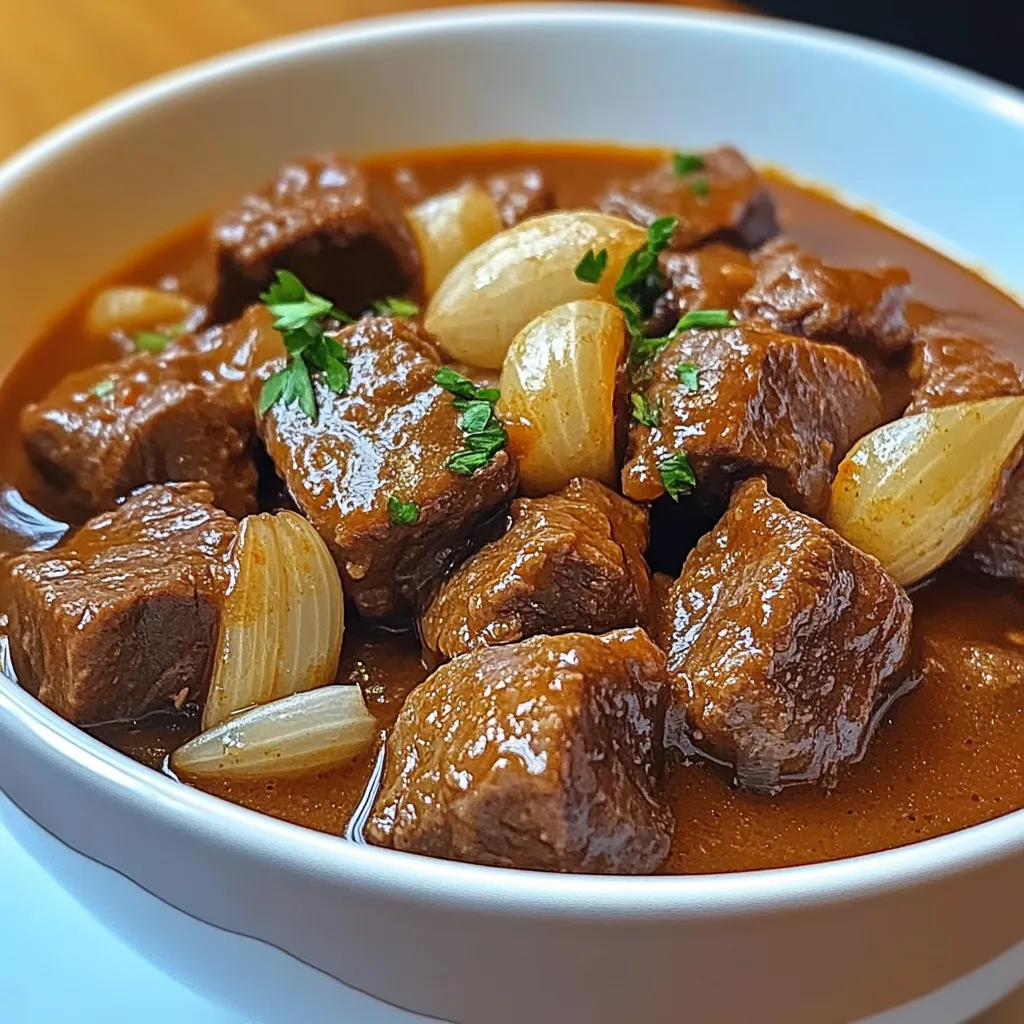
There’s something deeply comforting about a pot of braised beef stew gently bubbling away on the stove. It’s the kind of dish that fills your kitchen with rich, savory aromas and makes everyone ask, “When is it ready?” This recipe is one I turn to when I want something hearty and satisfying without too much fuss. The beef becomes melt-in-your-mouth tender, and the sauce turns thick, glossy, and packed with flavor.
I especially love making this on a quiet afternoon. You let it simmer low and slow, and somehow the whole house starts to feel warmer. It’s simple food, but done right, it tastes like something much more special.
Why This Braised Beef Stew Is Worth the Wait
What makes this stew stand out is the slow cooking. The beef absorbs all the flavors from the broth, herbs, and spices while becoming incredibly tender. The onions soften into the sauce, adding natural sweetness, and the tomato paste gives it a deep, slightly rich base.
It’s not complicated, but it does reward patience. And honestly, that’s part of the charm.
Ingredients You’ll Need
- 700g beef, cut into cubes
- 2 tablespoons oil
- 2 large onions, cut into chunks
- 3 garlic cloves, minced
- 2 tablespoons tomato paste
- 2 cups beef broth
- 1 tablespoon soy sauce (optional)
- 1 teaspoon paprika
- 1/2 teaspoon black pepper
- 1 teaspoon salt (adjust to taste)
- 1 teaspoon dried thyme or mixed herbs
- 1 bay leaf
- 1 tablespoon flour (optional, for thickening)
- Fresh parsley for garnish
Step-by-Step Cooking Instructions
Start by heating the oil in a large pot over medium-high heat. Once it’s hot, add the beef cubes in batches if needed. Let them sear properly without moving them too much at first—you want that deep brown crust. It might feel tempting to stir constantly, but giving the meat time to brown is what builds that rich flavor. Once browned on all sides, remove the beef and set it aside.
In the same pot, add the onions. Don’t clean the pot—those browned bits at the bottom are full of flavor. Cook the onions for a few minutes until they begin to soften and pick up some of that color.
Add the garlic and stir for about a minute. You’ll smell it instantly—it’s one of my favorite moments in cooking.
Next, stir in the tomato paste and cook it for another minute. This step really makes a difference. It deepens the flavor and takes away that raw tomato taste.
Return the beef to the pot, along with any juices it released. Pour in the beef broth and add the soy sauce if you’re using it. Sprinkle in the paprika, salt, black pepper, thyme, and drop in the bay leaf.
Bring everything to a gentle boil, then reduce the heat to low. Cover the pot and let it simmer slowly for about 1.5 to 2 hours. Stir occasionally and check that it’s not drying out. You’ll notice the sauce gradually thickening and the beef becoming fork-tender.
If you prefer a thicker stew, mix the flour with a little water to form a smooth slurry. Stir it into the stew and let it simmer uncovered for another 5 to 10 minutes. The sauce will become richer and slightly thicker.
Once done, remove the bay leaf and sprinkle fresh parsley on top before serving.
Texture, Flavor, and Aroma Notes
This stew is all about depth. The beef becomes incredibly tender, almost falling apart with a spoon. The sauce is rich and slightly velvety, with layers of flavor from the slow cooking. The onions melt into the stew, giving it a subtle sweetness that balances the savory broth.
And the smell—honestly, it’s hard to ignore. Warm, meaty, slightly herby, with that comforting richness that only a slow-cooked dish can bring.
Helpful Tips for Best Results
Sear the beef properly. Don’t rush this step—it builds the base flavor of the entire dish.
Use a heavy pot or Dutch oven if you have one. It distributes heat evenly and prevents burning.
Keep the heat low during simmering. A gentle simmer is key to tender meat.
Taste toward the end and adjust seasoning. Sometimes it needs just a pinch more salt to come alive.
Variations You Can Try
You can easily adapt this stew depending on what you have. Add carrots or potatoes for a more traditional version. Mushrooms work beautifully too and add extra depth.
If you like a slightly richer sauce, you can stir in a small knob of butter at the end. For a deeper flavor, a splash of red wine added with the broth works wonderfully.
You can also spice it up a little with chili flakes or a dash of cayenne if you prefer a bit of heat.
Serving and Storage
This stew is perfect served over fluffy white rice, creamy mashed potatoes, or with crusty bread to soak up the sauce. Personally, I love it with bread—you don’t want to waste a single drop.
Leftovers store very well. Keep them in an airtight container in the fridge for up to three days. In fact, the flavor often improves the next day. Reheat gently on the stove, adding a splash of water or broth if needed.
It also freezes well, making it a great make-ahead meal for busy days.
Nutrition Snapshot
This dish is rich in protein from the beef and provides essential nutrients like iron and B vitamins. While it’s a hearty meal, you can balance it by serving it with vegetables or lighter sides.
Braised Beef Stew FAQ
Can I use a different cut of beef?
Yes, tougher cuts like chuck or stewing beef work best because they become tender during slow cooking.
How do I know when the beef is done?
It should be very tender and easy to pull apart with a fork. If it’s still tough, let it simmer longer.
Can I make this in a slow cooker?
Absolutely. After searing the beef and sautéing the onions and garlic, transfer everything to a slow cooker and cook on low for 6 to 8 hours.
Is the flour necessary?
No, it’s optional. The stew will naturally thicken as it cooks, but flour gives it a slightly richer consistency.
Can I make it ahead of time?
Yes, and it actually tastes better the next day as the flavors continue to develop.
This braised beef stew is one of those recipes that reminds you how rewarding simple cooking can be. With a bit of time and patience, you end up with a dish that feels warm, hearty, and deeply satisfying.