
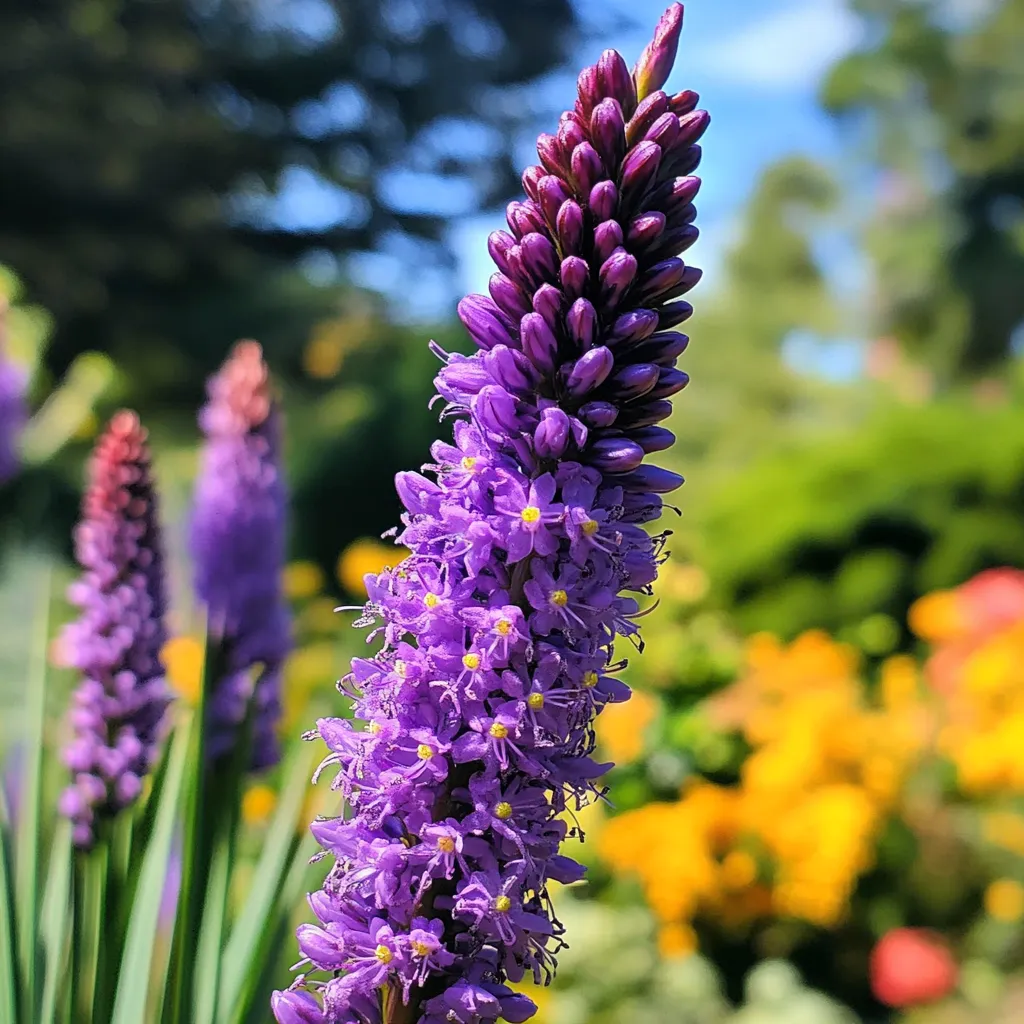
Are you looking for a tough perennial that delivers bold color and striking vertical interest when the summer garden starts to fade? Blazing star, also known as Liatris spicata, is a reliable native wildflower that thrives in heat, resists drought, and attracts pollinators in droves. With its tall purple plumes and fine, grass-like foliage, this prairie native adds structure and beauty to borders, meadows, and cutting gardens alike, all while asking very little in return.
Cultivation and History
Native to the prairies and meadows of eastern North America, Liatris spicata belongs to the aster family and grows from corms with thick, tuberous roots. It forms upright clumps of narrow foliage followed by tall flower spikes that bloom from mid-summer into early fall. The bottlebrush-style flowers open from the top down and come in shades of purple, lavender, pink, or white.
Once established, blazing star is remarkably resilient. It tolerates drought, heat, and poor soils, making it a dependable performer during the hottest months when many other plants slow down. In fall, the foliage turns warm bronze tones, and the seed heads provide food for birds well into winter.
Propagation
Blazing star can be propagated by division or from seed.
Division is best done in spring when new growth appears. Dig up mature clumps, gently clean the roots, and cut them into sections, ensuring each piece has a healthy bud. Replant divisions five inches deep and space them well to avoid crowding. Smaller bulbils can also be replanted but may take longer to bloom.
Seeds can be sown directly outdoors in fall in regions with cold winters, as they require a long cold period to germinate. In milder climates, seeds should be cold-stratified in the refrigerator for about 12 weeks before planting. Seed-grown plants usually flower in their second year.
Best Growing Conditions
Blazing star grows best in full sun, though it can tolerate light shade. Well-draining soil is essential, as soggy conditions can cause root rot. Lean to moderately fertile soil is ideal, and overly rich ground may lead to floppy flower stems.
Plant corms in spring once the soil can be worked. Loosen the soil deeply, amend with compost if needed, and improve drainage with grit or sand if necessary. Water regularly until plants are established, then reduce watering as they become drought tolerant.
Growing Tips
New plantings benefit from weekly watering during dry spells, but mature plants rarely need extra moisture. Avoid overwatering, especially in heavy soils. Blazing star is largely pest-free, deer-resistant, and thrives without frequent feeding.
Because the flowers are rich in nectar and pollen, they are excellent for pollinator gardens. Butterflies, bees, and hummingbirds are frequent visitors, and birds enjoy the seeds later in the season.
Pruning and Maintenance
Deadheading is optional. Spent flowers can be removed to tidy the plant, or left in place for winter interest and wildlife value. Foliage can be cut back in late fall or early spring.
Every few years, divide large clumps to prevent overcrowding and maintain strong flowering. Adding compost in spring helps refresh the soil without overstimulating growth.
Reliable Cultivars to Consider
Liatris spicata is widely available and dependable, but several cultivars stand out. ‘Floristan Violet’ offers vivid purple plumes and strong stems. ‘Kobold’ is a compact variety perfect for smaller gardens. Mixed selections combine white and purple flowers for added visual interest.
Managing Pests and Diseases
Serious pest problems are uncommon. Occasionally, flower moth larvae may feed on plants, but damage is usually minimal and can be managed by hand removal. Fungal issues like powdery mildew or leaf spot may occur in humid conditions. Proper spacing, good airflow, and avoiding overhead watering help prevent disease.
Best Uses in the Garden
Blazing star shines in perennial borders, cottage gardens, naturalized meadows, and pollinator plantings. Its upright form provides contrast alongside mounded or broad-leaved plants and pairs beautifully with coneflowers, black-eyed susans, daylilies, and ornamental grasses.
It also makes an excellent cut flower, fresh or dried, and stands out when planted in drifts or mass plantings. Tough, elegant, and long-blooming, Liatris spicata earns its place as a summer garden essential.
Conclusion
Blazing star is a true workhorse perennial, combining beauty, resilience, and ecological value in one striking plant. With minimal care, it delivers dependable late-season color, supports pollinators, and thrives where many plants struggle. If you’re looking to add structure and vibrancy to your garden during the hottest months, Liatris spicata is a prairie classic well worth planting.