
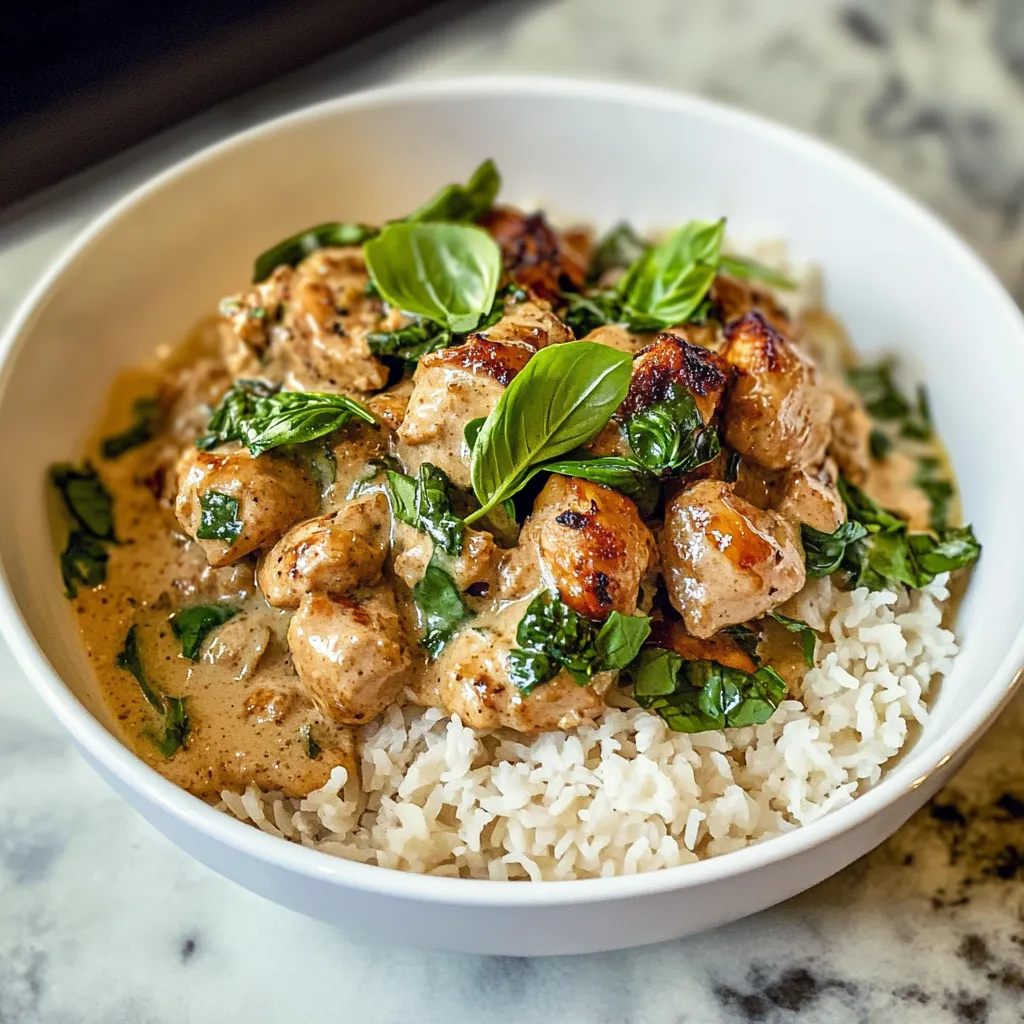
A Cozy Curry with Fresh Basil and Warm Spices
This basil chicken in coconut curry sauce is one of those recipes that feels comforting and exciting at the same time. The warm spices bloom in the pan, the coconut milk turns silky and rich, and the fresh basil at the end adds a bright, almost unexpected freshness. Every time I make this, the kitchen smells incredible within minutes, and I always sneak a taste of the sauce before serving.
It’s not a heavy curry, but it’s deeply flavorful. The balance of spice, creaminess, and herbs makes it perfect for both a relaxed weeknight dinner and a slightly special meal when you want something homemade but impressive.
What You’ll Need for This Creamy Basil Chicken Curry
The ingredient list may look long at first glance, but it’s mostly spices you probably already have. Together, they create layers of flavor that taste far more complex than the effort involved.
Ingredients:
- 1/2 teaspoon cumin
- 1/2 teaspoon cinnamon
- 1/2 teaspoon ground cloves
- 1/2 teaspoon ground cardamom
- 1/2 teaspoon ground black pepper
- 1/2 teaspoon chili powder
- 1/2 teaspoon salt
- 1/4 teaspoon ground turmeric
- 1 lb skinless, boneless chicken breasts, cut into 1-inch pieces
- 2 tablespoons olive oil, divided
- 3/4 cup chopped onion
- 5 cloves garlic, minced
- 2 jalapeño peppers, minced
- 1 can coconut milk
- 1 teaspoon Worcestershire sauce
- 1/3 cup fresh basil leaves, chopped
- 1 tablespoon finely chopped fresh ginger
- Cooked rice, for serving
Building Flavor from the Very First Step
Start by combining the cumin, cinnamon, cloves, cardamom, black pepper, chili powder, salt, and turmeric in a small bowl. I like to take a moment here and smell the spice mix—it’s warm, earthy, and slightly sweet, and it sets the tone for the whole dish.
Place the chicken pieces in a large bowl and sprinkle the spice mixture evenly over them. Toss well so every piece is coated. This step makes a big difference, because seasoning the chicken early allows the spices to cling and develop flavor as it cooks.
Cooking the Aromatics for a Fragrant Base
Heat 1 tablespoon of olive oil in a large skillet over medium-high heat. Add the chopped onion and jalapeño peppers and cook for a few minutes until they begin to soften. Then add the minced garlic and cook just until fragrant. You’ll notice the aroma instantly—this is where the dish really starts to come alive.
Transfer the onion mixture to a bowl and set it aside. Don’t worry if the skillet looks a bit messy; those browned bits are full of flavor and will melt right into the sauce later.
Browning the Chicken for Depth and Texture
Add the remaining tablespoon of olive oil to the same skillet. Cook half of the chicken pieces in a single layer, letting them brown nicely before turning. Once they’re cooked through, transfer them to the bowl with the vegetables.
Repeat with the remaining chicken. Cooking in batches prevents overcrowding and helps the chicken develop that lightly golden exterior instead of steaming. I’ve rushed this step before, and taking your time here really pays off.
Creating the Coconut Curry Sauce
With the skillet still hot, pour in the coconut milk and stir, scraping up any browned bits from the bottom. Let it cook until it starts bubbling gently and thickening slightly. The sauce should look smooth and glossy, not watery.
Stir in the Worcestershire sauce, which adds a subtle savory depth you don’t immediately notice but would miss if it weren’t there.
Bringing Everything Together with Basil and Ginger
Return the chicken and vegetable mixture to the skillet. Add the chopped basil and fresh ginger, then stir everything together until well combined and heated through. The basil wilts quickly, releasing a fresh, herbal aroma that balances the richness of the coconut milk beautifully.
At this point, I usually taste and adjust—sometimes a pinch more salt or an extra crack of black pepper is all it needs.
Serving and Storing Basil Chicken in Coconut Curry Sauce
Serve the curry hot over cooked rice, making sure to spoon plenty of sauce over the top. The rice soaks it up perfectly, and every bite feels satisfying and complete.
Leftovers store well in an airtight container in the refrigerator for up to three days. The flavors actually deepen overnight, making it even better the next day. Reheat gently on the stovetop or in the microwave, adding a splash of water or coconut milk if needed.
Easy Variations and Simple Swaps
If you prefer a milder dish, remove the seeds from the jalapeños or reduce the amount. For extra heat, add a pinch of cayenne or a splash of hot sauce.
You can also swap chicken breasts for chicken thighs if you like a juicier texture. For a vegetarian version, firm tofu or chickpeas work surprisingly well with this sauce.
Nutrition Notes and Balance on the Plate
This dish offers a good balance of protein from the chicken and healthy fats from the coconut milk. While it’s rich, it’s also filling, so a moderate portion goes a long way. Pairing it with rice and perhaps a simple cucumber or tomato salad makes it feel complete without being heavy.
Kitchen Questions Answered – Basil Chicken Curry FAQ
Can I use dried basil instead of fresh?
Fresh basil is best here because it adds brightness, but in a pinch, you can use dried basil—just reduce the amount and add it earlier in the cooking process.
Is this curry very spicy?
It has a gentle heat. You can easily adjust the spice level by using fewer jalapeños or more chili powder, depending on your taste.
Can I freeze this curry?
Yes, it freezes well. Let it cool completely, then store in freezer-safe containers for up to two months. Thaw overnight in the fridge before reheating.
What can I serve besides rice?
This curry is also great with naan, flatbread, or even quinoa if you want to change things up.
This basil chicken in coconut curry sauce is one of those recipes that feels reliable and comforting. Once you make it a couple of times, it becomes second nature—and it’s the kind of dish people always ask you to make again.