
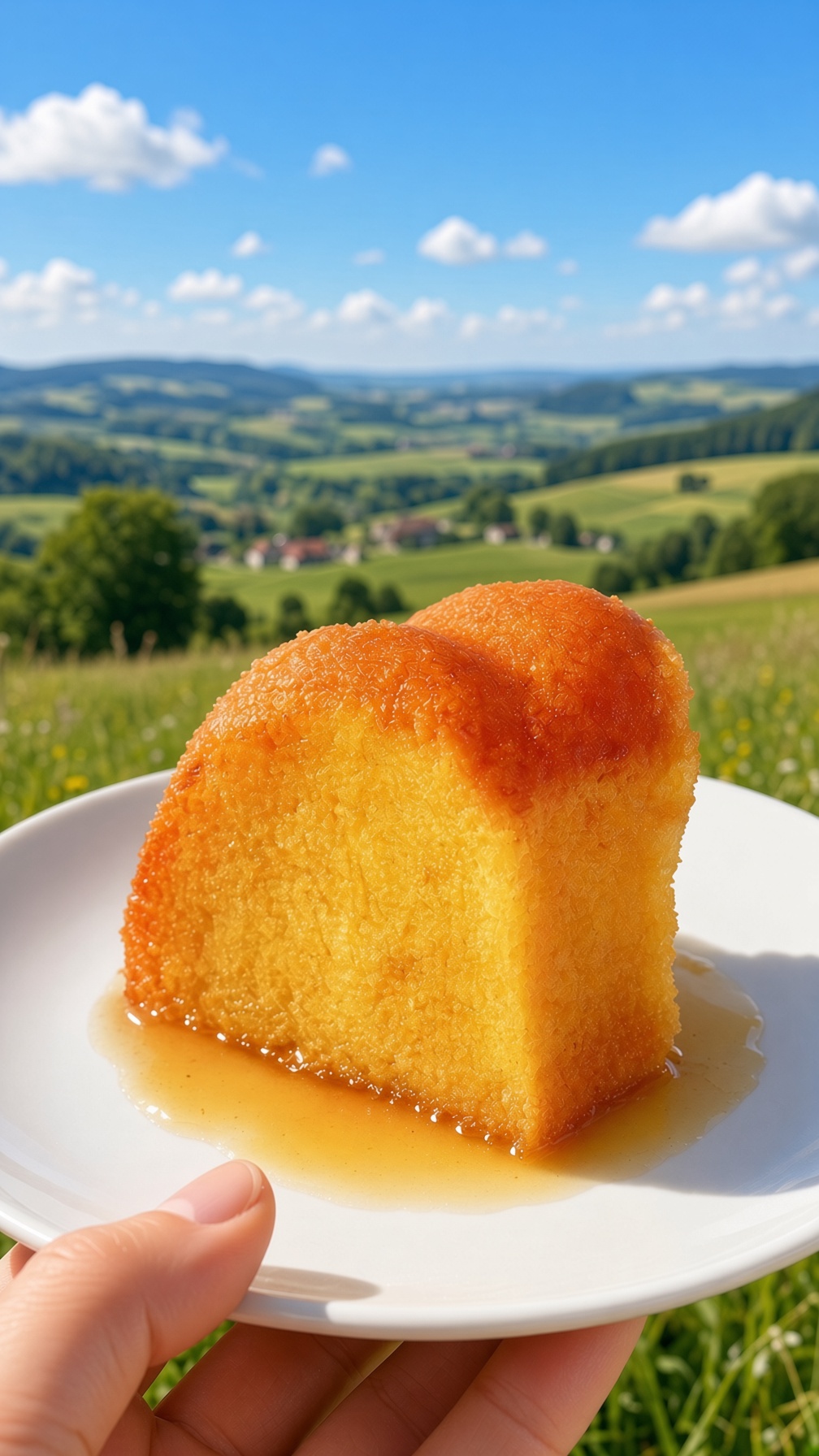
There is something wonderfully old-fashioned about a homemade rum cake. The cake itself is soft and tender, but the real magic happens when warm rum butter sauce is slowly poured over the finished Bundt cake. It seeps through the tiny holes in the crumb, creating a dessert that is rich, fragrant, buttery, and incredibly moist.
This Rum Cake from Scratch is especially satisfying because everything is made from basic ingredients rather than relying on a boxed cake mix. The combination of dark rum, vanilla, a touch of lemon, and the homemade butter sauce gives the cake a deep flavor that develops even more as it rests.
I love how the cake looks when it comes out of the Bundt pan. The golden ridges catch the sauce beautifully, and the aroma of butter, vanilla, and rum fills the kitchen almost immediately. It is the kind of dessert that feels right at a holiday dinner, family gathering, or relaxed weekend meal.
Why This Rum Cake from Scratch Is a Classic Dessert Worth Making
A good rum cake should be moist without becoming soggy, tender without falling apart, and flavorful without being overwhelmingly sweet. This recipe achieves that balance by combining a light cake batter with a generous rum butter sauce.
The Bundt shape is particularly useful because all those curves and ridges create plenty of surface area for the sauce to cling to. Poking holes throughout the cake allows the sauce to travel deeper into the crumb instead of simply sitting on the surface.
Another advantage is that the cake becomes even better after it has had a little time to absorb the sauce. The first slice is delicious, but the texture and flavor can become even more harmonious after resting.
Whether you’re making it for Christmas, Thanksgiving, a birthday, or simply because you’re craving a rich homemade dessert, this cake makes a beautiful centerpiece.
The Ingredients Behind a Moist, Flavorful Homemade Rum Cake
The ingredients are divided between the cake and the rum butter sauce.
Cake Ingredients
- 2 cups all-purpose flour
- ⅓ cup cornstarch
- 1½ cups sugar
- 4 teaspoons baking powder
- ½ teaspoon salt
- 5 eggs
- ½ cup vegetable oil
- ½ cup milk
- 1 teaspoon lemon juice
- ½ cup dark rum
- 2 teaspoons vanilla
- ¼ teaspoon rum flavoring
- ¼ cup fine dry bread crumbs, for dusting the baking pan
Rum Butter Sauce
- ½ cup unsalted butter
- ¼ cup water
- ¼–½ cup sugar
- ¼–½ cup dark rum
- ½ teaspoon vanilla
The cornstarch helps create a particularly tender crumb, while the vegetable oil contributes moisture without making the cake feel heavy.
Dark rum provides a deeper flavor than lighter varieties, while vanilla and lemon help round out the richness.
How Rum, Vanilla, and Lemon Create a Rich Cake Flavor
Rum is obviously the star of this cake, but it isn’t working alone.
Dark rum brings warm, slightly caramel-like notes that pair naturally with sugar and butter. The rum flavoring reinforces that character, giving the cake a recognizable rum profile throughout.
Vanilla softens the edges of the rum and adds a familiar bakery aroma. Even though the lemon juice is used in a relatively small amount, it provides a subtle brightness that keeps the cake from tasting one-dimensional.
I particularly like the combination because the finished cake doesn’t taste simply like alcohol and sugar. Instead, you get layers of vanilla, butter, citrus, and warm rum.
The sauce intensifies these flavors once it soaks into the cake.
Building the Batter for a Light and Tender Crumb
Begin by preparing your Bundt pan carefully. Using a pastry brush, coat the inside with oil, making sure you reach the grooves and corners.
Sprinkle the pan with fine dry bread crumbs, turning the pan until the crumbs lightly coat the greased surface. This unusual but helpful technique creates a barrier between the cake and the pan and makes releasing the finished cake much easier.
Set the prepared pan aside.
In a large bowl, combine the all-purpose flour, cornstarch, sugar, baking powder, and salt.
In a separate bowl, whisk together the eggs, vegetable oil, milk, lemon juice, dark rum, vanilla, and rum flavoring.
Add half of the liquid mixture to the dry ingredients. Beat on medium speed for about 1–2 minutes, until the batter becomes smooth.
Add the remaining liquid mixture and beat for another minute.
At this point, the batter should be smooth and fairly fluid. Avoid continuing to beat it longer than necessary. Once the ingredients are properly combined, you’re ready to transfer it to the Bundt pan.
Pour the batter evenly into the prepared pan and gently smooth the surface if needed.
Baking the Bundt Cake in Two Stages for Even Results
Bake the cake at 350°F (175°C) for approximately 20 minutes.
After the first 20 minutes, carefully rotate the cake in the oven. Reduce the oven temperature to 300°F (150°C), then continue baking for another 20 minutes.
This two-stage baking method helps the cake cook evenly while giving the exterior time to develop a beautiful golden color without becoming overly dark.
Check the cake with a wooden skewer toward the end of baking. Insert it into the thickest part of the cake. If it comes out clean or with a few moist crumbs, the cake is ready.
Every oven is slightly different, so use the skewer as your final test rather than relying entirely on the clock.
The finished cake should feel set but still have a little spring when gently pressed.
Practical Tips for Preventing Sticking and Overbaking
Bundt cakes can be frustrating when they refuse to release from the pan, so preparation matters.
- Thoroughly oil every part of the Bundt pan.
- Pay extra attention to the deep grooves.
- Coat the greased pan with fine dry bread crumbs.
- Don’t rush the cooling process.
- Check the cake with a wooden skewer before removing it.
- Avoid leaving the cake in the oven longer than necessary.
If you’re worried about sticking, take a little extra time when preparing the pan. A few minutes here can save a lot of frustration later.
Preparing the Rum Butter Sauce for a Glossy Finish
While the cake is baking, prepare the rum butter sauce.
Add the unsalted butter, water, sugar, dark rum, and vanilla to a small saucepan.
Cook gently for a few minutes, stirring as needed, until the sugar dissolves and the mixture becomes smooth.
You don’t need to aggressively boil the sauce. The goal is simply to bring the ingredients together into a smooth, buttery mixture.
Be careful when working with the rum and heat. Keep the saucepan away from open flames and follow normal kitchen safety practices.
Once the sugar has dissolved, remove the sauce from the heat and keep it ready for the soaking stage.
Soaking the Cake for Deep Rum Butter Flavor
After the cake has cooled slightly, it’s time for the most important part.
Use a wooden skewer to poke at least 20 holes throughout the cake. Distribute the holes across the entire surface rather than concentrating them in one area.
These openings create pathways for the rum butter sauce.
Slowly pour half of the sauce over the cake. Take your time rather than pouring it all in one place. The sauce should have an opportunity to work its way into the holes and absorb into the crumb.
Let the cake rest for about 10 minutes.
During this time, you’ll notice the surface becoming glossy as the sauce disappears into the cake.
Carefully turn the cake out onto a serving plate. Then pour the remaining rum butter sauce over the top, allowing it to run down the ridges and sides.
Give the cake some additional time to absorb the sauce before serving.
This resting period is worth it. The cake becomes incredibly moist, and the rum butter flavor spreads throughout the crumb.
Serving Ideas and Simple Garnishes for Special Occasions
This cake is rich enough to serve on its own, but a few simple additions can make it even more special.
Try serving each slice with:
- Whipped cream
- Vanilla ice cream
- Fresh berries
- Toasted pecans
- A light dusting of powdered sugar
- Fresh orange zest
- A drizzle of extra rum butter sauce
Vanilla ice cream is one of my favorite pairings. The cold, creamy texture contrasts beautifully with the rich, buttery cake.
For a holiday presentation, arrange fresh berries or toasted nuts around the base of the cake. You can also add a little orange zest for a festive touch.
Because the cake is already moist and flavorful, there’s no need for heavy frosting.
Storing, Freezing, and Making Rum Cake Ahead
Rum cake is an excellent make-ahead dessert because the flavor can continue to develop as it rests.
Once completely cooled and soaked with sauce, store the cake in an airtight container or cover it tightly.
At room temperature, it can generally be kept for a couple of days. For longer storage, refrigerate it.
If refrigerated, allow the cake to sit at room temperature for a short time before serving. You can also gently warm individual slices.
To freeze the cake, wrap it securely in plastic wrap and then place it in a freezer-safe container or bag. For the best quality, freeze it without additional garnishes.
Thaw the cake in the refrigerator, then allow it to come closer to room temperature before serving.
If you’re preparing the cake for a gathering, making it a day ahead can actually be beneficial because the rum butter sauce has more time to distribute throughout the crumb.
Rum Cake Questions Answered – Your Complete Baking FAQ
Can I use a different type of rum?
Dark rum is recommended because it provides a rich, deep flavor. A lighter rum can work, but the finished cake will have a somewhat different character.
Can I make this cake without rum?
You can replace the rum with another liquid, but it will no longer have the distinctive flavor of a traditional rum cake. The rum butter sauce is an important part of the recipe.
Why do I need to poke holes in the cake?
The holes allow the rum butter sauce to penetrate the interior instead of remaining mostly on the surface. This creates the moist texture and rich flavor associated with rum cake.
How many holes should I make?
At least 20 holes is a good starting point. Spread them throughout the cake so the sauce has plenty of places to enter.
Why use bread crumbs in the Bundt pan?
The bread crumbs provide an additional nonstick layer after the pan has been coated with oil. They can make releasing the finished cake easier, especially with a detailed Bundt design.
How do I know when the cake is done?
Insert a wooden skewer into the thickest part of the cake. It should come out clean or with a few moist crumbs rather than wet batter.
Can I make the rum butter sauce ahead?
Yes. Prepare it ahead and gently warm it before using if it has thickened. It should be fluid enough to pour over the cake.
Why is my rum cake dry?
Overbaking is one of the most common causes. Start checking the cake toward the end of the recommended baking period and remove it as soon as the skewer shows it’s done.
Can I make rum cake a day ahead?
Absolutely. In fact, making it ahead can improve the flavor because the sauce has more time to soak into the cake.
What is the best way to serve homemade rum cake?
Serve it at room temperature or slightly warm with vanilla ice cream, whipped cream, fresh berries, or toasted pecans. The buttery, rum-infused crumb is especially delicious when paired with something cool and creamy.