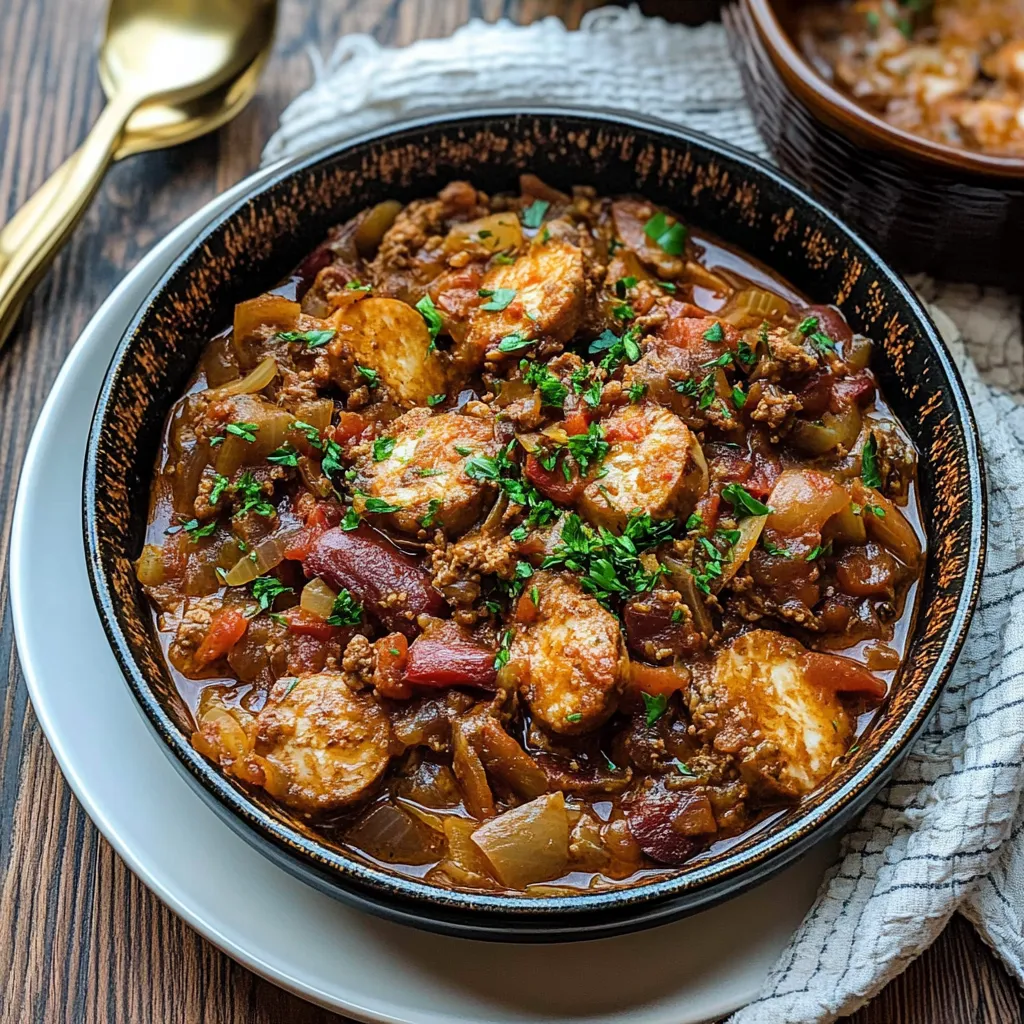
There’s something incredibly satisfying about a pot of Bigos slowly simmering away. This Polish Hunter’s Stew is rich, smoky, slightly tangy, and layered with flavors that only get better over time. It’s one of those dishes that feels rustic and hearty, the kind of meal that warms you from the inside out.
The first time I made Bigos, I was surprised by how the combination of sauerkraut, meats, and dried fruit came together so beautifully. The aroma alone is enough to make you hungry—smoky bacon, savory sausage, and that unmistakable tang of fermented cabbage filling the kitchen.
A Dish Rooted in Tradition
Bigos has been a staple in Polish cuisine for centuries. Traditionally, it was made by hunters using whatever meats they had on hand, simmered with cabbage and preserved ingredients. That’s why you’ll often see different variations—some richer, some simpler—but always deeply comforting.
What I love most is that it’s even better the next day. The flavors continue to develop, making leftovers something to look forward to rather than an afterthought.
Ingredients You’ll Need
This recipe makes a generous batch, perfect for sharing or saving.
- ⅓ cup (40g) dried porcini mushrooms
- 1 cup (240ml) boiling water
- 6 strips bacon, diced
- 1 lb (450g) kielbasa sausage, cubed
- 4 kabanos sausages, cut into small pieces
- 3 tablespoons vegetable oil
- 1 lb (450g) pork loin or shoulder, cubed
- 2 medium onions, diced
- 1 small white cabbage, shredded
- 6 cups (800g) sauerkraut, drained
- 10 prunes, halved
- 2 tablespoons tomato paste
- 3 bay leaves
- 1 tablespoon caraway seeds
- ½ teaspoon allspice
- 3 juniper berries (optional)
- 2 cups (480ml) Polish beer or dry red wine
- 1 cup (240ml) beef stock
- Salt and pepper to taste
Step-by-Step Cooking Instructions
Soak the mushrooms
Place the dried porcini mushrooms in a bowl and pour over the boiling water. Let them soak while you prepare everything else. The liquid will become deeply flavorful, and you’ll use it later in the stew.
Cook the bacon and sausages
In a large pan over medium heat, fry the diced bacon until it starts to crisp and release its fat. Add the kielbasa and kabanos sausages, stirring occasionally until lightly browned and fragrant. Transfer everything to a slow cooker or large pot.
Brown the pork
In the same pan, add a little oil if needed and brown the pork in batches. Don’t rush this step—getting a good sear adds depth to the final dish. Once browned, transfer the pork to the slow cooker.
Cook the vegetables
Using the same pan again, cook the diced onions until soft and slightly golden. Add the shredded cabbage and cook for a few minutes until it begins to wilt. If the pan feels dry, add a small splash of water or stock. Transfer this mixture to the slow cooker as well.
Build the stew
Add the prunes, sauerkraut, soaked mushrooms along with their soaking liquid, tomato paste, bay leaves, caraway seeds, allspice, and juniper berries if using. Pour in the beer or wine and the beef stock. Stir everything together until well combined.
Slow cook to perfection
Cover and cook gently until everything is tender and the flavors have melded together. This can take several hours on low heat. The longer it cooks, the richer it becomes. Stir occasionally if you can.
Finish and serve
Remove the bay leaves, then taste and adjust with salt and pepper. Serve hot, ideally with crusty bread to soak up all that incredible sauce.
Texture, Flavor, and Aroma Notes
Bigos has a thick, stew-like consistency with a mix of tender meat, soft cabbage, and little bursts of sweetness from the prunes. The sauerkraut adds a pleasant tang that balances the richness of the meats. You’ll smell smoky, savory notes first, followed by a subtle sweetness and earthy depth from the mushrooms.
I always notice how the flavors deepen overnight. It’s one of those dishes where patience really pays off.
Helpful Tips for Best Results
Don’t skip browning the meat, as it builds a strong flavor base.
Rinse the sauerkraut lightly if it’s too sour for your taste.
Let the stew cook low and slow for the best texture.
Make it a day ahead if possible—the taste improves dramatically.
Variations You Can Try
You can easily adapt Bigos depending on what you have. Try adding beef chunks for extra richness or swapping pork for game meat if available. Some versions include apples for a hint of sweetness, while others use more tomato for a slightly different profile.
If you prefer a lighter version, reduce the amount of sausage and add more cabbage.
Serving and Storage
Serve Bigos hot with crusty bread, mashed potatoes, or even boiled potatoes. It’s hearty enough to stand on its own but pairs beautifully with simple sides.
Store leftovers in the fridge for up to four days. Reheat gently on the stove, adding a splash of stock if needed. It also freezes very well, making it a great make-ahead meal.
Nutrition Snapshot
This stew is rich in protein from the meats and packed with fiber from the cabbage and sauerkraut. It’s filling, nourishing, and perfect for colder days when you need something substantial.
Bigos FAQ
Can I make Bigos without a slow cooker?
Yes, you can cook it in a large pot on the stove over very low heat. Just stir occasionally to prevent sticking.
Why are prunes added?
They add a subtle sweetness that balances the acidity of the sauerkraut and enhances the overall flavor.
Can I skip the alcohol?
Yes, simply replace the beer or wine with additional beef stock.
How long does Bigos last?
It keeps well in the fridge for several days and often tastes even better after resting.
Can I freeze Bigos?
Absolutely. Let it cool completely, then store in airtight containers and freeze for up to three months.
Bigos is more than just a stew—it’s a slow-cooked tradition full of depth, history, and comfort. Once you make it, you’ll understand why it’s cherished in so many homes.