
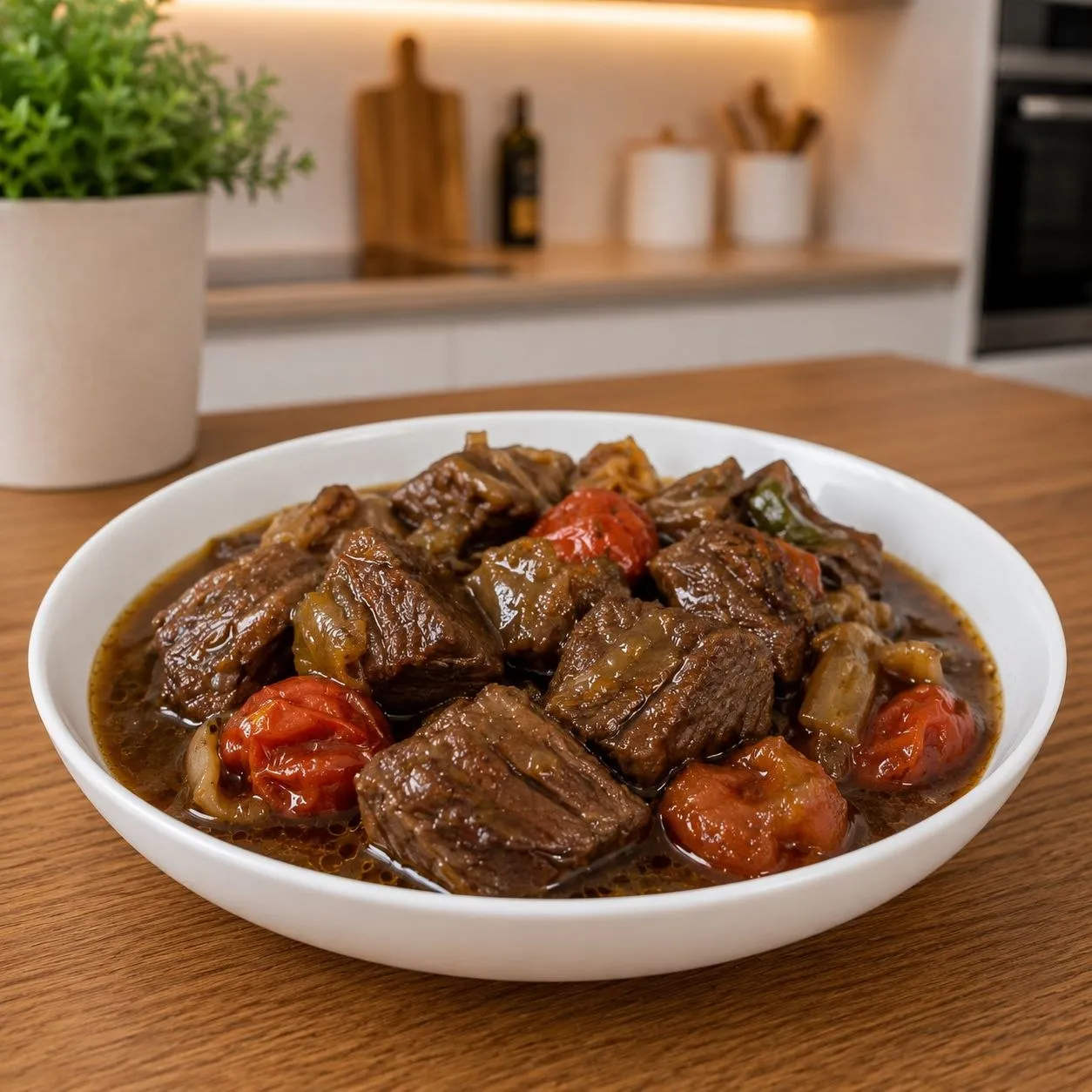
Red Braised Beef is one of those dishes that fills the kitchen with an aroma so comforting you instantly know something special is simmering on the stove. The combination of soy sauce, garlic, ginger, star anise, and slow-cooked beef creates a rich, savory broth with layers of warmth and depth. Every time I make this recipe, the smell alone makes everyone wander into the kitchen asking when dinner will be ready.
This dish is hearty, deeply flavorful, and surprisingly simple once you break it down step by step. The beef slowly absorbs all the bold seasonings while becoming beautifully tender. Served over rice or noodles, it’s the kind of meal that feels both cozy and impressive at the same time.
Why This Red Braised Beef Recipe Is So Satisfying
What makes red braised beef truly unforgettable is the balance of flavors. The soy sauces add savory richness, the tomato gives subtle sweetness and acidity, and the spices bring warmth without overpowering the dish. The chili bean paste adds complexity and a gentle heat that deepens as the stew cooks.
I especially love how the sauce thickens naturally during simmering. By the end, the beef becomes soft enough to pull apart with chopsticks, and the broth turns glossy and deeply aromatic.
Ingredients You’ll Need
- 1 lb beef shank, cut into 2-inch chunks
- Water, for blanching
- 1 tablespoon cooking oil
- 1/2 inch ginger, thinly sliced
- 2 green onions, cut into 2-inch lengths
- 4 cloves garlic, roughly chopped
- 2 tablespoons chili bean paste (doubanjiang)
- 1 large tomato, cut into wedges
- 3 tablespoons rice wine
- 1/4 cup light soy sauce
- 1/4 cup dark soy sauce
- 1 tablespoon brown sugar
- 5 star anise
- 1/2 tablespoon Sichuan peppercorns (optional)
- 3 to 4 dried red chili peppers (optional)
- Salt, to taste
Preparing the Beef for Better Flavor
Start by placing the beef chunks into a pot of cold water. Bring the pot to a boil over medium-high heat. As the water heats, you’ll notice foam and impurities rising to the surface. This blanching step is important because it removes excess blood and gives the final broth a cleaner taste.
Once the beef has boiled for a few minutes, remove it carefully and rinse it under cold water. Discard the blanching water completely. The beef will already smell cleaner and fresher after this step.
Building the Aromatic Base
Heat the cooking oil in a wok or large heavy pot over medium-high heat. Add the sliced ginger, green onions, and chopped garlic. Stir-fry for a minute or two until fragrant.
This stage always smells incredible. The ginger becomes warm and slightly sweet while the garlic turns golden around the edges. You’ll notice the aroma immediately filling the kitchen.
Browning the Beef and Tomatoes
Add the blanched beef and tomato wedges to the pan. Stir-fry everything together for several minutes until the beef develops a light brown color and the tomatoes begin to soften.
The tomatoes slowly break down into the sauce as they cook, adding richness and a subtle natural sweetness that balances the savory ingredients beautifully.
Creating the Signature Braising Sauce
Stir in the chili bean paste, rice wine, light soy sauce, dark soy sauce, and brown sugar. The sauce will immediately darken into a deep reddish-brown color.
The doubanjiang gives the dish its signature depth and slight heat, while the dark soy sauce adds color and richness. I always pause here for a second because the aroma becomes unbelievably savory and comforting.
Slow Simmering for Tender Beef
Transfer everything to a soup pot if needed and add enough water to fully cover the beef.
Add the star anise, Sichuan peppercorns, dried red chilies, and a little salt. Bring everything to a boil, then reduce the heat to low. Cover the pot and let it simmer gently.
This is where the magic really happens. Over time, the beef absorbs all the spices and becomes incredibly tender. Stir occasionally to make sure nothing sticks to the bottom. Depending on the cut of beef, this can take anywhere from 1½ to 2 hours.
You’ll know it’s ready when the beef easily breaks apart with a fork and the sauce has become rich and glossy.
Flavor, Texture, and Aroma Notes
The finished dish is deeply savory with hints of sweetness, spice, and warm aromatics. The beef becomes soft and succulent, while the sauce clings beautifully to every piece.
The star anise gives a subtle warmth that lingers gently in the background, and the Sichuan peppercorns add a light numbing sensation if you choose to include them. The broth itself is so flavorful you’ll probably want extra rice just to soak it all up.
Helpful Tips for the Best Red Braised Beef
Choose beef shank or another collagen-rich cut because it becomes tender and flavorful during slow cooking.
Don’t skip blanching the beef. It improves both texture and flavor.
Simmer gently rather than boiling aggressively to keep the meat tender.
Taste near the end of cooking and adjust salt carefully since soy sauce already adds saltiness.
If the sauce becomes too thick, add a splash of hot water while simmering.
Variations You Can Try
You can easily customize this dish depending on what you enjoy. Add carrots, daikon radish, or potatoes during the last part of cooking for extra heartiness. Mushrooms also work beautifully because they absorb the braising sauce so well.
For a milder version, reduce or skip the dried chilies and Sichuan peppercorns. If you love spice, add extra doubanjiang or fresh chili slices.
Some people also enjoy serving the braised beef over hand-pulled noodles, which soak up the rich sauce perfectly.
Serving and Storage Suggestions
Serve Red Braised Beef hot over steamed rice or noodles. A simple side of blanched greens pairs wonderfully with the richness of the dish.
Leftovers taste even better the next day because the flavors continue developing overnight. Store the beef in an airtight container in the refrigerator for up to four days.
When reheating, warm it slowly over low heat so the beef stays tender. You can also freeze portions for future meals, making this a fantastic make-ahead recipe.
Nutrition Snapshot
This dish is rich in protein and packed with bold flavor. Beef shank provides collagen and hearty texture, while the aromatics and spices create a deeply satisfying meal without needing complicated ingredients.
Serving it with vegetables or greens helps balance the richness and creates a complete, comforting dinner.
Red Braised Beef FAQ
Can I make this in a slow cooker?
Yes. After browning the aromatics and beef, transfer everything to a slow cooker and cook on low for 6 to 8 hours.
What does dark soy sauce do?
Dark soy sauce adds deep color and a slightly richer flavor compared to regular soy sauce.
Can I use another cut of beef?
Absolutely. Chuck roast or brisket also work very well for braising.
Is this dish very spicy?
Not necessarily. The spice level depends on how many chilies and how much chili bean paste you use.
Why is my beef still tough?
It usually just needs more cooking time. Tough cuts become tender slowly as the connective tissue breaks down.
Red Braised Beef is one of those recipes that rewards patience with incredible flavor. The longer it simmers, the richer and more comforting it becomes. Once you try a bowl of this tender beef with steaming rice and that deeply savory sauce spooned over the top, it’s easy to understand why this dish has remained a favorite for generations.