
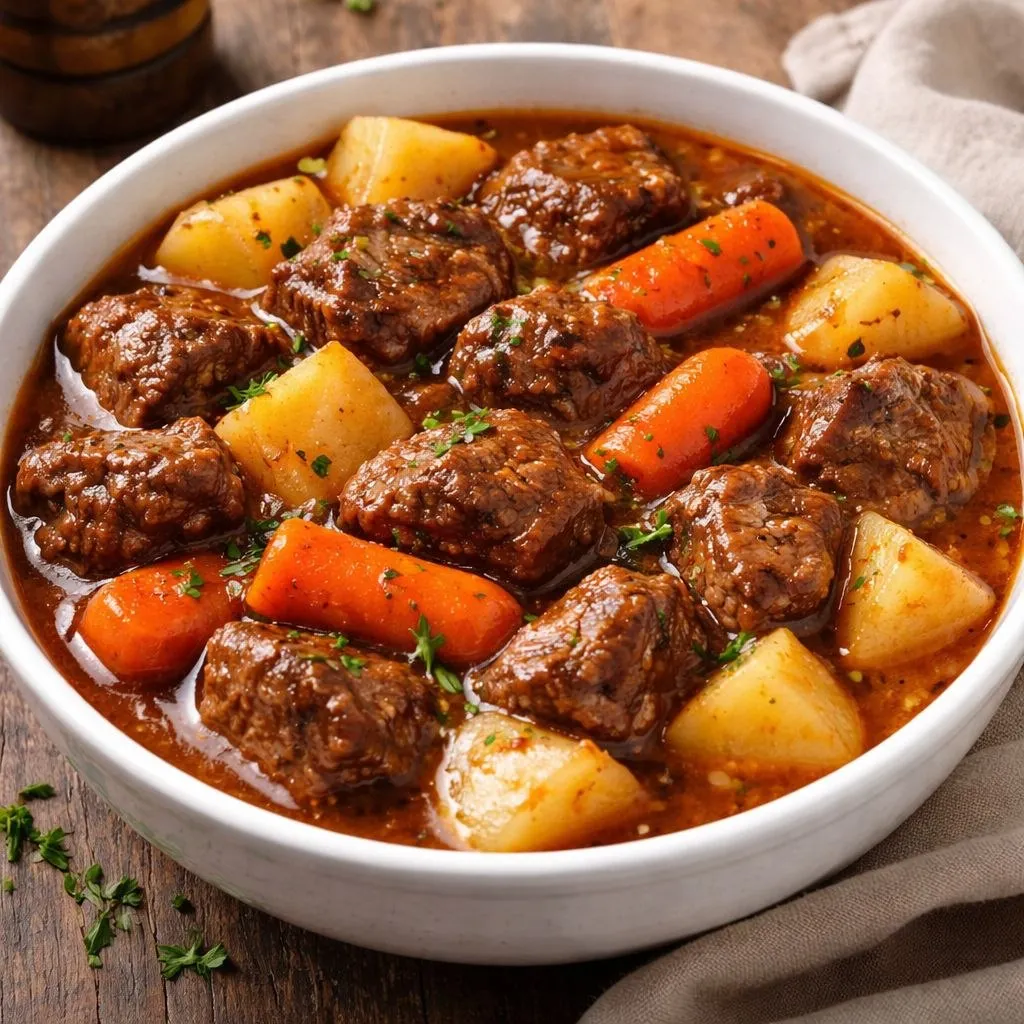
There are few dishes as comforting as a slow cooked beef stew. It’s the kind of meal that fills your kitchen with deep, savory aromas and makes you want to linger a little longer around the stove. This recipe is simple, honest, and incredibly satisfying—tender chunks of beef, soft vegetables, and a rich broth that tastes like it’s been cooking all day.
I always find myself coming back to this stew when the weather cools down or when I just need something grounding. It’s not fancy, but that’s exactly the charm. With a bit of patience, you get a pot full of warmth that tastes even better the next day.
Why This Slow Cooked Beef Stew Is Worth the Wait
What makes this stew so special is the slow simmer. It gives the beef time to break down and become melt-in-your-mouth tender, while the broth develops layers of flavor from the meat, herbs, and vegetables.
I love how the carrots turn slightly sweet, the potatoes soak up all that savory goodness, and the beef becomes so soft you barely need a knife. It’s a one-pot meal that feels complete on its own.
Ingredients You’ll Need
This recipe serves about 4 to 5 people.
- 700g beef chuck, cut into chunks
- 2 tablespoons flour
- Salt and black pepper
- 2 tablespoons oil
- 1 onion, chopped
- 3 cloves garlic, minced
- 3 carrots, chopped
- 2 potatoes, cubed
- 2 tablespoons tomato paste
- 4 cups beef broth
- 1 teaspoon thyme
- 1 teaspoon rosemary
- 1 bay leaf
Optional additions:
- A splash of red wine for deeper flavor
- Cornstarch slurry for thickening
- Fresh bread for serving
Step-by-Step Cooking Instructions
Prepare and season the beef
Start by seasoning the beef chunks with salt and pepper, then lightly coat them with flour. This helps create a beautiful crust when searing and also slightly thickens the stew later. I like to shake off any excess flour so it doesn’t burn in the pot.
Sear the beef
Heat the oil in a large pot over medium-high heat. Add the beef in batches, making sure not to overcrowd the pan. Let each piece brown properly before turning it. This step is where a lot of flavor develops, so don’t rush it. Once browned, remove the beef and set it aside.
Sauté the aromatics
In the same pot, add the chopped onion and cook for a few minutes until softened. Stir in the garlic and cook for about 30 seconds until fragrant. You’ll notice all those browned bits from the beef starting to loosen—that’s pure flavor.
Build the base
Add the tomato paste and cook it for about a minute. This deepens the flavor and removes any raw taste. The mixture should look slightly darker and smell richer.
Combine everything
Return the beef to the pot along with the carrots and potatoes. Sprinkle in the thyme, rosemary, and add the bay leaf. Pour in the beef broth, making sure everything is mostly covered.
Simmer low and slow
Bring the stew to a gentle boil, then reduce the heat to low. Cover the pot and let it simmer for 1.5 to 2.5 hours. Stir occasionally and check the liquid level. The longer it cooks, the more tender the beef becomes. You’ll know it’s ready when the meat easily breaks apart with a spoon.
Final seasoning
Taste the stew and adjust the salt and pepper as needed. If you want a thicker consistency, mix a small amount of cornstarch with water and stir it in, letting it simmer for a few more minutes.
Serve
Ladle the stew into bowls and serve hot. It’s perfect with a slice of crusty bread to soak up all that rich sauce.
Texture, Flavor, and Aroma Notes
This stew is all about comfort. The beef becomes incredibly tender, almost falling apart, while the vegetables are soft but still hold their shape. The broth is rich, slightly thick, and full of deep, savory flavor with hints of herbs.
The smell while it cooks is honestly one of the best parts. You’ll catch notes of garlic, herbs, and slow-cooked meat drifting through your kitchen. It’s the kind of aroma that makes everyone ask, “What’s cooking?”
Helpful Tips for Best Results
Brown the beef properly for maximum flavor.
Cook in batches so the meat sears instead of steaming.
Keep the heat low during simmering to avoid tough meat.
If the stew reduces too much, add a bit more broth or water.
Let it rest for a few minutes before serving so the flavors settle.
Variations You Can Try
You can easily customize this stew. Add mushrooms for an earthy flavor or peas for a bit of sweetness at the end. Swap potatoes for sweet potatoes for a slightly different twist.
For a richer version, add a splash of red wine when deglazing the pot after searing the beef. It adds depth and a subtle complexity that really elevates the dish.
You can also turn this into a slow cooker recipe by transferring everything after searing and cooking on low for 6 to 8 hours.
Serving and Storage
Serve this stew hot, ideally with crusty bread or even over rice if you want something different. It’s filling and satisfying all on its own.
Store leftovers in an airtight container in the fridge for up to 3 days. The flavor actually improves overnight, which I personally love. Reheat gently on the stove or in the microwave, adding a splash of water or broth if needed.
It also freezes well for up to 2 months. Just let it cool completely before freezing.
Nutrition Snapshot
This stew is rich in protein from the beef and packed with nutrients from the vegetables. It’s a balanced, hearty meal that provides energy and warmth, especially during colder days.
Slow Cooked Beef Stew FAQ
Can I use a different cut of beef?
Yes, but beef chuck is ideal because it becomes tender with slow cooking. Leaner cuts may turn tough.
How do I know when the beef is done?
It should be fork-tender and easy to pull apart. If it’s still firm, let it cook longer.
Can I make this ahead of time?
Absolutely. In fact, it tastes even better the next day as the flavors deepen.
What if my stew is too thin?
You can simmer it uncovered to reduce or add a cornstarch slurry to thicken it.
Do I have to use all the herbs?
You can adjust to taste, but thyme and rosemary really give that classic stew flavor.
This Slow Cooked Beef Stew is one of those recipes that never goes out of style. It’s simple, hearty, and deeply comforting—exactly the kind of dish you’ll want to make again and again.