
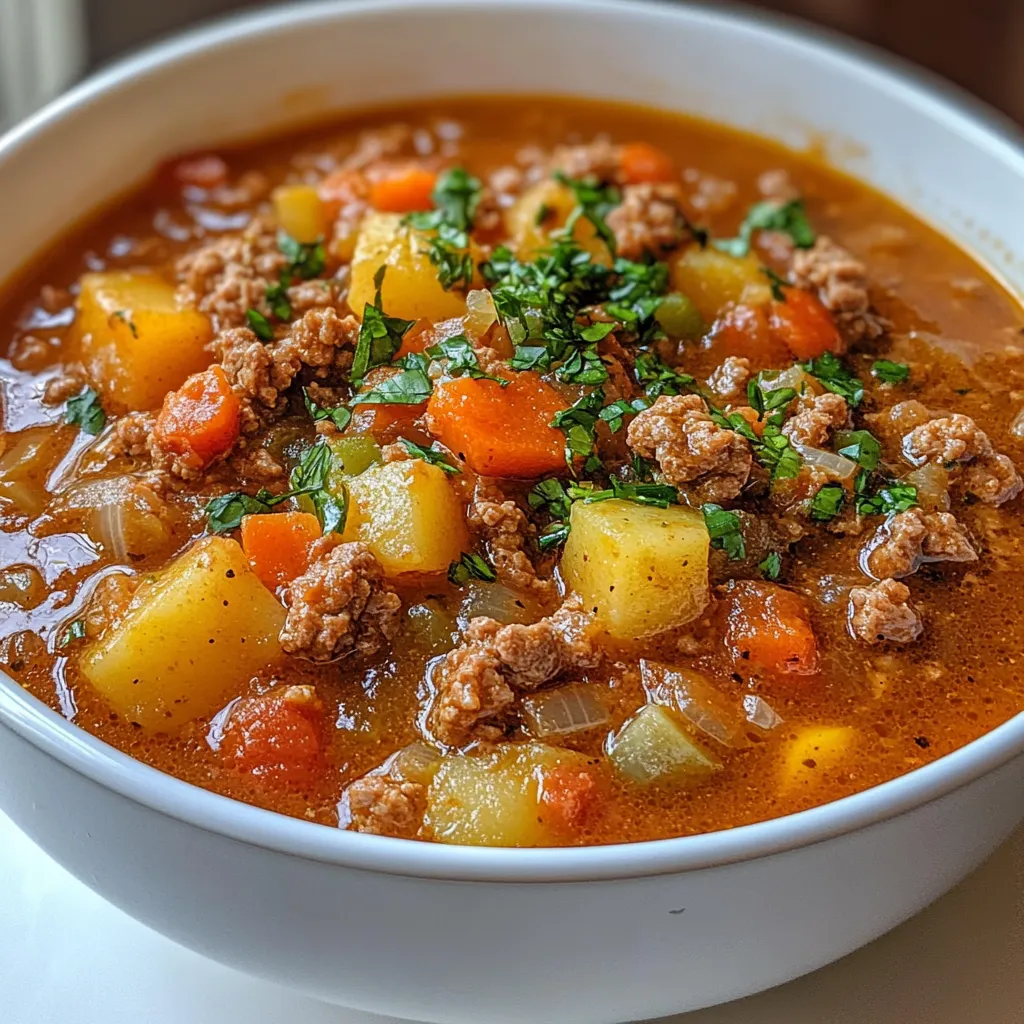
A Comforting Bowl with Purpose – Why I Love This Bone Broth Stew
This is the kind of recipe I come back to again and again, especially on busy weeks when I want something filling, nourishing, and easy to reheat. A hearty ground meat and vegetable bone broth stew feels like real food in the most honest sense. It’s warm, savory, and deeply satisfying, with that slow-simmered aroma that makes the kitchen smell like you’ve been cooking all day—even though it’s surprisingly simple.
What I love most about this stew is how flexible it is. You can use venison, beef, or even an organ meat blend, and it still turns out rich and comforting. The bone broth gives it depth and body, while the vegetables soften into the broth and soak up all the flavor. It’s the kind of meal that feels both practical and special at the same time.
What You’ll Need to Build This Nourishing Stew
This recipe uses basic ingredients, but together they create a deeply flavorful and balanced meal. Choose the best-quality meat and broth you can, since they’re the backbone of the dish.
Ingredients:
- 2 lb ground meat of choice (venison, beef chuck, or organ blend)
- 2–3 cups diced potatoes
- 1 cup chopped onion
- 1 cup chopped carrots
- 1 cup chopped celery
- 3 cloves garlic, minced
- 1 (28 oz) can diced or crushed tomatoes
- 3 cups beef or chicken bone broth
- 1 tsp Italian seasoning
- 1 tsp Worcestershire sauce
- 1 bay leaf
- Salt and pepper to taste
Preparing Your Ingredients for the Best Flavor Base
Before you turn on the stove, take a few minutes to prep everything. Chop your potatoes into bite-sized cubes so they cook evenly. Dice the carrots, celery, and onion fairly small; this helps them soften into the broth and creates a more unified texture.
Minced garlic should be ready to go because once the pot is hot, things move quickly. I like having everything laid out on the counter so I’m not scrambling mid-cooking. It makes the process calmer and more enjoyable.
Browning the Meat – Creating the Savory Foundation
In a large pot or Dutch oven, cook the ground meat over medium-high heat with a pinch of salt. Break it apart as it cooks until it’s fully browned and no longer pink. This step builds flavor, so don’t rush it.
Once cooked, discard the excess fat if there’s a lot of it, then remove the meat from the pot and set it aside. Leaving just a little fat behind helps flavor the vegetables that come next.
Building the Vegetable Layer – Where the Aroma Begins
Reduce the heat to medium and add a small dash of oil to the pot. Add the minced garlic and cook for about 30 seconds, just until fragrant. You’ll smell it right away—warm and savory.
Next, add the chopped carrots, celery, and onion along with a pinch of salt. Sauté for about 7 to 8 minutes, stirring occasionally, until the vegetables begin to soften and the onions turn slightly translucent. This step is where the stew really starts to smell like comfort food.
Simmering Everything Together – Letting the Stew Do Its Magic
Return the cooked meat to the pot. Add the bone broth, tomatoes, potatoes, Worcestershire sauce, bay leaf, and Italian seasoning. Stir everything well and bring the mixture to a boil.
Once boiling, reduce the heat to a gentle simmer. Cover partially and let it cook for 30 to 45 minutes, or until the potatoes are tender and the vegetables reach your preferred texture. I like mine soft but not mushy, with the broth slightly thickened from the potatoes and tomatoes.
Taste the stew and adjust the salt and pepper as needed. Every batch of broth and meat is different, so this final seasoning step really matters.
Tips for Even Cooking and Balanced Flavor
- Brown the meat well before removing it; this adds depth and prevents a bland stew.
- Cut vegetables evenly so they cook at the same rate.
- Simmer gently, not aggressively, to keep the broth rich and clear.
- If using organ meat blends, the tomatoes and seasoning help mellow stronger flavors.
These small choices make the stew taste intentional rather than rushed.
Serving and Storing Your Hearty Bone Broth Stew
Serve this stew hot in deep bowls with a spoon and a thick slice of bread if you like. It’s filling enough to be a complete meal on its own.
For storage, let the stew cool completely and transfer it to airtight containers. It keeps well in the refrigerator for up to four days and freezes beautifully for up to three months. I often make a double batch just so I can have future dinners ready with almost no effort.
Creative Ways to Customize This Stew
This recipe welcomes substitutions. You can add green beans, zucchini, cabbage, or even spinach near the end of cooking. Swap potatoes for sweet potatoes or turnips if you want something different.
For spice lovers, a pinch of chili flakes or smoked paprika adds warmth. You can also stir in fresh herbs like parsley or thyme just before serving for a brighter finish.
Nutrition Snapshot – Why This Stew Is So Satisfying
This stew is packed with protein, minerals, and collagen thanks to the bone broth and meat. The vegetables contribute fiber and vitamins, making it a well-rounded meal that keeps you full for hours.
Because it’s cooked in one pot, the nutrients stay in the broth instead of being lost. It’s especially comforting when you want something nourishing without feeling heavy.
Savory Questions Answered – Your Stew FAQ Corner
Can I use any type of ground meat?
Yes. Beef, venison, turkey, or an organ blend all work well. Choose what you enjoy or what you have on hand.
Why bone broth instead of regular stock?
Bone broth adds collagen and gelatin, giving the stew a richer texture and more nutritional value.
Can I make this in advance?
Absolutely. It tastes even better the next day after the flavors have had time to meld.
How do I thicken the stew?
Let it simmer uncovered for the last 10 minutes or mash a few potato pieces into the broth.
Can I freeze leftovers?
Yes, this stew freezes very well. Store in portions for easy reheating.
This hearty ground meat and vegetable bone broth stew is one of those recipes that feels both practical and deeply comforting. It’s easy, adaptable, and nourishing, and once you make it once, it’s likely to become a regular part of your meal rotation.