
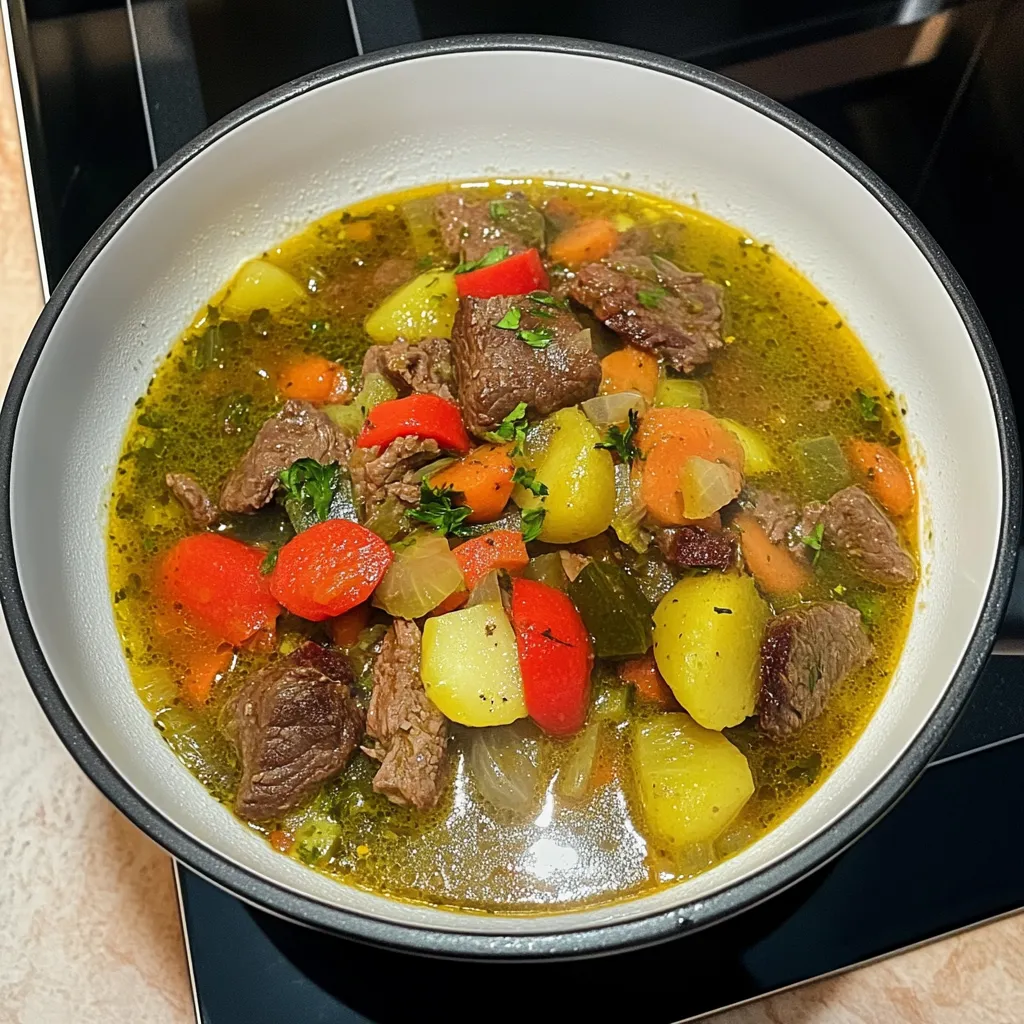
A Cozy Classic – Why Beef and Vegetable Stew Never Goes Out of Style
There’s something deeply comforting about a pot of beef and vegetable stew slowly simmering on the stove. It’s the kind of meal that fills the kitchen with warm, savory aromas and makes everyone wander in asking, “Is it ready yet?” This is one of those recipes I return to again and again when I want something nourishing, simple, and deeply satisfying.
What I love most is how humble ingredients turn into something rich and flavorful with just a little patience. The beef becomes tender, the vegetables soak up all the spices, and the broth thickens into a silky, comforting sauce. It’s not fancy food, but it’s honest food—and sometimes that’s exactly what you need.
What You’ll Need for a Flavorful Beef and Vegetable Stew
This stew uses everyday ingredients you probably already have in your kitchen. Each one plays an important role in building flavor and texture.
Ingredients:
- 500 g beef, cut into chunks
- 3 potatoes, cubed
- 2 carrots, sliced
- 1 tomato, chopped
- 1 onion, chopped
- 2 spring onions, sliced
- 2 tablespoons oil
- 1 teaspoon salt
- ½ teaspoon black pepper
- ½ teaspoon turmeric
- ½ teaspoon paprika
- 1 bay leaf (optional)
- 750 ml water or beef broth
Preparing the Ingredients for Best Texture and Taste
Before you start cooking, take a few minutes to prepare everything properly. Cut the beef into evenly sized chunks so it cooks at the same rate. I like pieces that are big enough to stay juicy but small enough to fit easily on a spoon.
Wash and cube the potatoes, slice the carrots, and chop the onion and tomato. Having everything ready before turning on the heat makes the cooking process smooth and stress-free. You’ll notice the colors already look beautiful together—bright orange carrots, pale potatoes, and rich red tomato.
Building the Flavor Base – Browning the Beef and Onions
Heat the oil in a large pot over medium heat. Add the beef chunks and let them brown on all sides. This step is crucial because it creates depth of flavor. Don’t rush it. Let the beef develop a light golden crust before stirring.
Once the beef is nicely browned, add the chopped onion. Cook it until it softens and turns slightly translucent. At this point, the smell in the kitchen becomes irresistible—savory, warm, and comforting.
Simmering the Stew to Tender Perfection
Now stir in the salt, black pepper, turmeric, paprika, and bay leaf if you’re using it. These spices give the stew a gentle warmth and beautiful color without overpowering the beef.
Add the chopped tomato and cook for a few minutes until it breaks down and blends into the mixture. This creates a natural base for the broth and adds a subtle sweetness.
Next, add the potatoes and carrots, then pour in the water or beef broth. Give everything a gentle stir, cover the pot, and lower the heat. Let it simmer for 45 to 60 minutes. The longer it cooks, the more tender the beef becomes. I usually peek in occasionally and stir, just to make sure nothing sticks to the bottom.
Finally, add the sliced spring onions and cook for another 5 minutes. They bring a fresh, mild onion flavor that brightens the whole dish right before serving.
Tips for Richer Flavor and Softer Meat
- Brown the beef well before adding liquid. This step adds a deep, savory taste to the stew.
- Use beef broth instead of water if you want a richer result.
- Keep the heat low while simmering. Slow cooking is the secret to tender meat.
- Taste near the end and adjust salt or spices to your liking.
Little details like these make a simple stew taste like something that cooked all afternoon, even if you didn’t plan it that way.
Serving and Storing Your Homemade Beef Stew
Serve the stew hot, straight from the pot. I love pairing it with crusty bread or a bowl of rice to soak up the flavorful broth. It’s also wonderful with a simple salad on the side for a balanced meal.
For storage, let the stew cool completely before transferring it to an airtight container. It keeps well in the refrigerator for up to three days. In fact, it often tastes even better the next day because the flavors have more time to blend.
Creative Ways to Enjoy Leftover Stew
Leftover stew can be transformed easily. Spoon it over mashed potatoes for a new meal, or use it as a filling for savory pies or wraps. You can even thicken it slightly and serve it over pasta for a completely different dinner experience.
I’ve reheated this stew countless times, and each time it feels like comfort in a bowl.
Variations to Try – From Spicy to Herb-Infused
If you enjoy a bit of heat, add a pinch of chili powder or fresh chili slices while simmering. For an herby version, try adding thyme or rosemary along with the bay leaf.
You can also swap the vegetables depending on what you have. Zucchini, peas, or green beans work beautifully and make the stew feel new every time you cook it.
Nutrition Snapshot – A Balanced and Nourishing Meal
This beef and vegetable stew is packed with protein from the beef and essential vitamins from the carrots, potatoes, and onions. It’s filling without being heavy and makes a complete meal in one bowl. Because it’s homemade, you control the salt and fat, making it much healthier than store-bought versions.
Common Questions Answered – Your Beef Stew FAQ Corner
Can I use another cut of beef?
Yes, tougher cuts like chuck or shoulder work best because they become tender with slow cooking.
Why is my beef still tough after cooking?
It likely needs more time. Low heat and patience are key for soft, melt-in-your-mouth beef.
Can I freeze this stew?
Yes, it freezes very well. Store it in freezer-safe containers for up to two months.
Can I make this in a pressure cooker?
Absolutely. You can reduce the cooking time to about 25–30 minutes while still achieving tender beef.
Should I peel the potatoes?
That’s up to you. I sometimes leave the skins on for extra texture and nutrients, as long as they’re well washed.
This beef and vegetable stew is the kind of recipe you’ll come back to again and again. It’s simple, comforting, and full of honest flavor—perfect for family dinners, quiet evenings, or whenever you need a warm bowl of something homemade.