
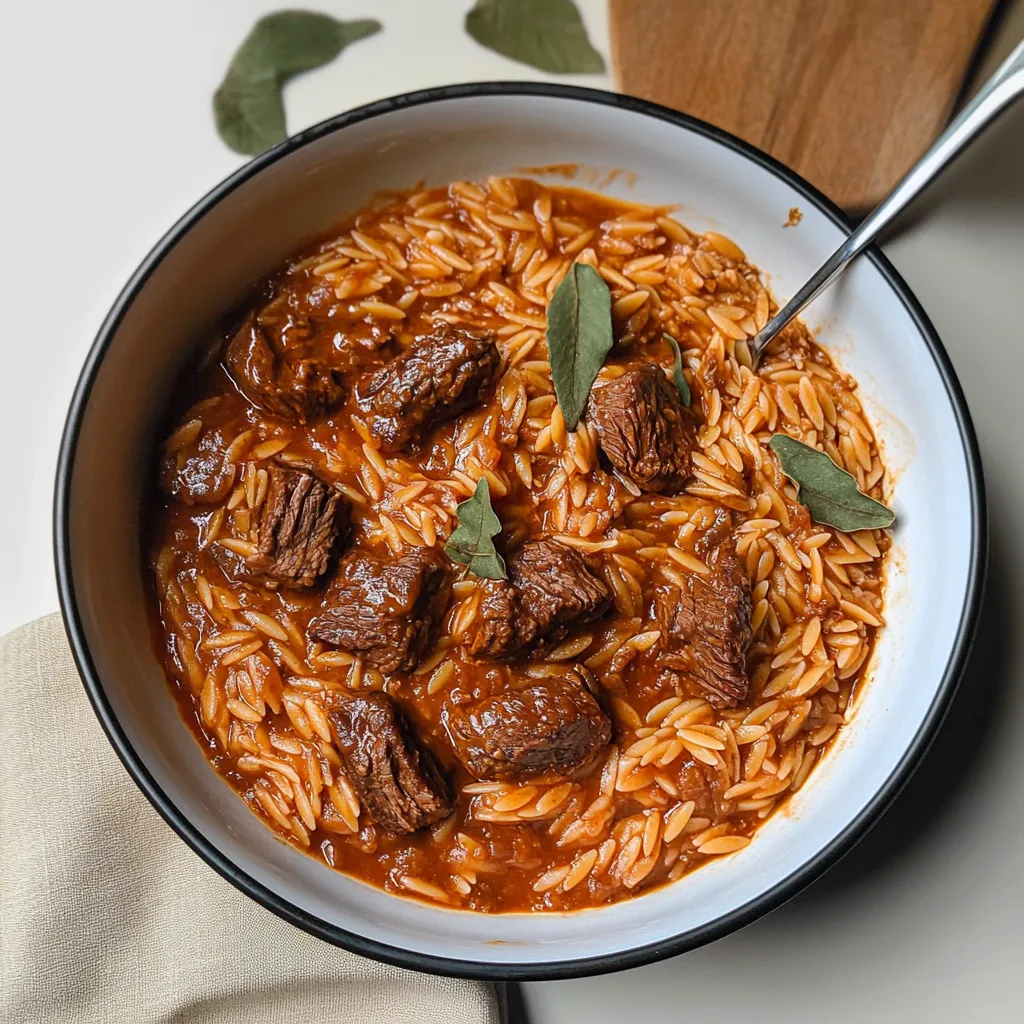
A Rustic Greek Dish with Deep Roots
Beef Giouvetsi is one of those dishes that feels both hearty and soulful. It’s the kind of meal you’d expect to find simmering slowly in a Greek kitchen on a Sunday afternoon, filling the house with the smell of tomatoes, spices, and tender beef. The first time I made it, I was surprised by how simple the ingredients were, yet how rich and layered the final dish tasted.
This is comfort food in the truest sense. The beef becomes meltingly tender, the sauce thickens into something silky and savory, and the orzo absorbs all those beautiful flavors. It’s not flashy food, but it’s deeply satisfying, and once you make it, it has a way of becoming a regular on your table.
What You’ll Need for Authentic Beef Giouvetsi
The ingredient list may look long at first glance, but most of it is pantry-friendly. Each element plays a role in building that signature warm, slightly spiced tomato sauce.
Ingredients:
- 550 g boneless beef chuck, chuck roll, or flatiron, cut into cubes
- 1/4 teaspoon ground allspice
- Salt, to taste
- Pepper, to taste
- A pinch of nutmeg
- 2 tablespoons olive oil
- 50 g red onion, minced
- 2 teaspoons tomato paste
- 40 ml red wine
- 180 g whole peeled canned tomatoes, blended smooth
- 250 ml beef or vegetable stock
- Sweet paprika, to taste
- 2 dried bay leaves
- 200 g orzo pasta
- Grated Kefalotyri cheese, optional for serving
Preparing the Base Ingredients
Before you turn on the stove, it helps to get everything ready. Blend the canned tomatoes until completely smooth and set them aside. This creates a velvety sauce later, without chunks.
Pat the beef dry with paper towels—this small step really helps with browning. Season the meat generously with salt, pepper, allspice, and a pinch of nutmeg. I like to rub the seasoning in with my hands so every piece is coated. The spices might seem subtle now, but they come through beautifully as the dish cooks.
Building Flavor from the Pan Up
Heat the olive oil in a wide pan or deep skillet over medium-high heat. Add the beef and brown it on all sides. Don’t rush this step. Let the meat develop a good crust—it adds depth and richness you’ll notice later in the sauce.
Once browned, lower the heat and add the minced red onion. Stir gently, scraping up any browned bits stuck to the bottom of the pan. Those bits are pure flavor. Cook until the onion softens and turns slightly sweet.
Stir in the tomato paste and let it cook for a minute or two until it darkens slightly. This caramelization takes away the raw tomato taste and adds a subtle sweetness.
Deglazing and Creating the Sauce
Pour in the red wine and deglaze the pan, scraping the bottom as it simmers. You’ll smell the wine almost immediately as it reduces, and the sauce starts to come together.
Add the blended tomatoes, stock, bay leaves, and a pinch of sweet paprika. Bring everything to a gentle simmer, then cover and let it cook slowly until the beef is tender. Depending on the cut, this can take anywhere from 45 minutes to over an hour. I usually check it halfway through and give it a gentle stir.
Cooking the Orzo the Traditional Way
Once the beef is fork-tender, add a bit of boiling water to loosen the sauce if needed. Season again with salt and pepper—this is the moment to adjust everything.
Stir in the orzo, cover the pan, and let it simmer gently. Stir occasionally to prevent sticking, and add a little more hot water if the sauce thickens too quickly. The orzo should be tender but not mushy, and the sauce should cling to it rather than pool at the bottom.
When it’s done, remove the pan from the heat and let it rest for a few minutes. This resting time helps the orzo absorb the last bit of sauce.
Small Tips That Make a Big Difference
Use a heavy-bottomed pan if you can—it helps prevent burning during the long simmer.
Always add boiling water, not cold, when adjusting the sauce.
Don’t overcook the orzo; it continues to soften as it rests.
Taste as you go. This dish is all about balance.
Serving and Storing Beef Giouvetsi
Serve Beef Giouvetsi hot, topped with grated Kefalotyri cheese if you have it. The cheese adds a salty, sharp finish that cuts through the richness of the sauce. If Kefalotyri isn’t available, a good Pecorino or Parmesan works well too.
Leftovers store beautifully. Keep them in an airtight container in the refrigerator for up to three days. When reheating, add a splash of water or stock to loosen the sauce.
Variations You Can Try at Home
You can make this dish with lamb instead of beef for a more traditional taverna-style version. Chicken also works if you’re looking for something lighter, though the cooking time will be shorter.
Some cooks like to finish Giouvetsi in the oven, especially when making a large batch. You can transfer everything to an oven-safe dish and bake until the orzo is perfectly tender and slightly golden on top.
Nutrition Notes
Beef Giouvetsi is a balanced meal on its own, offering protein from the beef, carbohydrates from the orzo, and healthy fats from olive oil. It’s filling without feeling heavy, especially when served with a simple green salad on the side.
Beef Giouvetsi Questions Answered
Can I make this dish ahead of time?
Yes, and it often tastes even better the next day as the flavors deepen.
What if my sauce gets too thick?
Just add a little hot water or stock and stir gently until it loosens.
Is red wine necessary?
It adds depth, but you can skip it and use a splash of extra stock if needed.
Can I freeze Beef Giouvetsi?
You can, though the orzo may soften slightly when thawed. Freeze in portions for best results.
What should I serve with it?
A Greek salad, crusty bread, or simply some steamed vegetables work perfectly.
Beef Giouvetsi is one of those dishes that rewards patience and care. Once you smell it simmering and take that first spoonful, you’ll understand why it has remained a beloved Greek classic for generations.