
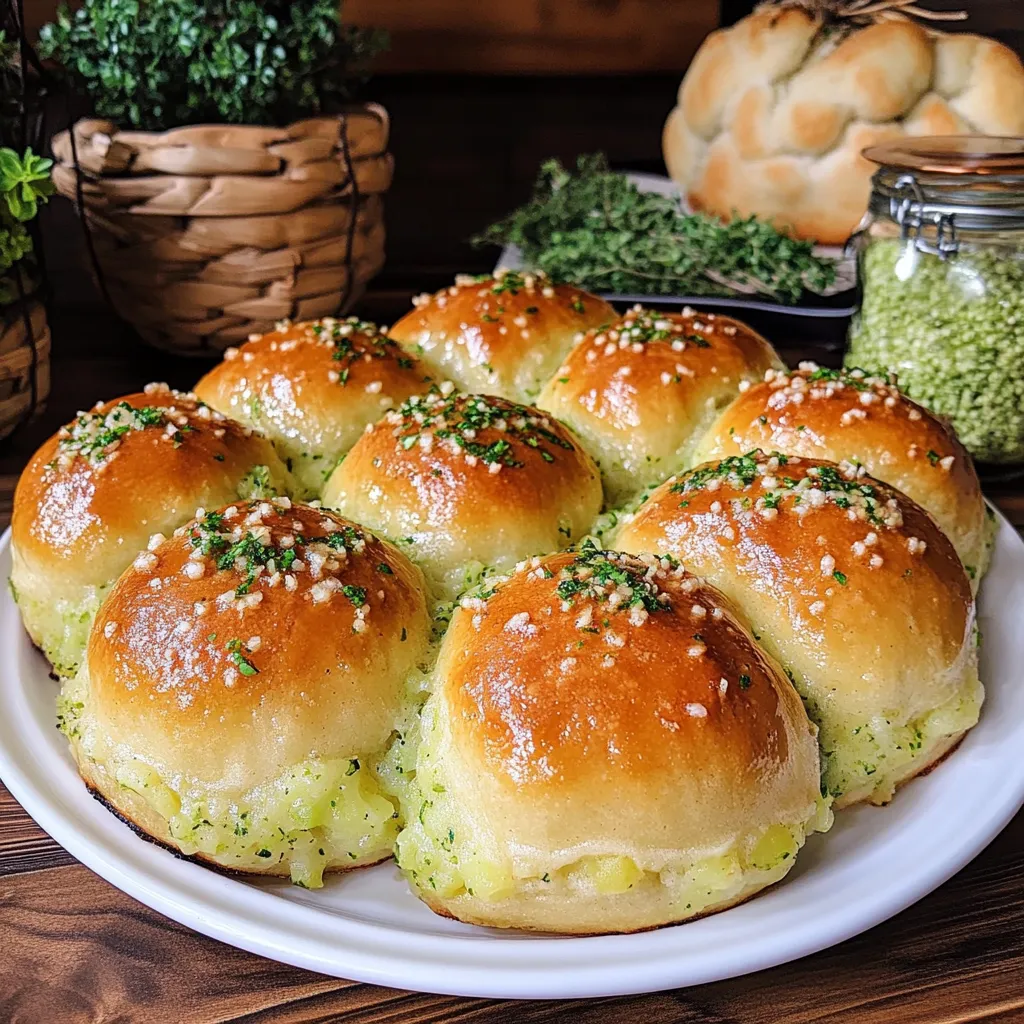
H2: Why These Old-Fashioned Herbed Potato Rolls Feel Like Home Baking at Its Best
There’s something incredibly satisfying about baking bread from scratch, especially when it fills your kitchen with that warm, yeasty aroma. These herbed potato rolls have a softness that’s hard to beat, thanks to the mashed potato tucked into the dough. I love how they come out pillowy and tender every single time, with just a hint of herbs in every bite.
H3: The simple tradition of adding potatoes to bread dough
Using potatoes in bread isn’t new—it’s actually a classic technique. The starch from the potato keeps the rolls moist and soft for longer, which is why these rolls stay fluffy even the next day. It’s one of those little tricks that feels old-fashioned in the best way.
H2: What You’ll Need for Soft, Flavorful Potato Rolls
This recipe uses simple, everyday ingredients, but together they create something really special.
Ingredients:
- 1 russet potato
- 3/4 cup reserved potato water
- 1 1/4 tsp active dry yeast
- 1/4 tsp sugar
- 1 egg, beaten
- 1 tbsp butter, melted
- 1 tbsp honey
- 0.5 tsp salt
- 2 tbsp chopped fresh herbs
- 2 3/4 cups all-purpose flour (plus extra as needed)
- 2 tbsp flavoured butter (for brushing)
H3: Choosing the right herbs and potatoes for best results
A starchy potato like russet works beautifully here—it mashes smoothly and blends easily into the dough. For the herbs, I usually go with whatever I have on hand. Parsley, thyme, or chives all work well. Fresh herbs really make a difference; you’ll notice the aroma as soon as the rolls come out of the oven.
H2: From Boiled Potato to Fluffy Rolls: The Complete Method
Start by peeling and dicing your potato, then boil it until it’s completely tender. Don’t rush this step—you want it soft enough to mash without lumps. Before draining, reserve about 3/4 cup of that cooking water. It might seem like a small detail, but that starchy water adds extra flavor and helps the yeast along.
Mash the potato and let it cool slightly. Meanwhile, take about 1/4 cup of the warm potato water (not hot—you don’t want to kill the yeast) and mix it with the yeast and sugar. Let it sit for a few minutes until it becomes foamy. If nothing happens, your yeast might be inactive, and it’s better to restart here than later.
In a large bowl, combine the remaining potato water, mashed potato, beaten egg, melted butter, honey, herbs, salt, and the yeast mixture. Stir everything together—it’ll look a bit messy at first, but it comes together once you add the flour.
Add the flour gradually and mix until a soft dough forms. It should feel slightly tacky but not overly sticky. If it sticks too much to your hands, sprinkle in a little extra flour.
H3: Kneading, proofing, and baking explained clearly
Turn the dough onto a lightly floured surface and knead it for about 8–10 minutes. I like to use the heel of my hand and push the dough away, then fold it back. You’ll feel it change—it goes from rough and sticky to smooth and elastic.
Place the dough in a greased bowl, cover it, and let it rise in a warm spot until it doubles in size. This usually takes about an hour, depending on your kitchen temperature.
Once risen, gently punch down the dough and knead it briefly to release air. Divide it into 12 equal pieces and shape them into smooth balls. I like to tuck the edges underneath to get that nice round top.
Arrange the balls in a greased baking pan, leaving a little space between them. Cover again and let them rise until puffy—they should look soft and slightly touching.
Bake in a preheated oven at 180°C (350°F) until golden brown on top. As soon as they come out, brush them with melted flavoured butter. The smell at this point is incredible—herby, buttery, and warm.
H2: Pro Tips for Achieving Ultra-Soft, Pillowy Rolls
If your dough feels too dense, it may need a bit more kneading or a slightly longer rise. I’ve learned not to rush the proofing—it really makes all the difference.
Keep your liquids warm, not hot. Yeast is sensitive, and too much heat can ruin it before it even starts working.
H3: Balancing moisture and flour for perfect dough
Potato dough can be a little different from regular bread dough—it’s softer and slightly more delicate. Add flour slowly and stop once the dough is manageable. Too much flour will make the rolls dry instead of soft.
H2: Common Mistakes and How to Avoid Them
One of the most common issues is adding too much flour. It’s tempting, especially when the dough feels sticky, but that stickiness often disappears with kneading.
Another mistake is under-proofing. If the rolls don’t rise enough, they’ll be dense instead of fluffy.
H3: Fixing dense rolls or weak rise
If your rolls turn out dense, check your yeast first. Also, make sure you gave the dough enough time to rise fully. A warm environment helps a lot—sometimes I place the bowl near a slightly warm oven.
H2: Flavor Variations and Creative Twists
You can easily customize these rolls. I’ve added garlic to the dough before, and it gives a deeper savory flavor. Cheese is another great addition—just fold in some shredded cheese before shaping.
H3: Adding cheese, garlic, or different herb blends
Try rosemary for a more rustic feel, or dill for something fresher. Mixing herbs creates layers of flavor that make these rolls feel a bit more special.
H2: How to Serve and Store Herbed Potato Rolls
These rolls are best served warm, straight from the oven. The inside stays soft and fluffy, while the outside has a light golden crust. I love serving them with soups or alongside roasted dishes.
H3: Keeping them fresh and reheating tips
Store them in an airtight container at room temperature for a couple of days. To reheat, just warm them in the oven for a few minutes—they’ll soften right up again.
H2: Your Potato Roll Questions Answered
Can I make the dough ahead of time?
Yes, you can refrigerate the dough after the first rise and bake the next day. Just let it come to room temperature before shaping.
Can I freeze these rolls?
Absolutely. Freeze them after baking and cooling, then reheat when needed.
What if I don’t have fresh herbs?
You can use dried herbs, but reduce the quantity slightly since they’re more concentrated.
Why are my rolls not fluffy?
It usually comes down to yeast activity or not enough rising time. Give the dough time, and don’t rush the process.
Once you get the feel for this dough, these rolls become a go-to recipe. They’re simple, comforting, and always worth the effort.