
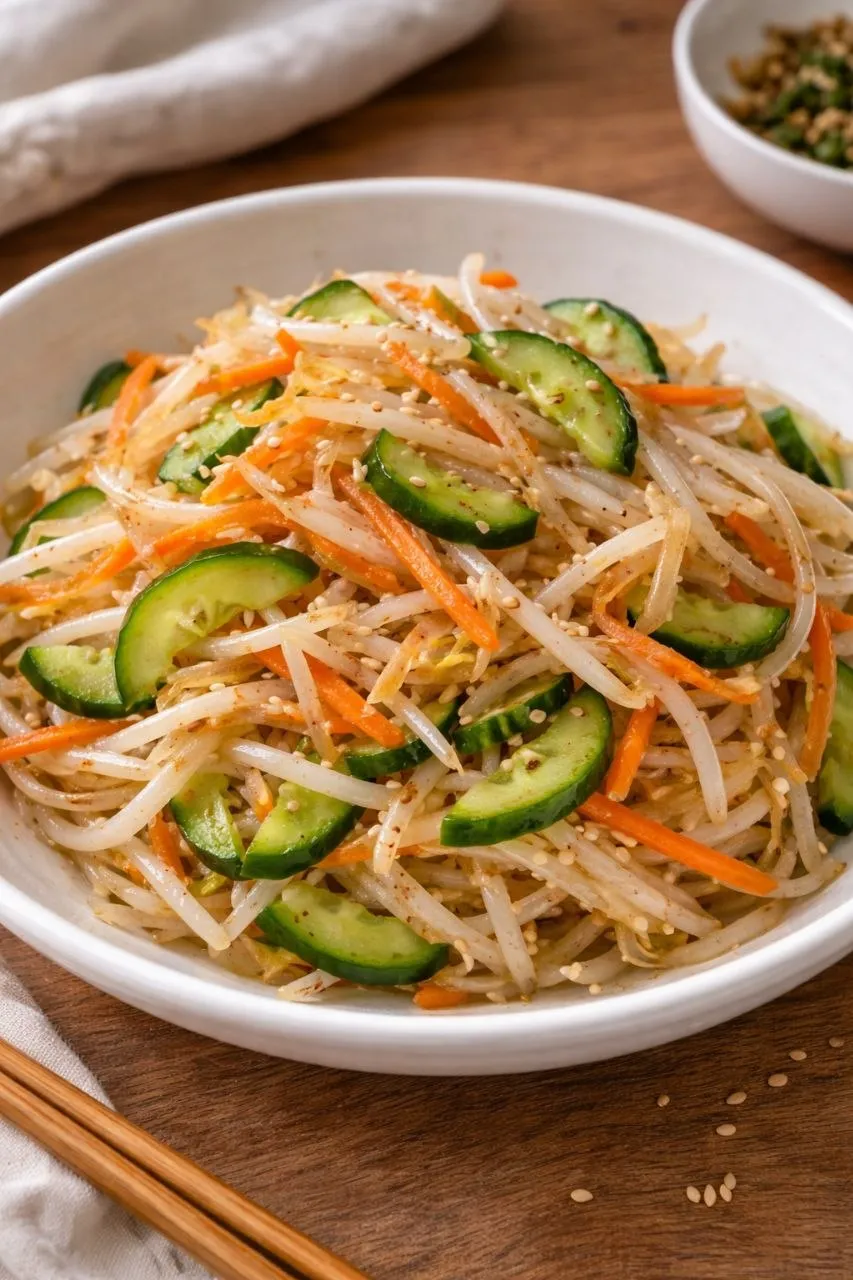
These two simple salads are the kind I come back to when I want something light, refreshing, and still full of flavor. They’re quick to prepare, rely on basic pantry ingredients, and somehow taste even better after sitting for a few minutes. I love how the textures stay crisp while the dressing soaks in just enough to make everything pop.
H2: Why These Simple Asian Cold Salads Work So Well
There’s a quiet magic in combining crunchy vegetables with a few bold seasonings. You don’t need complicated cooking techniques here—just fresh ingredients and balance. One salad leans crisp and refreshing, the other savory and umami-rich, and together they make a surprisingly satisfying duo.
H3: The balance of freshness, crunch, and umami
Bean sprouts, cucumber, and carrot bring freshness and crunch, while sesame oil and soy sauce add depth. In the second salad, seaweed and bonito flakes bring a deep, ocean-like savoriness that contrasts beautifully with the sharp bite of onion. It’s all about contrast, and it works effortlessly.
H2: Ingredients You’ll Need for Both Refreshing Salads
Each salad uses simple, everyday ingredients, but the result feels far more special than the effort involved.
H3: Crisp bean sprout salad ingredients
- 2 cups bean sprouts
- 1 carrot, julienned
- 1 cucumber, thinly sliced
- 1 tbsp sesame oil
- 1 tbsp soy sauce
- 1 tsp vinegar (optional)
- Salt & pepper to taste
- Sesame seeds (optional)
H3: Umami seaweed onion salad ingredients
- 1 onion, thinly sliced
- 1 cup seaweed (rehydrated if dried)
- 1 handful bonito flakes
- 1 tbsp soy sauce
- 1 tbsp sesame oil
- 1 tsp rice vinegar
H2: Step-by-Step Preparation for Crisp and Flavorful Results
Both salads come together quickly, but small details make a big difference in texture and flavor.
H3: Cooking and mixing the bean sprout salad
Start by boiling the bean sprouts for just 2–3 minutes. I always watch them closely because overcooking turns them limp, and the crunch is what makes this salad special. Once they’re done, drain them immediately and let them cool completely. That cooling step is important—you don’t want residual heat softening the vegetables.
Add the julienned carrot and sliced cucumber once the sprouts are cool. Then drizzle in sesame oil, soy sauce, and a touch of vinegar if you like a slight tang. Season with salt and pepper, then toss everything gently. I like to do this with my hands sometimes to feel how evenly everything is coated. Finish with sesame seeds for a subtle nutty crunch.
H3: Assembling the onion and seaweed salad with umami depth
Start by soaking the sliced onion in cold water for about 5 minutes. This softens the sharp bite and makes it much more pleasant to eat raw. Drain it well so the salad doesn’t become watery.
Combine the onion with the rehydrated seaweed in a bowl. The texture contrast here is really satisfying—slippery, soft seaweed against crisp onion. Add soy sauce, sesame oil, and rice vinegar, then mix lightly. You don’t want to break the seaweed too much.
Finally, top with bonito flakes. They’ll slightly move with the heat and moisture, almost like they’re “melting” into the salad, adding a smoky, savory layer that makes everything more complex.
H2: Serving Ideas and Storage Tips for Best Freshness
These salads are best served cold or at room temperature. I often prepare them ahead of lunch or as a side dish for grilled meats or rice bowls. The bean sprout salad stays crisp for a few hours, while the seaweed salad deepens in flavor as it sits.
If storing, keep them in airtight containers in the fridge. The bean sprout salad is best eaten within a day for maximum crunch, while the seaweed onion salad can hold up a bit longer, though the texture will soften slightly over time.
H2: Common Questions About These Light and Savory Salads
H3: Can I skip boiling the bean sprouts?
You can, but lightly boiling them improves texture and removes any raw taste. It only takes a few minutes and makes a noticeable difference.
H3: What type of seaweed works best?
Wakame is the most common choice because it softens nicely and has a mild flavor that absorbs seasoning well.
H3: Can I make these salads spicy?
Yes, a pinch of chili flakes or a drizzle of chili oil works really well, especially with the bean sprout salad.
H3: Why soak the onions in water first?
It reduces their sharpness while keeping the crunch. It makes the salad more balanced and easier to eat raw.
H3: Are these salads served warm or cold?
They’re best served cold or slightly chilled. That’s when the textures and flavors feel the most refreshing.
These two salads are simple, but that’s exactly what makes them so good. They’re fresh, quick, and full of contrast—perfect when you want something light but still deeply satisfying.