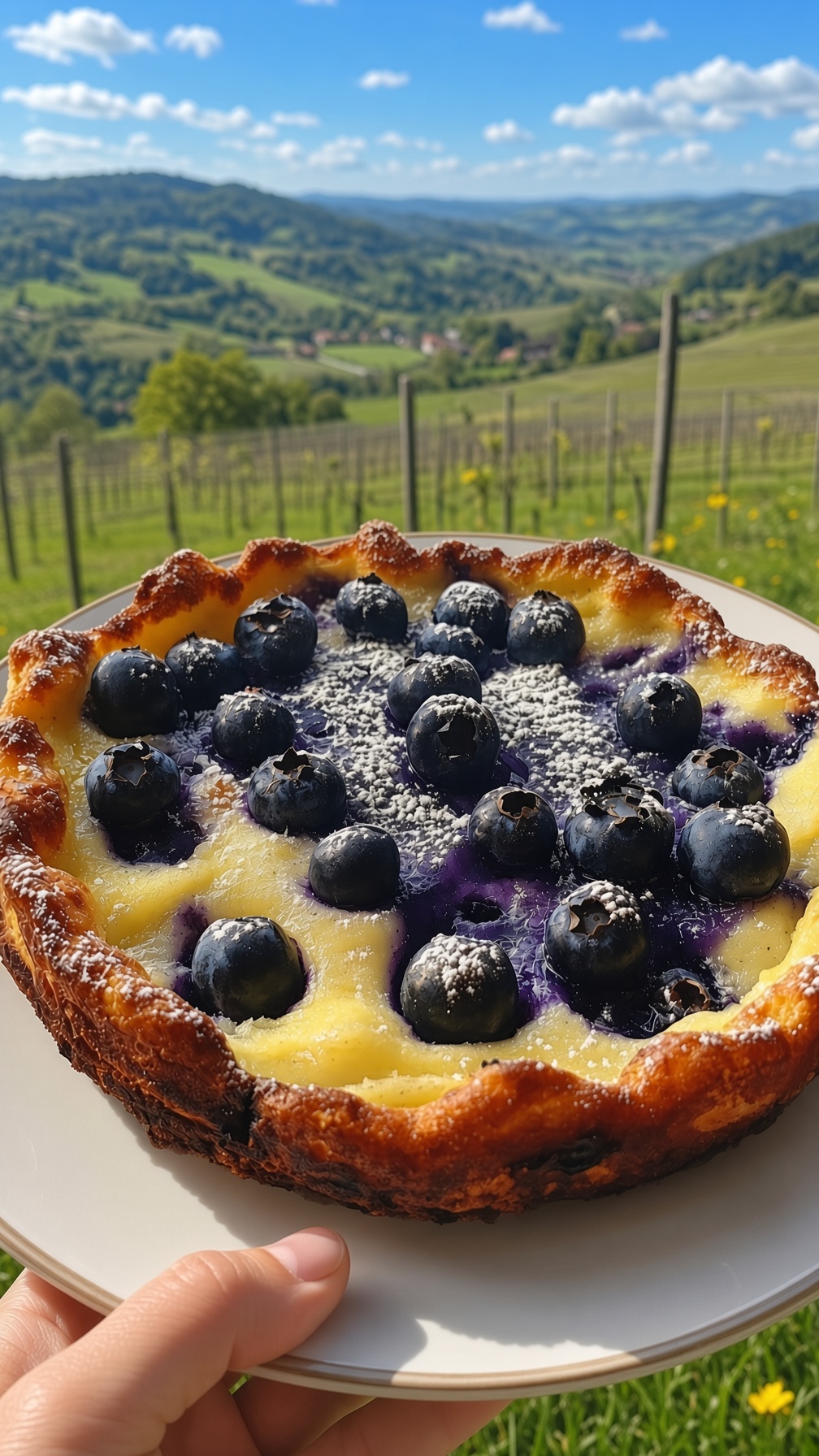
A Blueberry Lemon Dutch Baby is one of those breakfasts that looks far more complicated than it really is. The batter takes just a few minutes to blend, and then the oven does nearly all the work. What comes out is a dramatically puffed pancake with crisp, golden edges, a tender center, juicy blueberries, and bright lemon flavor.
I love how this turns out every time. The moment you open the oven, the Dutch baby looks almost impossibly tall around the edges, with the blueberries nestled into the buttery center. It does settle as it cools, and that’s completely normal. In fact, watching it puff and then gently deflate is part of the fun.
The combination of lemon zest and blueberries makes this Dutch baby especially fresh. Add a dusting of powdered sugar and a spoonful of lemon curd, and you have a breakfast that feels worthy of a lazy weekend morning.
Why This Blueberry Lemon Dutch Baby Makes Breakfast Feel Special
Unlike traditional pancakes that require standing over a griddle and flipping individual portions, a Dutch baby is baked entirely in one skillet. That makes it especially convenient when you’re cooking for several people.
The texture is also unique. The edges become lightly crisp and golden while the center stays soft, tender, and almost custard-like. The butter adds richness, while lemon zest gives the entire dish a bright citrus aroma.
Fresh blueberries add little bursts of juicy sweetness throughout the pancake. When they hit the hot skillet, they soften and release some of their juices into the buttery batter.
This is an excellent recipe for weekend breakfasts, brunch gatherings, Mother’s Day, holidays, or whenever you want something a little more impressive without spending the morning in the kitchen.
The Simple Ingredients Behind a Light and Lemony Dutch Baby
The ingredient list is short, but each ingredient has an important role in creating the right texture and flavor.
Ingredients
- 3 large eggs, at room temperature
- ¾ cup milk, at room temperature
- ¾ cup all-purpose flour
- ½ tsp vanilla extract
- 2 tsp lemon zest from 1 lemon
- 1 tbsp sugar
- ¼ tsp kosher salt
- 3 tbsp unsalted butter
- 1 cup blueberries, fresh or frozen, do not thaw
- Powdered sugar, for serving
- Lemon curd, for serving
- Maple syrup, for serving
Room-temperature eggs and milk are particularly helpful because they blend more smoothly and allow the batter to develop a light, airy consistency.
For the blueberries, fresh berries are wonderful, but frozen blueberries work just as well. If using frozen berries, don’t thaw them first. Thawed berries can release too much liquid and make the batter wetter than necessary.
How Lemon Zest and Blueberries Shape the Flavor
Lemon zest is the key to getting strong lemon flavor without adding extra liquid to the batter. The fragrant oils in the zest provide a bright citrus aroma that comes through beautifully after baking.
I like to zest the lemon directly over the blender or mixing bowl so none of those fragrant oils are wasted.
Blueberries provide the perfect contrast. Their natural sweetness balances the tartness of the lemon, while their juices become wonderfully jammy as they bake.
The vanilla rounds everything out with a subtle warmth, and the small amount of sugar gives the pancake just enough sweetness without making it dessert-like.
If you plan to serve the Dutch baby with lemon curd and maple syrup, keeping the batter only lightly sweetened is ideal.
Blending and Resting the Batter for Maximum Puff
Start by adding the eggs, milk, flour, vanilla extract, lemon zest, sugar, and salt to a blender.
Blend until the batter is completely smooth and slightly frothy. You don’t want visible streaks of flour remaining. The finished batter should look thin and pourable, more like a crepe batter than traditional pancake batter.
Transfer the batter to a pitcher or simply leave it in the blender container.
Now comes a small step that is easy to overlook: let the batter rest at room temperature for at least 30 minutes.
This resting period allows the flour to fully hydrate and helps create a smoother batter. It also gives the bubbles from blending time to settle slightly.
While the batter rests, you can prepare the rest of your ingredients and preheat the oven.
Getting the Skillet Hot for That Signature Dutch Baby Rise
Preheat the oven to 425°F (220°C).
Place a 10-inch oven-safe skillet inside the oven while it preheats. This is one of the most important parts of the recipe. The skillet needs to be thoroughly hot before the batter touches it.
When the skillet is ready, carefully remove it from the oven. Add the butter immediately and swirl the skillet until the melted butter coats the bottom and sides.
Be careful here—the pan and butter will be extremely hot.
Add the blueberries and gently swirl them through the melted butter. You don’t need to cook them separately; they’ll soften beautifully while the Dutch baby bakes.
Pour the rested batter directly over the blueberries and butter.
Immediately return the skillet to the oven and bake until the Dutch baby is dramatically puffed and golden brown around the edges.
Try not to open the oven repeatedly while it’s baking. The steady heat is important for creating that impressive rise.
Practical Tips for Golden Edges and a Tender Center
A few simple details can make a big difference.
- Always preheat the skillet thoroughly.
- Use room-temperature eggs and milk.
- Let the batter rest for at least 30 minutes.
- Don’t thaw frozen blueberries.
- Coat the skillet thoroughly with butter.
- Pour the batter in as soon as the butter has melted.
- Avoid opening the oven door unnecessarily.
- Use a skillet with oven-safe construction and handles.
The Dutch baby may puff dramatically above the sides of the skillet. Don’t worry if it looks almost too tall. Once it leaves the oven, it will naturally begin to collapse.
That deflation doesn’t mean something went wrong. It’s exactly what a Dutch baby is supposed to do.
Finishing the Dutch Baby with Sweet and Tangy Toppings
Once the Dutch baby is golden brown and beautifully puffed, carefully remove it from the oven.
Immediately dust the top with powdered sugar. The warm surface allows the sugar to settle into the folds and valleys of the pancake.
For an extra burst of citrus flavor, spoon lemon curd over individual servings. Its creamy, tart sweetness works particularly well with the blueberries.
Maple syrup adds another layer of sweetness and gives the dish that familiar breakfast-pancake character.
You can serve it with just powdered sugar, or combine all three toppings for a more indulgent breakfast.
The contrast between the crisp edges, soft center, juicy blueberries, tart lemon curd, and sweet maple syrup is absolutely delicious.
Serving and Storing Blueberry Lemon Dutch Baby
A Dutch baby is best served immediately while it’s still warm.
Cut it into wedges directly from the skillet and serve each portion with your favorite toppings. Because the pancake naturally deflates after baking, there’s no need to wait before slicing.
For a brunch table, place the skillet in the center and let everyone add their own powdered sugar, lemon curd, or maple syrup.
If you have leftovers, allow them to cool completely before refrigerating them in an airtight container. They can be kept refrigerated for about 2 to 3 days.
To reheat, warm individual pieces in a 300°F oven or toaster oven until heated through. The edges won’t be quite as crisp as when freshly baked, but the flavor remains delicious.
Easy Variations for Different Seasons and Occasions
Once you’ve made the basic version, there are plenty of ways to change it.
For a stronger citrus flavor, add a little extra lemon zest or replace some of the lemon curd with fresh lemon slices.
You can also replace the blueberries with other berries such as raspberries, blackberries, or sliced strawberries.
For a warm autumn version, add a small amount of cinnamon to the batter and replace some of the blueberries with thinly sliced apples.
For a richer dessert-style Dutch baby, serve it with whipped cream, vanilla ice cream, or a drizzle of melted white chocolate.
A handful of sliced almonds or chopped pecans can also add a pleasant crunchy contrast.
Nutrition Notes for This Fruit-Filled Breakfast
The exact nutritional information will depend on the amount of toppings used and the specific brands of ingredients.
The eggs provide protein, while milk contributes calcium and other nutrients. Blueberries add natural sweetness along with fiber and antioxidants. Using a moderate amount of powdered sugar and maple syrup allows you to control the overall sweetness.
The toppings can make a significant difference in the final nutritional profile. For a lighter serving, use fresh blueberries and a small dusting of powdered sugar. For a more indulgent brunch, add lemon curd and maple syrup.
Dutch Baby Questions Answered – A Fresh Kitchen FAQ
Why didn’t my Dutch baby puff?
The most common reasons are an insufficiently hot skillet, a cold oven, or batter that wasn’t blended properly. Make sure the skillet preheats in the oven and that the batter is smooth and slightly frothy before baking.
Why does my Dutch baby collapse after baking?
This is completely normal. The dramatic puff comes from steam and hot air inside the batter. Once the skillet comes out of the oven, the structure naturally settles.
Can I use frozen blueberries?
Yes. Frozen blueberries work very well. Add them straight from the freezer and do not thaw them first.
Do I really need to let the batter rest?
It’s strongly recommended. A 30-minute rest allows the flour to hydrate and helps produce a smoother, more tender result.
Can I make the batter ahead of time?
Yes. You can prepare the batter several hours ahead and keep it refrigerated. Bring it back toward room temperature before baking for the best results.
What skillet is best for a Dutch baby?
A 10-inch oven-safe skillet works particularly well. Cast iron is a popular choice because it retains heat effectively, but another heavy oven-safe skillet can also work.
Can I use orange instead of lemon?
Absolutely. Orange zest pairs beautifully with blueberries and creates a sweeter, warmer citrus flavor.
What is the best way to serve a Blueberry Lemon Dutch Baby?
Serve it hot and fresh with powdered sugar, lemon curd, and maple syrup. The combination of crisp edges, tender center, juicy blueberries, and bright citrus makes it especially delicious straight from the oven.