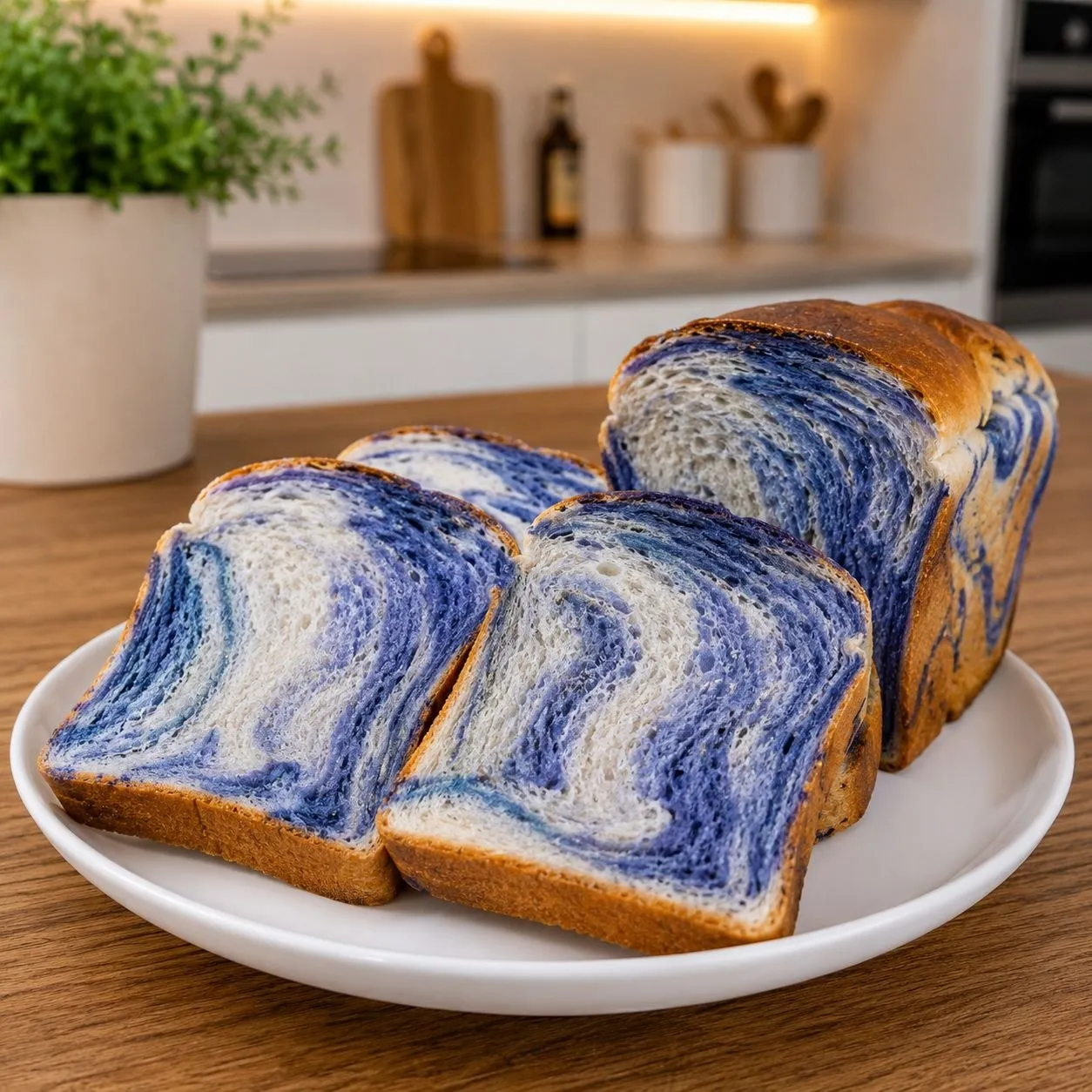
There’s something incredibly calming about baking homemade Japanese milk bread. The process is gentle, almost therapeutic, and the reward is a loaf so soft you can barely stop yourself from tearing into it while it’s still warm. This Butterfly Blue Shokupan takes that classic pillowy texture and adds a stunning marbled blue swirl using butterfly pea powder.
The first time I sliced into this loaf, I honestly paused for a second just to admire the wave-like pattern inside. It looks delicate and artistic, yet the flavor stays wonderfully simple and comforting. The bread itself is buttery, slightly sweet, and unbelievably fluffy thanks to the tangzhong method. If you love soft bakery-style bread with a unique visual twist, this recipe is one you’ll want to make again and again.
Why This Butterfly Blue Shokupan Is So Special
Japanese milk bread already has a reputation for being extra soft and cloud-like, but adding butterfly pea powder gives it a dreamy appearance without overpowering the flavor. The blue dough creates natural swirls that make every slice look different.
I love serving this bread toasted with butter in the morning. The edges crisp slightly while the center stays soft and airy. The subtle sweetness also makes it perfect for French toast or fruit sandwiches.
Ingredients You’ll Need
Tangzhong:
- 3 tablespoons bread flour
- 1/2 cup milk
- 1/2 cup water
Dough:
- 3 1/2 cups bread flour
- 1/4 cup sugar
- 1 teaspoon salt
- 2 1/4 teaspoons instant yeast
- 3/4 cup warm milk
- 1 large egg
- 4 tablespoons unsalted butter, softened
Blue Dough:
- 1 to 2 teaspoons butterfly pea powder
- 1 to 2 tablespoons warm milk
Optional:
- 1 egg + 1 tablespoon milk for egg wash
The Secret Behind Ultra-Soft Japanese Milk Bread
The magic of shokupan comes from tangzhong, a cooked flour mixture that helps the bread retain moisture. It may seem like a small extra step, but it completely changes the texture of the final loaf.
This method creates bread that stays soft for days instead of drying out quickly. You’ll notice the dough feels silky and stretchy while kneading, and the baked loaf has that signature feathery pull-apart texture.
Making the Tangzhong
In a small saucepan, whisk together the bread flour, milk, and water until smooth. Place the pan over medium heat and stir constantly. Within a few minutes, the mixture thickens into a pudding-like paste.
Don’t walk away during this step because it thickens surprisingly fast. Once it reaches a smooth consistency, remove it from the heat and let it cool completely before adding it to the dough.
The texture should be glossy and thick but still spreadable.
Mixing and Kneading the Dough
In a large mixing bowl, combine the bread flour, sugar, salt, and instant yeast. Pour in the warm milk, egg, and cooled tangzhong. Mix until a shaggy dough forms.
Knead the dough for about 8 to 10 minutes until smooth. At first, it may feel sticky, but resist adding too much flour. As you knead, it gradually becomes softer and more elastic.
Add the softened butter and continue kneading until fully incorporated. The dough should become stretchy and smooth enough to pass the windowpane test. When you pull a small piece gently, it should stretch thin without tearing easily.
Creating the Butterfly Blue Dough
Divide the dough into two equal portions. Leave one plain.
In a small bowl, mix the butterfly pea powder with warm milk until smooth and vibrant. Knead this mixture into the second portion of dough until the color is evenly distributed.
The blue shade becomes richer as you knead. Sometimes I leave tiny streaks of darker blue for a more natural marbled look. It doesn’t need to be perfectly uniform.
First Rise – Letting the Dough Develop Flavor
Place both dough portions into lightly greased bowls and cover them with a towel or plastic wrap. Let them rise in a warm spot for about one hour or until doubled in size.
You’ll notice how soft and puffy the dough becomes. If your kitchen is cool, it may take a little longer. I often place mine near the oven for gentle warmth.
Creating the Signature Marble Effect
Roll out both doughs into rectangles of similar size. You can either stack them on top of each other or gently twist them together for a swirl pattern.
Carefully roll the dough into a loaf shape. Don’t overwork it here or the colors may blend too much. The beauty comes from soft, flowing swirls rather than perfectly mixed dough.
As you shape the loaf, you’ll start seeing hints of the final pattern hidden inside.
Second Rise for a Light and Airy Texture
Place the shaped dough into a greased loaf pan. Cover loosely and let it rise again for about 45 to 60 minutes.
The dough should puff up noticeably and rise close to the top of the pan. This second rise is what gives the bread its airy, delicate crumb.
Baking the Perfect Loaf
If using egg wash, whisk together the egg and milk and gently brush the top of the loaf. This gives the crust a beautiful golden shine.
Bake at 350°F (175°C) for 30 to 35 minutes until golden brown. The top should feel lightly firm, and the kitchen will smell buttery and sweet.
If the loaf browns too quickly, loosely cover it with foil during the last part of baking.
Cooling and Slicing
Let the bread cool before slicing. I know it’s tempting to cut into it immediately, but allowing it to cool helps the texture settle properly.
Once sliced, the beautiful blue swirls appear inside like soft ocean waves. Every loaf turns out slightly different, which honestly makes it even more charming.
The crumb should be fluffy, tender, and light enough to pull apart with your fingers.
Delicious Ways to Enjoy Butterfly Blue Shokupan
This bread is incredibly versatile. It’s perfect for:
- Blueberry sandwiches
- French toast
- Sweet butter toast
- Cream cheese and fruit toast
- Honey drizzle breakfast slices
I especially love it lightly toasted with salted butter. The outside becomes lightly crisp while the inside stays soft and rich.
Helpful Tips for Best Results
Use bread flour instead of all-purpose flour for the best chewy-soft texture.
Make sure the tangzhong cools before adding it to the dough.
Don’t rush the kneading stage because proper gluten development creates the fluffy texture.
Avoid adding too much extra flour even if the dough feels sticky at first.
For brighter blue color, use high-quality butterfly pea powder.
Storing Your Homemade Milk Bread
Store the bread in an airtight container or bread bag at room temperature for up to three days. It stays softer longer than regular bread because of the tangzhong.
You can also freeze slices individually and toast them straight from frozen. The texture holds up beautifully.
Butterfly Blue Shokupan FAQ
Can I make this without butterfly pea powder?
Yes, absolutely. You’ll still get delicious classic shokupan without the blue swirl.
Why is my bread dense instead of fluffy?
Usually this happens from under-kneading or not allowing enough rising time. The dough needs proper gluten development and patience.
Does butterfly pea powder change the flavor?
Not very much. It has a very mild earthy taste, but the buttery bread flavor stays dominant.
Can I make this by hand without a mixer?
Yes. It just takes a little more kneading time and patience, but it works beautifully.
What makes Japanese milk bread softer than regular bread?
The tangzhong method locks moisture into the dough, creating that signature soft and fluffy texture.
This Butterfly Blue Shokupan feels almost too beautiful to slice at first, but once you taste the soft buttery crumb, you’ll be reaching for another piece immediately. It’s comforting, creative, and one of those recipes that makes homemade bread feel truly special.