
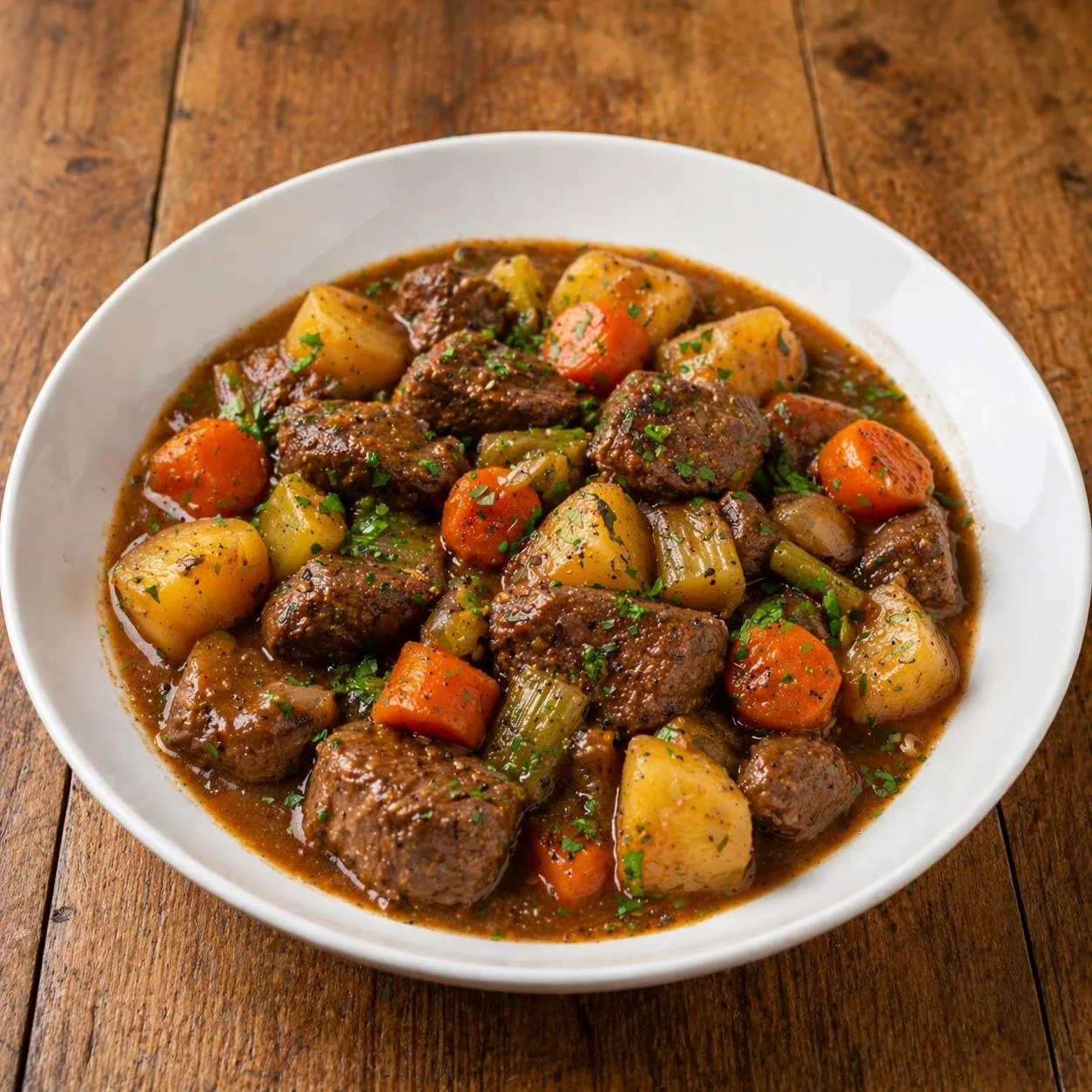
There’s something incredibly satisfying about a pot of beef stew gently bubbling away on the stove. This Classic Beef Stew with Vegetables is the kind of meal that fills your kitchen with rich, savory aromas and makes you look forward to dinner all day. It’s warm, deeply comforting, and packed with tender beef, soft vegetables, and a flavorful broth that feels like it’s been made with care.
I always think of this as a “slow down and enjoy the process” recipe. It’s not complicated, but it rewards patience. The longer it simmers, the better it tastes, and honestly, I love sneaking a spoonful here and there just to check how it’s coming along.
Why This Classic Beef Stew Is Always Worth It
What makes this stew special is the layering of flavors. You start by browning the beef, which builds that deep, savory base, then slowly add aromatics, broth, and vegetables. Everything comes together into a rich, hearty dish where every bite feels complete.
It’s also one of those recipes that’s forgiving. If your carrots are a little bigger or your potatoes a bit softer, it still turns out delicious. That’s part of the charm.
Ingredients You’ll Need
- 800 g beef (chuck or stewing beef, cubed)
- 2 tablespoons olive oil
- 1 onion, chopped
- 3 garlic cloves, minced
- 3 carrots, sliced
- 3 potatoes, chopped
- 2 celery stalks, sliced
- 2 cups beef broth
- 1 cup water
- 2 tablespoons tomato paste
- 1 teaspoon paprika
- 1 teaspoon dried thyme
- 1 bay leaf
- Salt, to taste
- Black pepper, to taste
- 2 tablespoons flour (optional, for thickening)
- Fresh parsley, chopped (for garnish)
Step-by-Step Cooking Instructions
Heat the olive oil
Place a large pot over medium heat and add the olive oil. Let it warm up for a minute—you want it hot enough to sear, not just gently heat.
Sear the beef
Add the beef cubes in batches if needed, making sure not to overcrowd the pot. Let them brown on all sides. This step is where a lot of flavor develops, so don’t rush it. Once browned, remove the beef and set it aside.
Sauté the aromatics
In the same pot, add the chopped onion. Cook for a few minutes until soft and slightly golden. Add the minced garlic and cook for about 30 seconds. The smell at this point is incredible—rich and savory with a hint of sweetness.
Build the base
Stir in the tomato paste and cook it for about a minute. This deepens the flavor and removes any raw taste. It’s a small step, but it makes a noticeable difference.
Return the beef and add flour
Put the beef back into the pot. If you’re using flour, sprinkle it over the meat and stir well. This helps thicken the stew later and gives it that classic, slightly velvety texture.
Add liquids and seasoning
Pour in the beef broth and water. Stir in paprika, thyme, bay leaf, salt, and black pepper. Bring everything to a gentle boil, then reduce the heat to low.
Let it simmer
Cover the pot and let the stew simmer for about one hour. This is where the magic starts—your kitchen will fill with that slow-cooked, comforting aroma.
Add the vegetables
After the first hour, add the carrots, potatoes, and celery. Stir gently, making sure everything is submerged in the liquid.
Finish cooking
Continue simmering for another 45 to 60 minutes, until the vegetables are tender and the beef is soft enough to break apart easily with a spoon. The broth should be rich and slightly thickened.
Final touches
Taste and adjust seasoning if needed. Remove the bay leaf and sprinkle fresh parsley over the top before serving.
Texture, Flavor, and Aroma Notes
This stew is all about comfort. The beef becomes melt-in-your-mouth tender, the potatoes soak up the broth and turn creamy, and the carrots add a gentle sweetness. The broth itself is rich and savory, with subtle hints of herbs and spice.
You’ll notice the aroma shifting as it cooks—from the sharpness of garlic and onion at the start to a deep, slow-cooked richness that fills the entire kitchen. It’s one of those dishes that makes people wander in and ask, “What smells so good?”
Helpful Tips for Best Results
Take your time browning the beef. That deep color equals deep flavor.
Cut your vegetables into similar sizes so they cook evenly.
Keep the heat low during simmering to avoid tough meat.
If the stew gets too thick, add a splash of water or broth. If it’s too thin, let it simmer uncovered for a bit longer.
Variations You Can Try
You can easily customize this stew. Add mushrooms for extra depth or swap potatoes for sweet potatoes for a slightly sweeter twist. A splash of red wine added with the broth can bring a richer, more complex flavor.
For a lighter version, reduce the oil slightly and skip the flour. For a more rustic feel, leave the vegetables in larger chunks.
Serving and Storage
Serve the stew hot, ideally with crusty bread to soak up the broth. It’s the kind of meal that feels complete on its own but pairs beautifully with a simple side.
Store leftovers in the fridge for up to three days in an airtight container. When reheated, the flavors are even deeper and more developed. You might actually find it tastes better the next day.
Nutrition Snapshot
This stew is packed with protein from the beef and nutrients from the vegetables. It’s a balanced, hearty meal that provides warmth and energy, especially on cooler days.
Classic Beef Stew FAQ
Can I make this in advance?
Yes, and it’s even better the next day as the flavors continue to develop.
Can I freeze beef stew?
Absolutely. Let it cool completely, then store in freezer-safe containers for up to three months.
What cut of beef is best?
Chuck or stewing beef works best because it becomes tender during slow cooking.
Do I have to use flour?
No, it’s optional. It helps thicken the stew, but you can skip it or use alternatives like cornstarch.
Why is my beef still tough?
It likely needs more time. Keep simmering on low heat until it becomes tender.
This Classic Beef Stew with Vegetables is one of those timeless recipes that never goes out of style. It’s simple, honest cooking that fills both your kitchen and your table with warmth. Once you make it, you’ll understand why it’s such a beloved classic.