
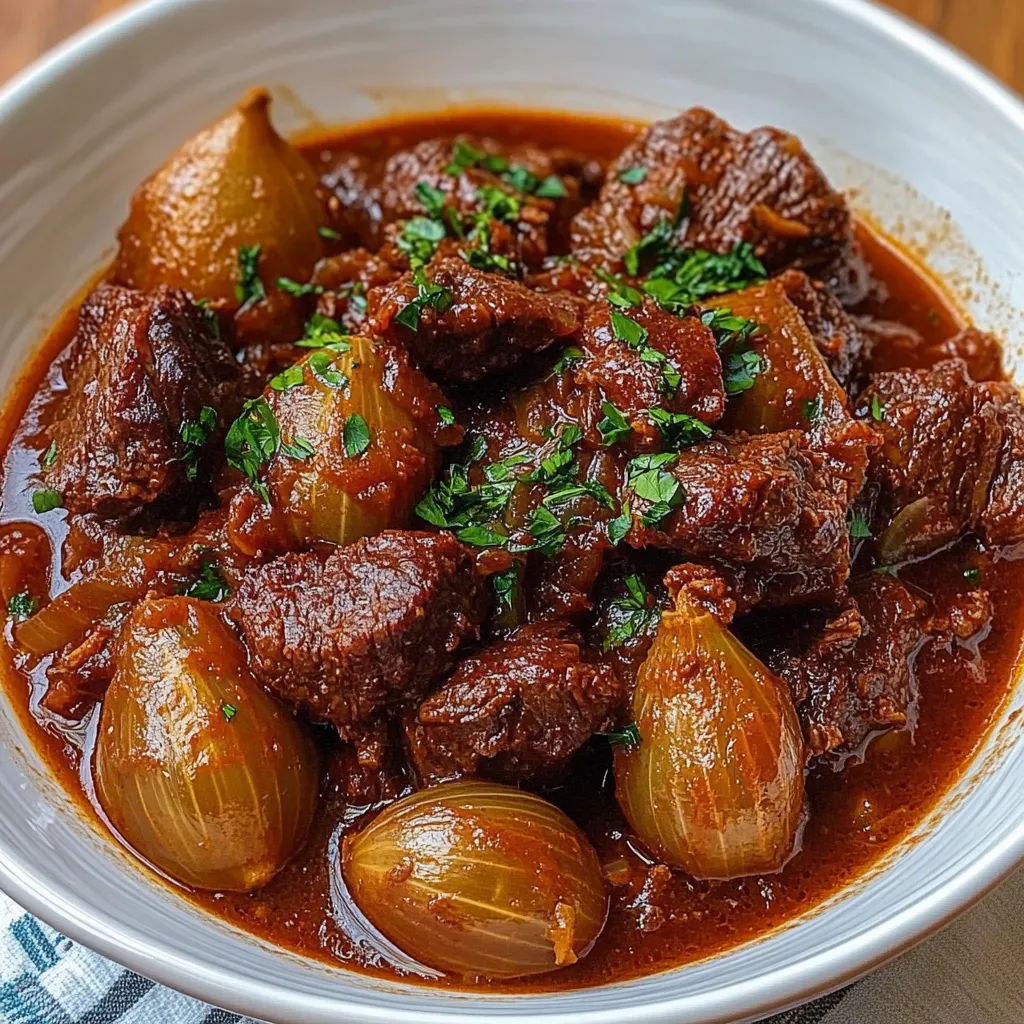
Greek Beef Stifado is one of those dishes that feels like it was made to fill the house with warmth. It’s rich, aromatic, slightly sweet from the shallots, and deeply savory thanks to slow-cooked beef and spices like cinnamon and cloves. Every time I make it, the kitchen smells like something that’s been cooking for hours in a traditional Greek home, even if it’s just my own pot on a quiet afternoon.
This is not a rushed meal. It’s a slow, gentle stew that rewards patience with melt-in-your-mouth beef and a thick, glossy sauce that you’ll want to scoop up with bread until the pot is empty.
The Story and Flavor Behind Greek Beef Stifado
Stifado is a classic Greek stew known for its signature combination of beef, pearl onions or shallots, and warm spices. What makes it special is the balance between acidity from tomatoes and vinegar, sweetness from the onions, and the deep richness of slow-cooked meat.
I love how the cinnamon and cloves don’t overpower the dish but instead give it a subtle warmth in the background. It’s the kind of flavor that sneaks up on you in the best way possible. The longer it simmers, the better it gets.
Ingredients You’ll Need
- 700 g beef (cut into chunks)
- 300–400 g small shallots (peeled, whole)
- 2 tbsp olive oil
- 2 garlic cloves, minced
- 2 tbsp tomato paste
- 400 g crushed tomatoes
- 1/2 cup red wine
- 2 tbsp red wine vinegar
- 1 tsp sugar (optional)
- 1 cinnamon stick
- 2–3 bay leaves
- 4–5 whole cloves
- 1/2 tsp ground allspice (optional)
- Salt, to taste
- Black pepper, to taste
- Fresh parsley, chopped (for garnish)
Step-by-Step Cooking Instructions
Sear the beef
Heat olive oil in a heavy pot over medium heat. Add the beef chunks and sear them on all sides until nicely browned. This step builds the foundation of flavor, so don’t rush it. Once browned, remove the beef and set it aside.
Build the base
In the same pot, add the minced garlic and sauté briefly until fragrant. Stir in the tomato paste and cook for 1 to 2 minutes, letting it deepen in color and flavor. You’ll notice a rich, slightly sweet aroma developing at this stage.
Deglaze and simmer
Pour in the red wine and let it simmer for a few minutes, scraping the bottom of the pot to lift all those flavorful browned bits. This adds depth to the sauce and a subtle richness that makes the stew taste slow-cooked even early on.
Slow cook the beef
Return the beef to the pot. Add crushed tomatoes, red wine vinegar, sugar if using, cinnamon stick, bay leaves, cloves, and allspice. Season with salt and black pepper. Stir everything well so the spices are evenly distributed.
Cover and let it simmer gently on low heat for about 1 to 1.5 hours. The beef should slowly become tender and absorb all the aromatic flavors. The sauce will start to thicken and deepen in color during this time.
Add the shallots
Once the beef is starting to soften, add the peeled whole shallots. Continue cooking for another 30 to 40 minutes until the shallots are soft, slightly sweet, and the sauce has reduced into a rich, glossy consistency.
Finish and adjust
Taste and adjust seasoning if needed. Remove the cinnamon stick and bay leaves before serving. Finish with a sprinkle of fresh parsley for a fresh, vibrant contrast.
Why This Stifado Tastes So Special
The magic of this dish is in its layers of flavor. The beef becomes tender and rich, the shallots turn soft and slightly sweet, and the sauce carries a gentle warmth from the spices. You don’t get any single overpowering taste—it all blends into something deeply comforting.
I always find myself tasting the sauce “just one more time” before serving because it changes as it cooks. That’s the beauty of slow stews.
Helpful Cooking Tips
Brown the beef properly for maximum flavor development.
Don’t skip the wine—it adds depth and balance to the tomato base.
Cook low and slow; rushing will make the meat tough instead of tender.
If the sauce gets too thick, add a splash of water or broth while simmering.
Serving Ideas and Pairings
This dish is traditionally served with crusty bread, and honestly, that’s my favorite way too. The bread soaks up the sauce perfectly. You can also serve it with fluffy rice or creamy mashed potatoes, which both work beautifully with the rich stew.
A simple Greek salad on the side adds freshness and balances the richness of the dish.
Variations You Can Try
You can swap beef for lamb for a more traditional Greek variation with an even deeper flavor. Some versions also add a touch more vinegar for extra brightness. If you like a slightly sweeter profile, increase the shallots or add a small pinch more sugar.
For a thicker stew, let it simmer uncovered for the last 15 minutes.
Storage and Reheating
Stifado actually tastes better the next day. Store it in an airtight container in the fridge for up to 3 days. Reheat slowly over low heat, adding a small splash of water if needed to loosen the sauce.
It also freezes well, making it a great make-ahead comfort meal.
Nutrition Snapshot
This stew is rich in protein from the beef and contains antioxidants from tomatoes and spices. It’s a hearty, balanced meal that works well for family dinners, especially when served with vegetables or whole grains on the side.
Greek Beef Stifado FAQ
Can I make this without wine?
Yes, you can replace the wine with beef broth, but the flavor will be slightly less deep.
Why use whole shallots?
They soften during cooking and become sweet and tender, balancing the rich sauce.
Can I cook it faster?
You can, but the beef will not be as tender or flavorful. Slow cooking is key.
What cut of beef is best?
Stewing cuts like chuck or shoulder work best because they become tender over long cooking.
Can I make it ahead?
Yes, and it actually tastes better the next day after the flavors develop further.
Greek Beef Stifado is one of those timeless dishes that rewards patience with incredible depth of flavor. Once you’ve made it, it’s easy to understand why it’s such a beloved classic in Greek home cooking.