
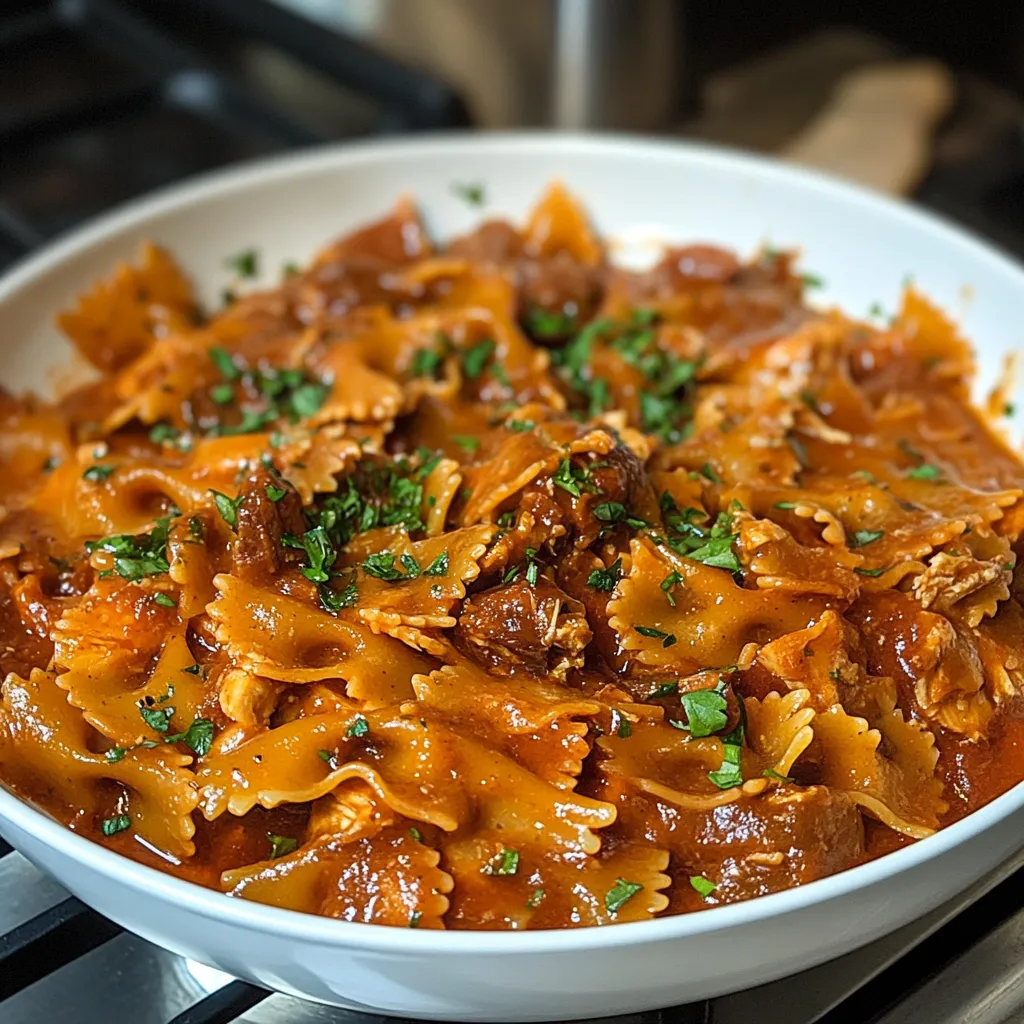
A Sweet Taste of Nostalgia – The Story Behind Marry Me Creamy Chicken Pasta
There’s a reason this dish gets its playful name—it’s the kind of meal that feels special enough to impress anyone at the table. Marry Me Creamy Chicken Pasta is rich, velvety, and packed with flavor, and I’ve made it on both busy weeknights and for small gatherings when I want something that feels just a little more elevated.
The first time I made it, I remember how the kitchen filled with the smell of garlic, herbs, and simmering cream. It’s one of those recipes where you can’t help but sneak a taste before it even reaches the table. The sauce clings beautifully to every piece of pasta, and the chicken stays juicy and tender if you cook it right.
What You’ll Need to Make This Creamy Favorite
- 2 chicken breasts, cut into bite-sized pieces
- 250–300g farfalle pasta
- 2 tablespoons olive oil or butter
- 3–4 cloves garlic, minced
- 1 small onion, chopped
- 1 teaspoon paprika
- 1 teaspoon Italian seasoning
- Salt and black pepper to taste
- 1 cup heavy cream
- ½ to 1 cup tomato sauce
- ½ cup parmesan cheese, grated
- ½ cup chicken broth (optional)
- Chili flakes (optional)
- Fresh parsley for garnish
Preparing the Pasta and Building the Base
Cook the pasta in a large pot of salted boiling water until al dente. The salt is important—it’s your first chance to season the dish properly. Before draining, reserve about ½ cup of the pasta water. It can help loosen and bind the sauce later. Drain the pasta and set it aside.
Seasoning and Searing the Chicken
Season the chicken pieces with salt, pepper, paprika, and a pinch of Italian seasoning. Heat olive oil or butter in a large pan over medium heat, then add the chicken. Cook until golden on the outside and fully cooked through, usually about 5–7 minutes.
You want a bit of browning here—it adds depth and a slightly smoky flavor. Once done, remove the chicken from the pan and set it aside. Don’t clean the pan; those browned bits are full of flavor.
Building Flavor with Aromatics
In the same pan, add the chopped onion. Let it soften for a few minutes until it turns translucent and slightly sweet. Then add the minced garlic and cook for about 30 seconds. You’ll notice the aroma immediately—it’s warm, savory, and inviting, and it forms the backbone of the sauce.
Creating the Creamy Tomato Sauce
Pour in the tomato sauce and, if using, the chicken broth. Let it simmer gently for 3–5 minutes so the flavors can come together. The sauce should start to thicken slightly and lose any sharp acidity.
Next, lower the heat and stir in the heavy cream and grated parmesan. This is where the magic happens. The sauce becomes silky, rich, and beautifully smooth. Stir until everything is fully combined and creamy.
If the sauce feels too thick, add a splash of the reserved pasta water to adjust the consistency.
Bringing Everything Together
Return the cooked chicken to the pan, along with the drained pasta. Toss everything together so the sauce coats every piece evenly.
Let it cook for another minute or two on low heat. This helps the pasta absorb some of the sauce and brings everything together into one cohesive dish.
Finishing Touches and Serving
Sprinkle fresh parsley over the top and add a pinch of chili flakes if you like a little heat. Serve immediately while it’s hot and creamy.
I love how this dish looks when it’s finished—the sauce is glossy, the chicken is tender, and the pasta is perfectly coated. It’s simple, but it feels special every single time.
Texture, Flavor, and Aroma Notes
This dish is all about contrast. The chicken is juicy with a slightly golden exterior, the pasta is soft but still has bite, and the sauce is rich and creamy with a gentle tang from the tomato.
The smell while cooking is incredible—garlic, cream, and herbs come together in a way that feels comforting and a little indulgent. It’s one of those meals that makes the whole house feel warm and welcoming.
Helpful Tips for Best Results
Don’t overcook the chicken—keep it juicy by removing it once it’s just cooked through.
Use freshly grated parmesan for the smoothest sauce. Pre-grated cheese doesn’t melt as well.
Adjust the sauce thickness with pasta water instead of adding extra cream.
Let the sauce simmer gently; high heat can cause the cream to separate.
Variations You Can Try
You can easily switch things up with this recipe. Add mushrooms or spinach for extra texture and nutrients. Swap chicken for shrimp if you want a seafood twist, or use sun-dried tomatoes for a deeper, slightly tangy flavor.
If you prefer a lighter version, use half-and-half instead of heavy cream. For a spicier version, increase the chili flakes or add a touch of hot sauce.
Serving and Storage
Serve this pasta immediately for the best creamy texture. It pairs beautifully with a simple green salad or warm garlic bread.
Store leftovers in an airtight container in the fridge for up to 2–3 days. When reheating, add a splash of milk or broth to loosen the sauce and keep it creamy. Heat gently on the stove or in the microwave to avoid separating the sauce.
Nutrition Snapshot
This dish offers a good balance of protein from the chicken, carbohydrates from the pasta, and fats from the cream and cheese. It’s a rich, satisfying meal best enjoyed as part of a balanced diet.
Marry Me Creamy Chicken Pasta FAQ
Can I use milk instead of cream?
Yes, but the sauce will be lighter and less rich. For better texture, try mixing milk with a bit of butter.
Can I make this ahead of time?
You can prepare it ahead, but it’s best enjoyed fresh. Add a little liquid when reheating to restore creaminess.
What pasta works best?
Farfalle works great because it holds the sauce well, but penne or fettuccine are also good options.
Why did my sauce separate?
This usually happens if the heat is too high or the cream is boiled too aggressively. Keep the heat low when adding dairy.
Can I freeze it?
It’s possible, but cream-based sauces can change texture after freezing. Fresh is always best for this dish.