
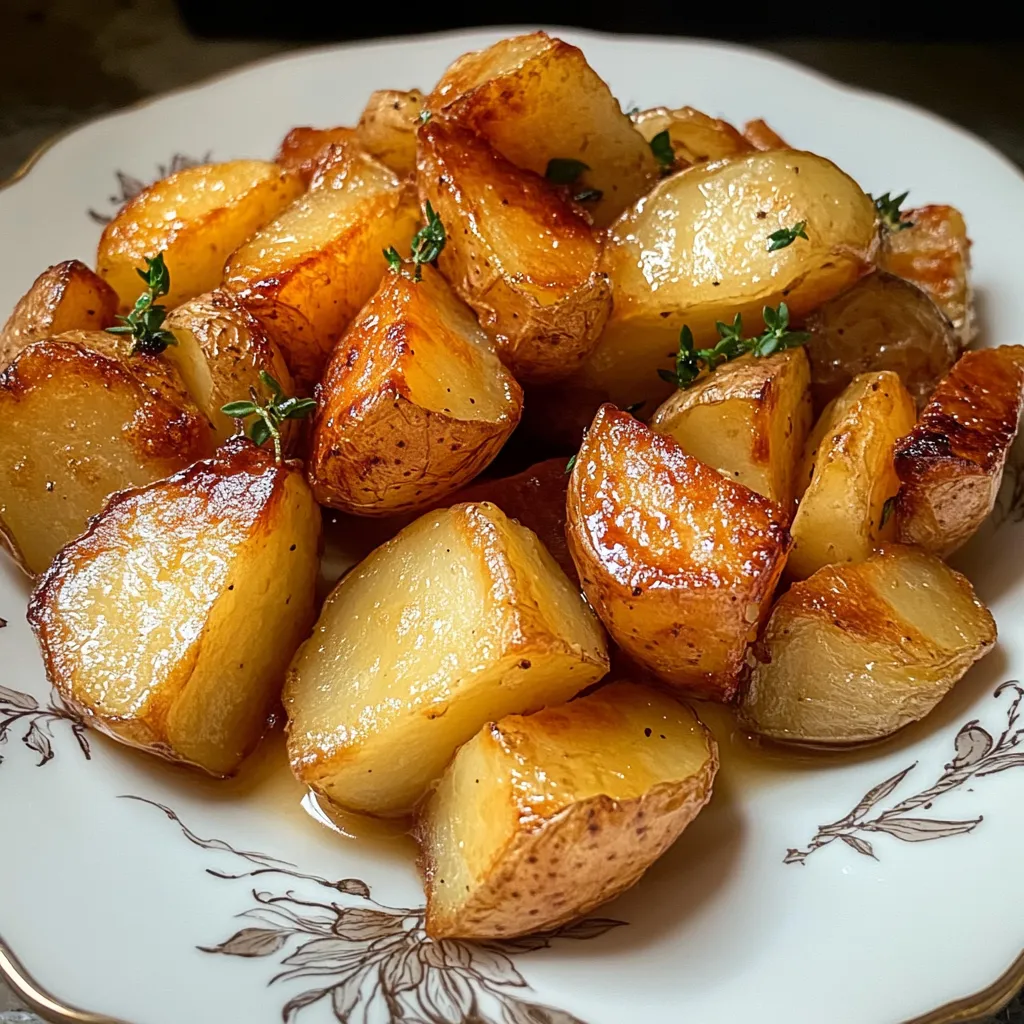
Why Duck Fat Potatoes Are in a League of Their Own
There are roasted potatoes, and then there are duck fat potatoes. Once you make them this way, it’s hard to go back. Duck fat has a richness that butter and olive oil just can’t match. It gives the potatoes a deep, savory flavor and that shatteringly crisp exterior that makes people reach for seconds before they even finish the first bite.
The first time I made these, I remember pulling the skillet from the oven and hearing that unmistakable sizzle. The smell alone was enough to stop everyone in the house mid-conversation. These are the kind of potatoes that steal the spotlight, even next to a beautiful roast or steak.
Ingredients That Make All the Difference
This recipe relies on a short list of ingredients, but each one plays a specific role. The potatoes get fluffy inside, the duck fat delivers richness, and a few smart additions ensure maximum crispiness.
Ingredients:
- ¼ cup rendered duck fat
- 4 lbs Russet or Yukon Gold potatoes, peeled and cut into 2–3 inch chunks
- 2 tablespoons plus 1 teaspoon kosher salt, divided
- ½ teaspoon baking soda
- ⅛ teaspoon freshly cracked black pepper
- 1 tablespoon fresh rosemary or other fresh herbs, finely chopped
- Flaky sea salt, for finishing
Choosing the Right Potatoes for Maximum Crisp
Russet potatoes are my go-to when I want extreme crispiness thanks to their high starch content. Yukon Golds work beautifully too if you prefer a slightly creamier center. Either way, cut them into large, even chunks so they roast instead of drying out. Uneven pieces can lead to some burning while others stay pale, so take an extra minute here—it’s worth it.
The Boiling Trick That Changes Everything
This step looks simple, but it’s where the magic starts. Place the potatoes in a large pot, cover with water, and add 2 tablespoons of kosher salt along with the baking soda. Bring everything to a rapid boil and cook uncovered until the potatoes are just tender enough to pierce easily with a knife.
The baking soda raises the pH of the water, helping the potato surfaces break down slightly. This creates that starchy coating that later turns into an impossibly crispy crust in the oven. Once tender, drain the potatoes thoroughly and return them to the hot pot.
Roughing Up the Potatoes for Extra Crunch
Now comes one of my favorite steps. Cover the pot with a lid and shake it vigorously for several seconds. When you peek inside, the potatoes should look a little battered and fuzzy around the edges, almost like mashed potatoes clinging to the surface.
This might feel wrong the first time you do it, but trust the process. Those rough edges are exactly what crisp up so beautifully once they hit the hot duck fat.
Roasting in Duck Fat Until Deeply Golden
Preheat your oven to 450°F and place the duck fat in a large cast iron skillet. Let it heat in the oven until shimmering and hot. Carefully spoon the potatoes into the skillet, taking your time so you don’t splash the fat.
Sprinkle the potatoes with the remaining teaspoon of kosher salt and the black pepper. Roast them undisturbed for 30 minutes. This is hard—I always want to peek—but leaving them alone helps form that first crust. After 30 minutes, toss the potatoes, then return them to the oven for another 40 minutes, flipping once halfway through, until deeply golden and crisp on all sides.
Finishing Touches That Elevate the Flavor
As soon as the potatoes come out of the oven, sprinkle them with chopped fresh rosemary or your favorite herbs. The heat releases their aroma instantly, and you’ll notice how it mingles with the richness of the duck fat. Finish with flaky sea salt for texture and a final pop of flavor. Serve immediately while they’re at their crispiest.
Serving and Storing Duck Fat Potatoes
These potatoes are best served straight from the oven, when the contrast between crunchy exterior and fluffy interior is at its peak. They’re perfect alongside roast chicken, steak, or even a simple green salad.
If you do have leftovers, store them in an airtight container in the fridge. Reheat them in a hot oven or skillet—not the microwave—so they regain some of their crispness.
Flavor Variations and Herb Swaps
Rosemary is classic, but thyme, sage, or even a mix of herbs works beautifully. Garlic lovers can toss a few smashed cloves into the skillet during the last 20 minutes of roasting. For a subtle kick, a pinch of smoked paprika or cracked chili flakes adds warmth without overpowering the potatoes.
Nutrition Notes and Indulgence Balance
Duck fat potatoes are definitely an indulgence, but they’re meant to be enjoyed as such. Duck fat contains monounsaturated fats, similar to olive oil, and because these potatoes are so satisfying, a smaller portion often feels enough. Pair them with lighter sides to balance the meal.
Duck Fat Potato Questions, Answered
Can I substitute another fat if I don’t have duck fat?
Yes, but the flavor will change. Beef tallow or goose fat are the closest substitutes. Olive oil works, but you’ll miss that signature richness.
Why are my potatoes not crispy?
This usually means the potatoes weren’t roughened enough or the fat wasn’t hot when they went into the skillet. Both steps are crucial.
Do I really need baking soda?
It’s optional, but highly recommended. It dramatically improves crispiness by breaking down the potato surface.
Can I prep these ahead of time?
You can boil and roughen the potatoes a few hours ahead. Keep them uncovered in the fridge, then roast when ready.
Duck fat potatoes aren’t just a side dish—they’re a statement. Once you make them this way, you’ll understand why they’re so beloved, and you may find yourself planning meals just to have an excuse to make them again.